
To understand October 7th is to understand the wider complications within the region. While Hamas, as a Sunni Muslim group, have implied support from countries like the UAE, Jordan, Saudi, etc. Hezbollah, being Shia (co-religionist with the Iranian regime), is deemed unpopular.
The Saudi Arabian PM, Mohammed bin Salman, essentially forced the Lebanese PM to resign over his anger towards Hezbollah’s participation in the Lebanese government. The Shia have been historically discriminated against in Lebanon, Saudi, Bahrain and to some extent Iraq.
This leaves the Gulf unsure of how to respond to the recent escalation. They don’t like Iran or Hezbollah, and equally, they are troubled by Israel’s mounting attacks. Though Hezbollah wasn’t always unpopular, there was a moment during the civil war when the Druze (a syncretic, Abrahamic religious group) had an alliance with them, as well as a few Christian groups. They are seen as a major player in resistance to Israel, as Israel occupied Southern Lebanon from the early 80’s until 2000. Hezbollah was seen as the group that drove Israel out, much more than the Lebanese military. That popularity has now largely diminished, with The Arab Barometer, a group which carries out opinion surveys in most Arab countries, seeing that only “12 percent of citizens feel closest to Hezbollah”.
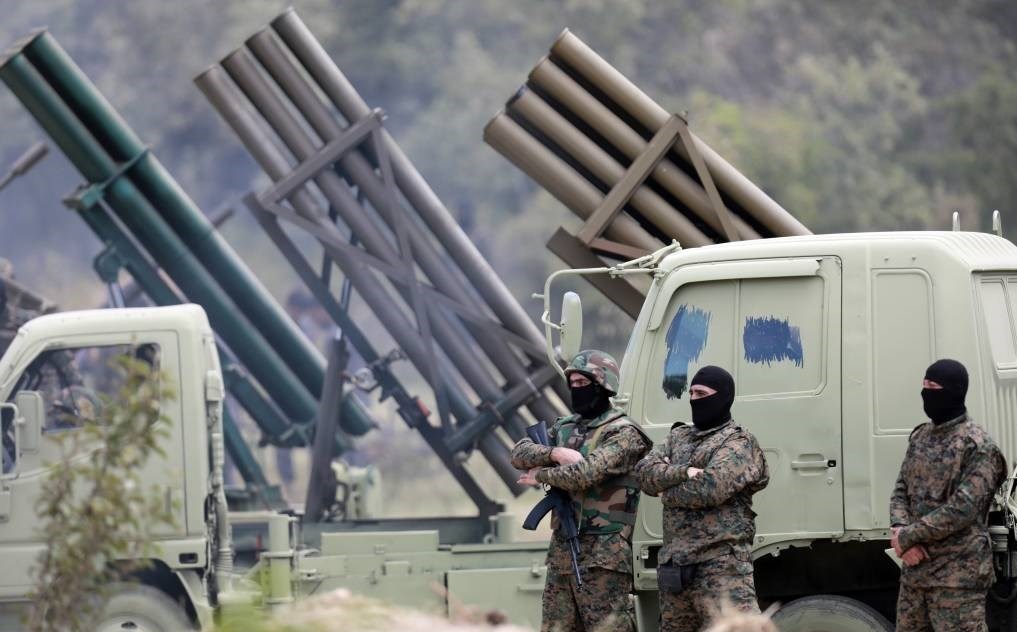
There are two key elements in regard to the past 12 months, firstly Hezbollah firing missiles into Northern Israel, their reasoning being a call for a ceasefire in Gaza. The second reason is their importance to the US and its allies in regard to de-escalation, for fear of a wider regional conflict. There has been increasing effort from both US Secretary of State Antony Blinken and President Joe Biden to not draw Iran in, Hezbollah’s big backer.
Despite this effort, there are many people in the Israeli government, like Gallant, who felt the focus should’ve never been on Hamas but always on Hezbollah. The stated Israeli aim militarily in Gaza was to destroy Hamas, in Lebanon, it was to create the conditions for the displaced Northern Israelis to return. The sudden focus on Lebanon is a tacit admission that the war aims in Gaza have not yet been met. Ultimately Deif, who masterminded the October 7th attack, is still alive.
Israel has had much more military success in Lebanon, eliminating Nasrallah, Shukr, Aqil and Wahbi – key Hezbollah figures. This success, alongside Hezbollah’s weak response, has restored some Israeli confidence in its intelligence agencies after October 7th.
Despite both sides’ perceptions of ‘success’, civilians bear the brunt of this escalation. If both Israel and Hezbollah continue seeing rocket fire as a ‘response’, rather than an attack, regional tension will continue rising. There is little regard for the lives of the civilians; Nasrallah was hiding underneath an apartment block, which subsequently was bombed in order to take him out, killing 33 and wounding 195.
While the assassination itself was a tactical success for the military, it is not a solution to Israel’s standing in the Middle East, not politically, nor does it deal with the internal problems within Israeli politics. It doesn’t deal with the Israeli settlers along the West Bank, not to mention the humanitarian crisis in Gaza.
Israel is in an extremely fragile situation in regard to their perception globally, facing increased accusations of war crimes and genocidal intent. While the attack was successful from a military perspective, it doesn’t answer the long-term questions for the region.
Image credit: WikimediaCommons





Leave a Reply