
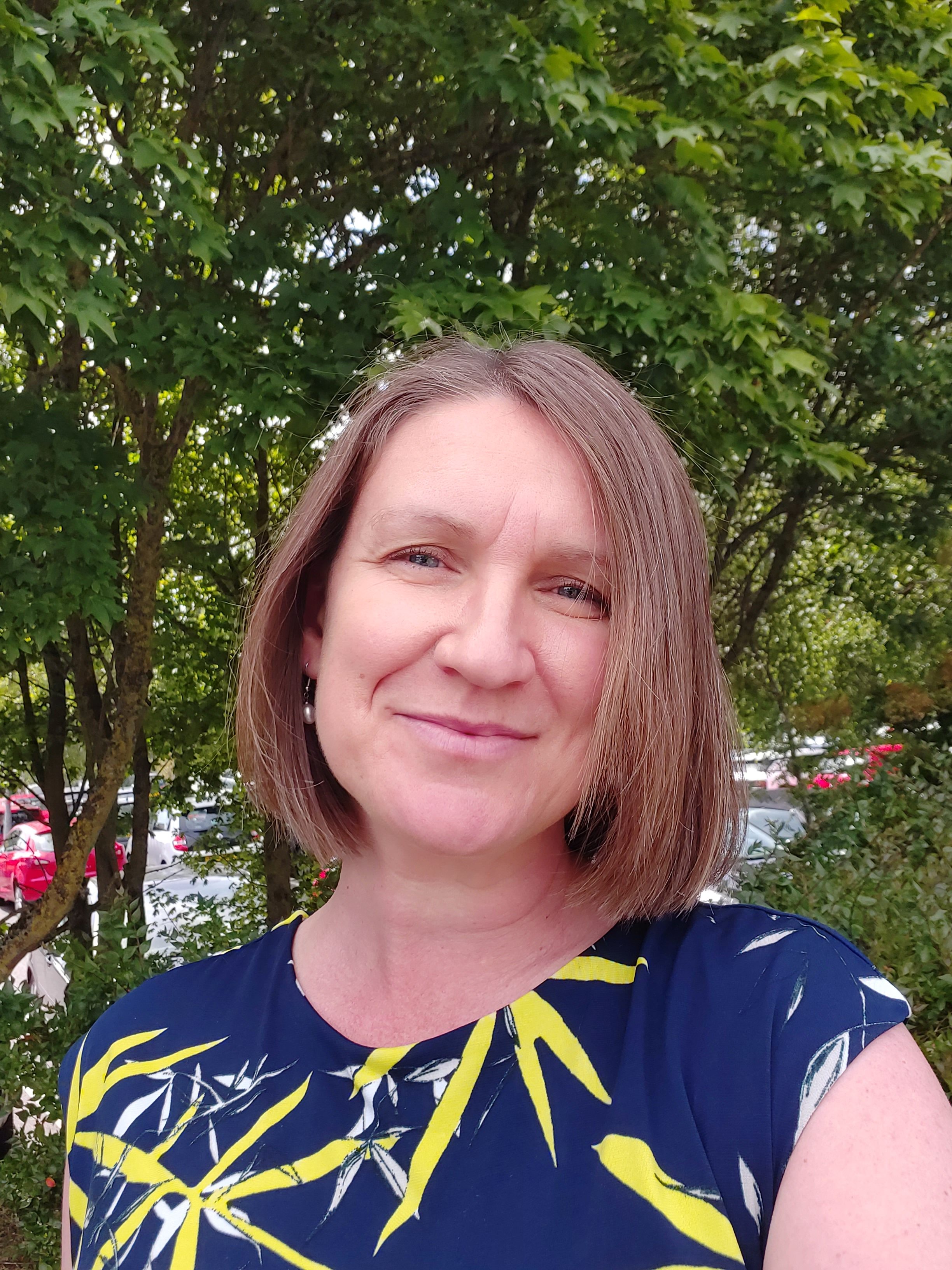

How would you explain your research to someone at the pub?
I’m interested in DNA. All of our cells contain the same DNA – so how do we have different types of cells? All humans contain really, really similar DNA – yet how are we so different from each other? All living things contain DNA, how it shapes who and what we are is fascinating to me.
What did your journey to the Sainsbury Laboratory look like?
Something I only found out recently, is that when I was 7 or 8 yo, my year 3 teacher told my parents that I would grow up to be a scientist! So I guess I was never going to do anything else.
I started my career with a BSc in Biology at UEA, then worked as a Research Assistant at The Sainsbury Laboratory cloning and sequencing smRNAs. From there, I moved to Israel where I completed my MSc and PhD at the Weizmann Institute of Science department of Plant Science. Following my PhD I moved to the Immunology department where I really got into next-generation high throughput sequencing.
In 2020 (in the middle of the pandemic) we did a whole family international relocation back to the UK, and I took up the position of Post-Doctoral researcher in David Monk’s group back at UEA again! In this position I took my skills in next-generation sequencing and expanded them into epigenetic analyses of the human placenta and single cell embryology.
I’m now (since January 2025) starting a new role at The Sainsbury Laboratory, bringing my wealth of knowledge and experience to set up a new platform for various genomic technologies.
Since it’s our special sex and relationships issue, would you mind talking a bit about what you were looking at involving placenta or/and embryology?
No human organ is more unique in its epigenetics than the placenta, and since it is part of the female reproductive system (despite the fact that we have all had one at the very beginning of our life), it is highly under-researched. …many of the problems that occur during pregnancy can be attributed to deficiencies in the placenta. … placenta is comprised of several different specialist cell types, so our project aimed to isolate these cell types … We hope to identify and characterise the baseline normal genetic and epigenetic states of the placenta in a cell type specific manner…
What’s been your research highlight?
Can’t really think of just one highlight particularly. A more general highlight to working in science is getting to travel around the world to attend conferences and the fact that being a scientist is a hugely transferable skill has meant that I’ve been lucky enough to also work abroad.

If you could change one thing about your field, what would it be?
The things I would like to see change are already moving in the right direction, but more support for this is always needed – more women in science and greater acceptance that women can have research careers and have children. I had a baby during my PhD and the Weizmann Institute of Science in Israel was extremely supportive of PhD students taking maternity leave from their studies and they continue to pay the stipend for 3.5 months!
Who’s the coolest person you’ve met while working in research?
Well, ‘met’ is a stretch but I did see James Watson (of double helix fame) across the room at a conference on RNA Interference in the USA in 2002, and I also heard Ian Wilmut speak about the cloning of Dolly the sheep at the same conference.
I also once met Ada Yonath in the VIP lounge at Tel Aviv airport (she won a Nobel prize for her groundbreaking work on the structure and function of the ribosome).
Thank you to Dr. Chappell-Moar for agreeing to be interviewed for this article.


Leave a Reply