
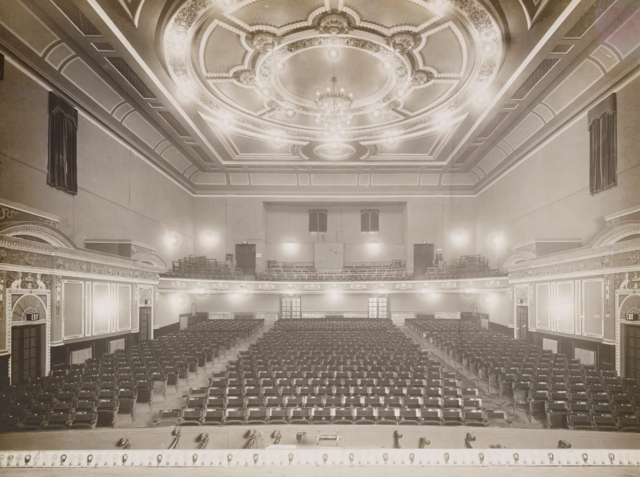
27th March marks this year’s World Theatre Day. Being celebrated since 1962, the day invites all those involved in the theatrical world and those who appreciate it as an artform to celebrate the joy it brings, and the work that gets put into performances across the world. This year, celebrations are happening in Rio de Janeiro from 27th-30th March. Every year, an author message is released by a leading industry figure, expressing their takes on theatre. This year’s author is Theodoros Terzopoulos, who is an internationally acclaimed director of the theatre being given many awards like the Grand Theatre Award of the Hellenic Association of Theatre Critics, Performing Arts 2024 and Best Direction Award 1994. His message poses a series of questions, ranging from the theatres’ concern with the climate crisis and the human condition. He powerfully opens it by asking, “can theatre hear the SOS call that our times are sending out, in a world of impoverished citizens, locked in cells of virtual reality, entrenched in their suffocating privacy?” This raises questions about the place theatre still holds in a world being consumed with technology.
Theatre has always been concerned with expressing stories, but this has developed across history: from the Ancient Greek tragedies celebrating Dionysus; to the medieval period where theatres were dominated with expressing Christian messages ; to the Renaissance, where one of history’s most influential playwrights, William Shakespeare, emerged with his comedy, history and tragedy plays. In many regards, his plays are like festivals, facilitating roleplaying and licensed social mobility for the duration of their enfolding. It is fitting then, that festivals are used today to celebrate the theatrical world and express people’s love for this artform.
For most of history, the theatre has been a central part of human connection and community, bringing people together from all social classes for a unified moment – but the question that Terzopoulus seems to ask is whether it still has the same place in our lives as it did for the rest of history. Technology has facilitated the rise of many different forms of entertainment, ranging from television to radio and film to name a few. In this regard, theatre’s centrality has taken a back step as people’s attention splits between varying different artforms. Theatres were also hit hard during the pandemic, but five years on, theatres seem to be thriving. I think that people have continued to go to the theatre, despite the impact of technology, because of its unique ability to connect with its audience in a way that surpasses storytelling to collaboration and communication. Theatre is able to engage with its audience in real-time, breaking the barrier of disconnect by calling for audience involvement, – making it more of a cooperation between audience and actors, rather than something to simply watch passively. I think this is added by the close proximity of the action, making audiences feel involved in the story. Notably, there is no performance without an audience, highlighting the importance of this two-way engagement. Another thing that makes theatre stand out against the other forms of entertainment is that it allows for moments of undivided attention that are hard to find elsewhere in the modern world. For me, the one time when I don’t feel the absence of my phone niggling in the back of my mind is when I’m at the theatre. Great performances allow me to get fully invested in the story enfolding like no other artform can.
In Norwich, we have a wealth of theatres, including the Norwich Theatre Royal, Maddermarket Theatre, Norwich Playhouse and Stage Two. So, as we get closer and closer to World Theatre Day, why not check out some of the great shows being performed, varying from ‘Lay Down Your Burdens’ showing between 28th-29th March at the Theatre Royal and a take on Chekov’s The Cherry Orchard at Maddermarket on 25th March, to celebrate this fantastic day.
Photo Credit: Wikimedia Commons.

Leave a Reply