
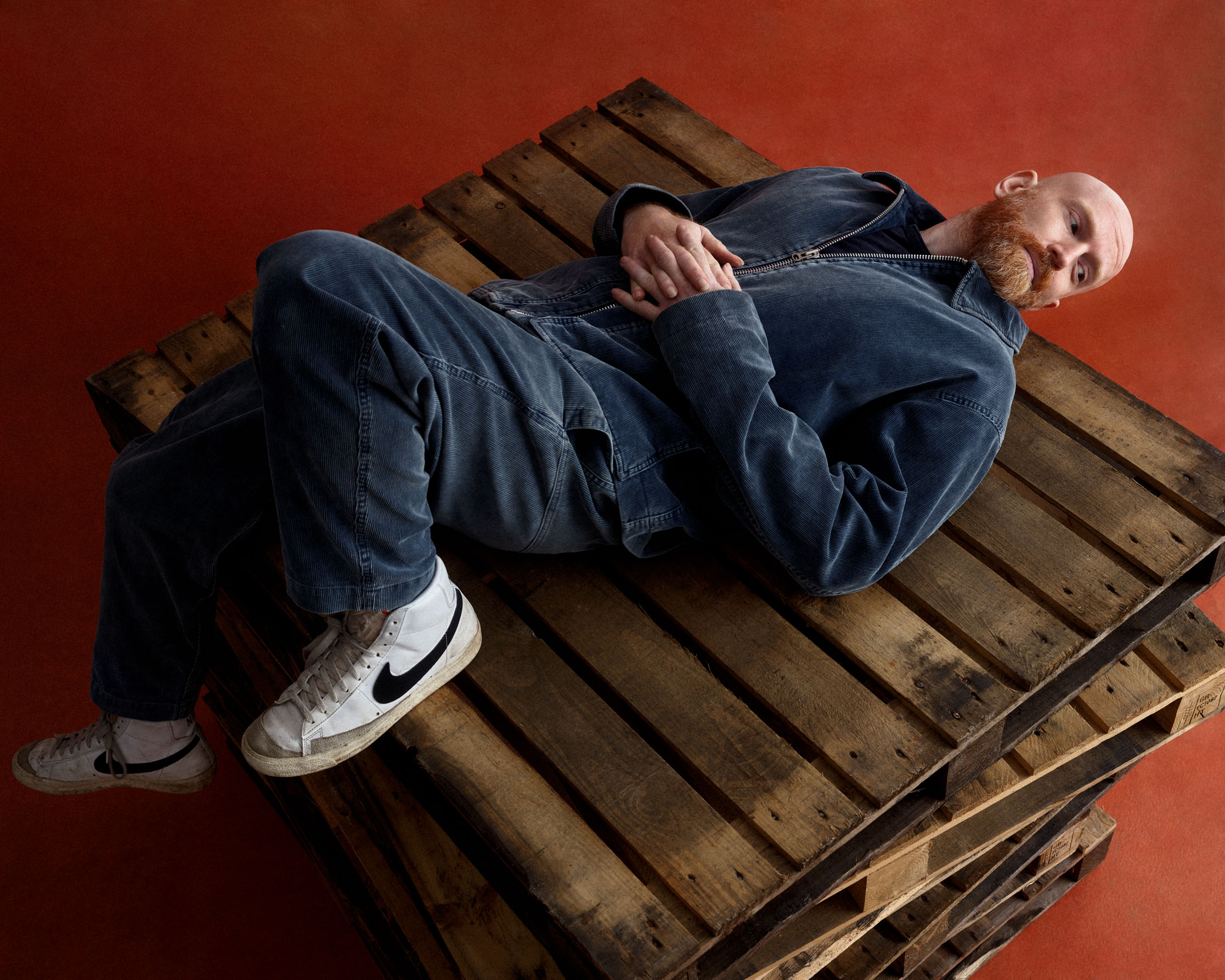
Ahead of his Norwich show at the Waterfront, our Editor-in-Chief, Emily Pitt-Shaw, sat down with Newton Faulkner to discuss his latest album, how to deal with vulnerability, and what’s changed in the industry in the past two decades. Since releasing his first album in 2007, the singer-songwriter has gone on to play a number of music festivals, and is currently on tour to promote his new album Octopus.
Emily Pitt-Shaw: It’s great to meet you, Newton. Let’s talk about the progression from your earlier albums to now.
I grew up listening to Hand Built By Robots, and what I find particularly fascinating is the name of it.
We’re now in a place where, with the use of AI and other means, music actually is being hand-built by robots.
With your new album and from the songs I’ve heard from it, I’d love to ask about what has changed in how you’re making music?
NF: It’s all technology, isn’t it? It’s, like, technologically driven changes. Well, I’m very much of the attitude that it’s all an opportunity, and it’s working out how to make it work for you.
There is this place I always go back to when I feel myself getting frustrated, or start to feel undervalued: when sheet music was first introduced, musicians were outraged. They were furious because you didn’t have to pay them to come sit in your house and play you the music anymore, because you could read the music yourself. That was seen as the worst thing that had ever happened to musicians.
Since then, I feel like we’ve maintained that level of outrage almost constantly for hundreds of years… I think there should be a limit on how long you can be annoyed about the same thing, and we probably reached it 100 years ago.
With the Internet – I was about to say that no one could have really predicted where it would go, but I think David Bowie did quite accurately, in an early interview. And with social media, I think it creates a number of social issues and exacerbates others, but it’s also an opportunity for people who are making things to connect with people in quite a unique way.
EP: Now, compared to 2007 and having to be a social media presence and the face of your album, what does that feel and look like?
NF: It has taken some getting used to, because, as someone who started releasing music in 2007… I was big on MySpace. Me, Lily Allen, Kate Nash – we were all big on there. After that, everything went to digital. Fast forward to things like TikTok, which is just so fast and immediate.
For me, it’s all an opportunity, but it must be genuine. There has to be an element of me, which is why live shows are so much fun. I genuinely love doing it, and people feed off the fact that they’re watching this guy have a really good time. That has a kind of infectiousness to it.
It’s taken me a while to find ways of getting that into social media because I’m not a natural documenter of my life. I lean quite opposite to that, I don’t feel interesting enough to want to give every aspect of my life.
EP: You’re heading on tour with your new album, and it’s vastly different to what you were doing in the 2010s. You must be going out to a sea of phones – what’s that like?
NF: Oh, always. Brian Adams banned phones from his gigs because he wanted people to feel like they were genuinely present again. It’s a thing some people probably don’t even notice, but for me, I’m very aware of it.
I was on my way to pick up my son from nursery, and everything is very hectic since the album’s coming out. I was on my phone frantically typing, and I had to draw a mental line in the sand. I never turn my phone off, I have other children with phones, and I want to be reachable. But I stopped for a moment, did some mild meditation, and when I went to pick him up, I wasn’t thinking of all the other things I needed to do. My phone didn’t leave my pocket; I was just genuinely connecting with him.
It’s something that I’ve brought into my live shows more and more. I think, to begin with, there was a level of armor. Newton Faulkner is a character that I invented to do that; he was very different to me. With time, one’s absorbed the other. The character that I invented to do all these big gigs, well… I was at this festival, and I decided, before going on, ‘let’s just be me and see if that works.’ I plugged in my stuff and was, like ‘how’s everyone doing? Oh, nice hat.’ It was a totally different tone to it. It kind of pulled everyone in. People are aware of vulnerability.
EP: Let’s pull on that vulnerability. Many young people that are starting bands or going solo will feel vulnerable and will be scared to show it. If you could go back to when you first started, releasing music in 2007, what would you say to try and make sure you knew that the vulnerability was okay?
NF: I think (especially male) vulnerability is something that’s almost in contention as to whether it’s fully allowed, though it definitely is. I’m raising two boys, and very much encouraging them to have feelings, and accept them, and not constantly tell them that everything’s okay.
I think, what you need to do, is treat yourself like a friend. Your entire world is inside your head and everything happening around you can affect you in whatever way you choose to let it affect you. There is a lost art to being able to make sense and pick what you actually want to think about. It’s taken me years, but it is possible.
As far as vulnerability in music, there is a degree of sharing that will feel cathartic and feel good, but there’s also a level that’s too much, that will leave you feeling like something’s been taken. It’s important to figure out those lines as early as you can and stick to them, don’t make yourself uncomfortable on a regular basis, because it won’t be maintainable for a career.
There was a study done recently that found that music is one of the most dangerous professions, due to the suicide rate in young musicians. It’s a lot, and there’s no real structures to help. I don’t think people fully understand the ramifications of it.
I’ve been doing this for 25 years, and I think, without having the right mental structures to cope… Yeah, there’s just a lot of constant comparison and judgement. It’s important to work out what you’re comfortable doing and getting on with it.
EP: And to conclude, 25 years on from when you first started making music, what are you most excited about for this next album and going on tour?
NF: This album feels like a new type of thing, it feels like a step in multiple directions that I’ve never taken before. For a little while, I had a picture stuck on my door, from a Tim Burton book called The Cat with the Enormous Head. It was a cat with a giant head that got stuck in a cat flap and couldn’t get out the door. So, every time I walked in, it worked as a reminder to park my ego and just do the work and get on creating. And that was one of my tipping points. The other was shaving my head, which is totally superficial, but there are a lot of things people attach to my old image. I think a person has to totally, unrecognizably change.
EP: You’ve been an absolute pleasure to interview. Thank you so much for today, and best of luck with your album release and tour.
Newton’s new album, Octopus, is now available to buy and stream across platforms.
You can continue to follow his tour here: https://newtonfaulkner.com



Leave a Reply