
When it comes to international cinema, the French film industry is rarely overlooked. After all, the country that birthed François Truffaut, auteur theory, and Le Fabuleux Destin d’Amélie Poulain can hardly be forgotten.
And yet, as a born and raised Frenchman living abroad, French cinema occupies a place in my heart far more important than it does for the average cinephile.
Coming from a film-loving family, I was lucky enough to be raised on Jacques Demy and Yves Robert.
After visiting my family in the North of France, I’d return home with a stack of DVDs borrowed from my grandfather, eager to spend rainy afternoons cross-legged on my living room rug, my eyes fixed on the television screen. This was how I came to fall in love with Les Demoiselles de Rochefort, a jazzy musical about two sisters who dream of leaving their seaside town to pursue an artistic life in Paris, or La Guerre des Boutons, about a group of young boys who spend days fighting in the woods.
While my American mother was the primary influence on the movies I watched and the books I read, French cinema was my way of growing closer to my French side. It helped me imagine my father and aunts at my age—enchanted by the same songs I’d act out during recess, laughing at the same lines that left me in giggles.
Where Hollywood movies gave me dreams of moving to New York, the loving mundaneness of French films showed me my everyday.
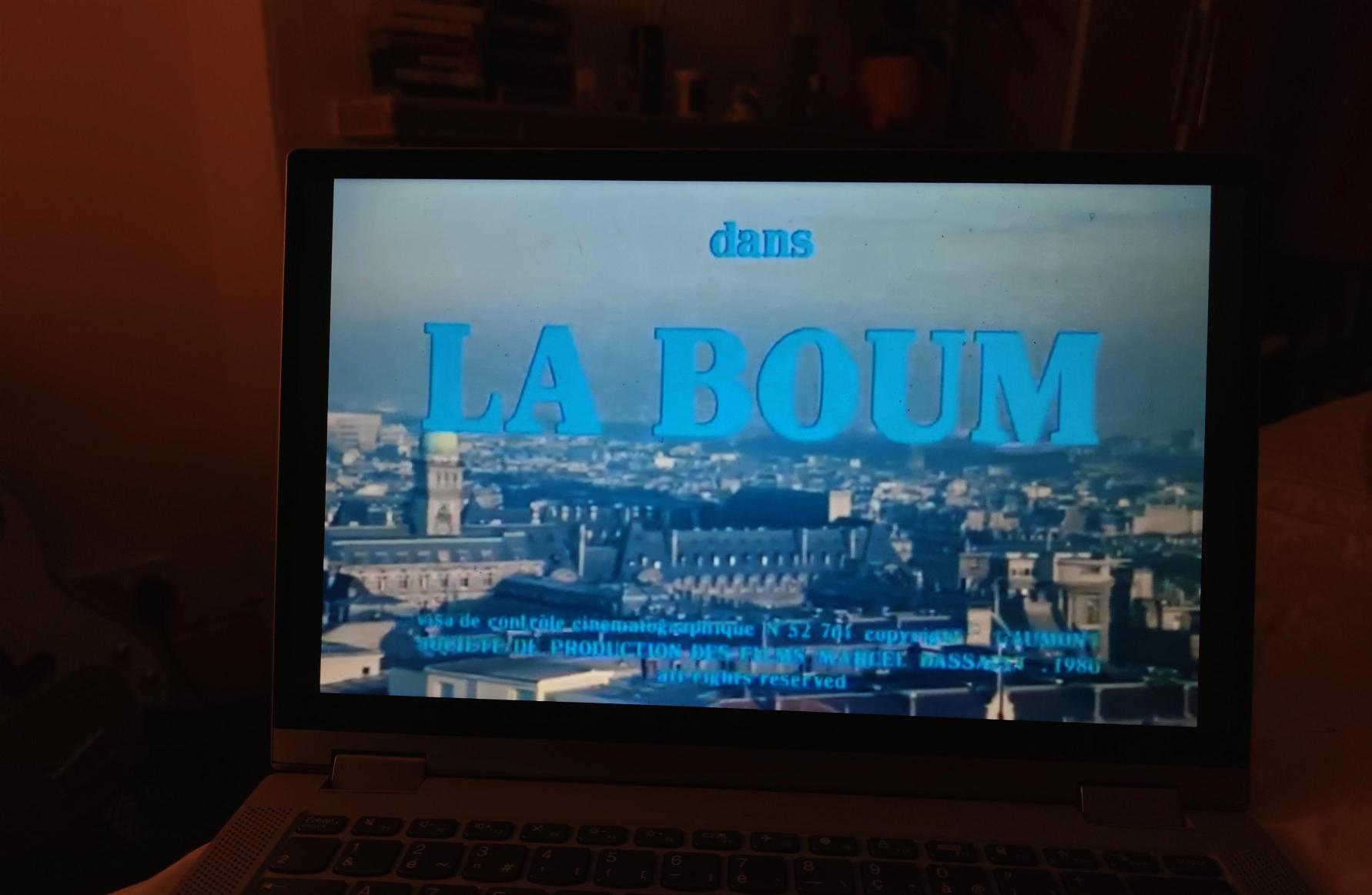
Bienvenue Chez les Ch’tis, the second-highest grossing French film of all time—about a Southern French man’s clash with Northern culture when he is sent to work in a Northern village—is set in the village where my aunt worked for most of my life; La Boum, the seminal French coming-of-age story about a girl in seventh grade rang true to my middle school years thirty-five years after its release, free from the tall lockers and myriad of after-school activities of American school movies.
Adaptations such as Lou! and Les Profs brought to life characters I’d fallen in love with in the pages of comic books from my local médiathèque; and award-winning films such as La Haine were filmed in suburbs where my friends lived.
That is not to say, of course, that the stories told in French cinema were my own, but the fantasy of an adolescence like the one in LOL was much more attainable than Mean Girls, when it was set a mere train ride away from my house.
Since moving to the UK, French cinema has taken on a new meaning for me, as it is often the only opportunity I have to hear my native tongue.

As such, I make it a point to explore more French cinema when I’m away, from classics such as the Talented Mr. Ripley adaptation Plein Soleil and the mid-70s coming-of-age film Diabolo Menthe (named after a drink I’d spent many summer days sipping on), to new releases like L’Amour Ouf and La Venue de l’Avenir, the former being a romance partially set in the North of France in the late 80s, while the latter follows distant cousins exploring the life of a common ancestor.
In this search for familiarity, I catch snippets of my life that I never thought I would see on screen, from the taunts chanted by campers in Nos Jours Heureux (about counselors at a countryside summer camp) or the choice of barbecued food served in the Oscar-nominated short film Berk!, and that alone is enough to ease my unavoidable homesickness.
When asked for French film recommendations, I will rarely give the classics. A simple Google search can recommend Amélie, or Les Parapluies de Cherbourg, or Jules et Jim.
Instead, I prefer to share films that I regard as quintessentially French, both in their content and in how they shaped their audience.
For example, any French 2000s child will have watched Azur et Asmar (an animated film about two boys on a quest to find a djinn), Les Choristes (about a chorus at a boys’ boarding school) or Le Petit Nicolas (an adaptation of a popular children’s book), and others will have had to read Juste la Fin du Monde (about a man who returns to his dysfunctional family’s home to announce that he is suffering from a terminal illness) for their final exams.
Comedies such as Le Diner de Cons (about a rich businessman searching for a guest to ridicule at a dinner party), Qu’est-ce Qu’on a Fait au Bon Dieu? (telling the story of a traditional Catholic couple who struggle with the fact that none of their daughters have married a white Catholic man) and Neuilly Sa Mère (about a boy who moves from his home on an estate to live with his aunt’s rich family in a posh suburb of Paris) showcase French humor with painful accuracy; and I have a special care for 120 Battements par Minute (about the Paris branch of ACT Up during the AIDS crisis) and Eté 85 (which tells the story of a teenager who falls in love with a boy that the audience knows will die), two films that depict homosexuality in France during an era when most narratives are centred on the USA.
At a time when Hollywood seems to constantly be churning out the same stale stories with the same five actors, French cinema offers a breath a fresh air, preserving an indie-like quality that can only exist outside of the English-speaking sphere.
Image Credit: Micah Petyt





Leave a Reply