
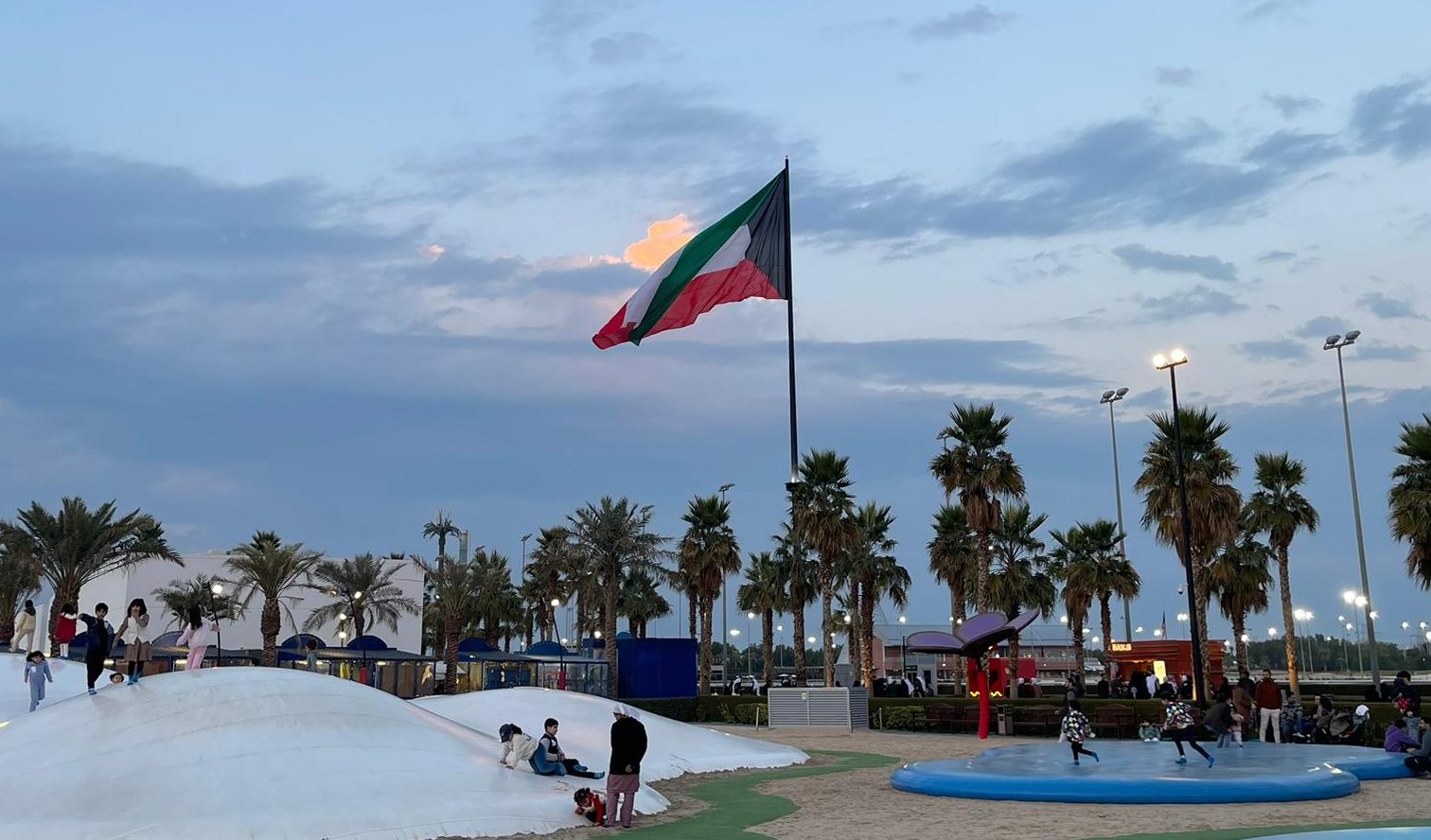
Born and raised in Kuwait, Nada recalls colourful markets tainted with the smell of fresh coffee and spices. But now, the sounds of nightly sirens echo in the distance as the prospect of war nears.
“We’re foodies,” Nada grins, placing her palms face down on the table in excitement.
Smile unfaltering, she begins to recite a recipe for machboos, a fragrant rice dish served with tender lamb. Somewhere in between the steps of boiling rice and adding seasoning, she whispers, “it tastes like home.”
For just one moment, as Nada stirs the pot of aromatic meat and grains in her small kitchen in Norwich, her whole family joins her. Stood around the stove, laughing and sharing stories, they prepare to eat.
Apart from, they are not really there. Instead, her parents and younger sibling reside 2,830 miles away in Kuwait. For Nada, a serving of machboos is the closest she’ll come to her home country until nearby conflict ends.
The young woman’s face is stung with uncertainty as she explains that, since the United States and Israel launched attacks on Iran, sirens have rung through the still air of the night in Kuwait.
“The scariest thing is not the sirens themselves,” Nada says. “It’s been having to learn what each of them mean.”

Like learning the language of war, she explains that each sound signifies a different scenario. Some suggest safety, others imply danger. All are terrifying echoes of what is happening across the Middle East.
But Nada remains surprisingly light about the situation, despite lengthy days of fasting and sleepless nights.
“We have a dark sense of humour, as Arabs,” she laughs. “I heard a man say that once this is all over and the sirens have ended, he’ll sleep for five days with no alarm.”
Perhaps it’s this light-hearted outlook on life that is keeping so many going. Or perhaps it’s memories of a softer youth, one carefree, safe and filled with colour.
Despite Nada’s polite nature, she insists that she was albeit growing up. “I was the naughty one in my family,” she confesses. It’s hard to imagine, as she sits with her hands politely crossed in her lap, pausing occasionally to hear my own anecdotes.
She recalls riding her bike around the local neighbourhood, accompanied by two boys that lived next door. “We were around the same age as my younger brother is now, in seventh grade,” she says. “But we didn’t have to worry about the things that he does now. I’m not sure, but I think he understands war.”
It’s a word that few children should be able to spell, let alone understand the torment of. Like a lurking shadow, it’s stands behind a closed door, waiting for one stray bullet or weaponised decision to open it.
As Nada describes her situation, she’s careful to dodge the word that would purse her lips and burden those listening like a monosyllabic stab to the chest.
“I hate it. I can’t say war in the same sentence as my home country. It doesn’t belong there. It shouldn’t be anywhere near Kuwait. It’s just not fair.”
Through what if’s and it might’s, Nada’s smile remains. It is obvious that, despite the five years she’s spent away from home, she has hope. She tells me that many think that conflict is common in the Middle East. She reminds me that manmade death is not.
She explains that, what is going on in nearby Iran, impacts everyone. Not merely through empathy, but through community.
“Where I’m from, everybody knows each other. It’s one of the few places that I’ve been in the world where you know the names and family of each face you see on the street.
“I know the restaurant worker, she knows the gym instructor, they know the market vendor, he knows my parents. It’s an incredible sense of community, and that’s what makes it home. That’s what makes it safe.”
She reels the connections off as if a memorised list of those she waves at as she goes between day to day errands in town. Starting her day off with a fresh coffee made with high quality beans, which she emphasises is the only type of coffee one should drink, she ducks from the gym to the Mubarakiya Old Market.

Tempted by the rich colours and smells of seafood, the Souk comes to life within the small room in which we are sat.
“You can buy anything. Makeup, carpets, fresh meat and fruits.”
Nada gasps between each product she names, as if she’s stood at each stall, running her fingers over each item and asking questions before deciding to purchase. It is clear that her heart lies in Kuwait, patiently awaiting her return.
“I’m so excited to go home. I miss my day-to-day with my family. When I’m back, I’ll wake up, go to the gym, and spend the rest of my time with my mum. I really, really miss my mum.”
With this, Nada’s face shows the first sign of longing. Her eyes, still so bright and full of life, become vaguely weary, as if she has wished to be closer to her family every day for the past 1,825 days that she’s been away from home.
But, at this suggestion, Nada nods subtly. “I pray every day for it.”
She describes the sensation of praying, a feeling that she says doesn’t translate out of her second language. “It’s like a sense of reassurance that fills your whole body. It’s really hard to put into words, but you know it when you feel it.”
Nada compares it to like making a wish when you blow out candles on a birthday cake. Apart from, there is no fictional oath to not tell those around you what you prayed for, and no risk of it not coming true.
“I’m surprised at how many people pray for things, even if they’re not religious, without realising. It shows how much faith the world has, and how manifesting can work.”
“I pray that my family are safe, I pray that my country is safe, and I pray that this stops.”
She pauses, sighs and begins to play with a ring on one of her fingers. She confides that she wishes that everyone would pray for the conflict to end.
But her faith is not just in a deity. Nada’s courage seems to come from a much larger community; one that she feels just as part of despite being continents away from. She says that, no matter the background or religion of each person, all are welcomed – especially during the holy month of Ramadan.

“In an odd way, what’s going on has united people even more,” she explains. “Everyone is coming together to pray. And everyone will come together to celebrate Eid al-Fitr. It shows that we’re strong, and even stronger together.”
Sat in front of me, Nada appears to embody such community in every possible way. Between asking for my thoughts and opinions, listening intently to each answer as if I were reciting the key to a secret code, her nature is anything but selfish.
We return to talking coffee. As I sip on my black americano, now tepid but still drinkable, Nada tells me that I should visit Kuwait “to get a taste of the real stuff.”
She’s a book of knowledge, a promotional guide so proud of her country that she loves it like one might a partner.
And much like a significant other, it’s clear that Nada will continue to hold hands with Kuwait.
For better or worse, through sickness and in health, and until nearby conflict ends.
Image credit: Nada Alfares



Leave a Reply