
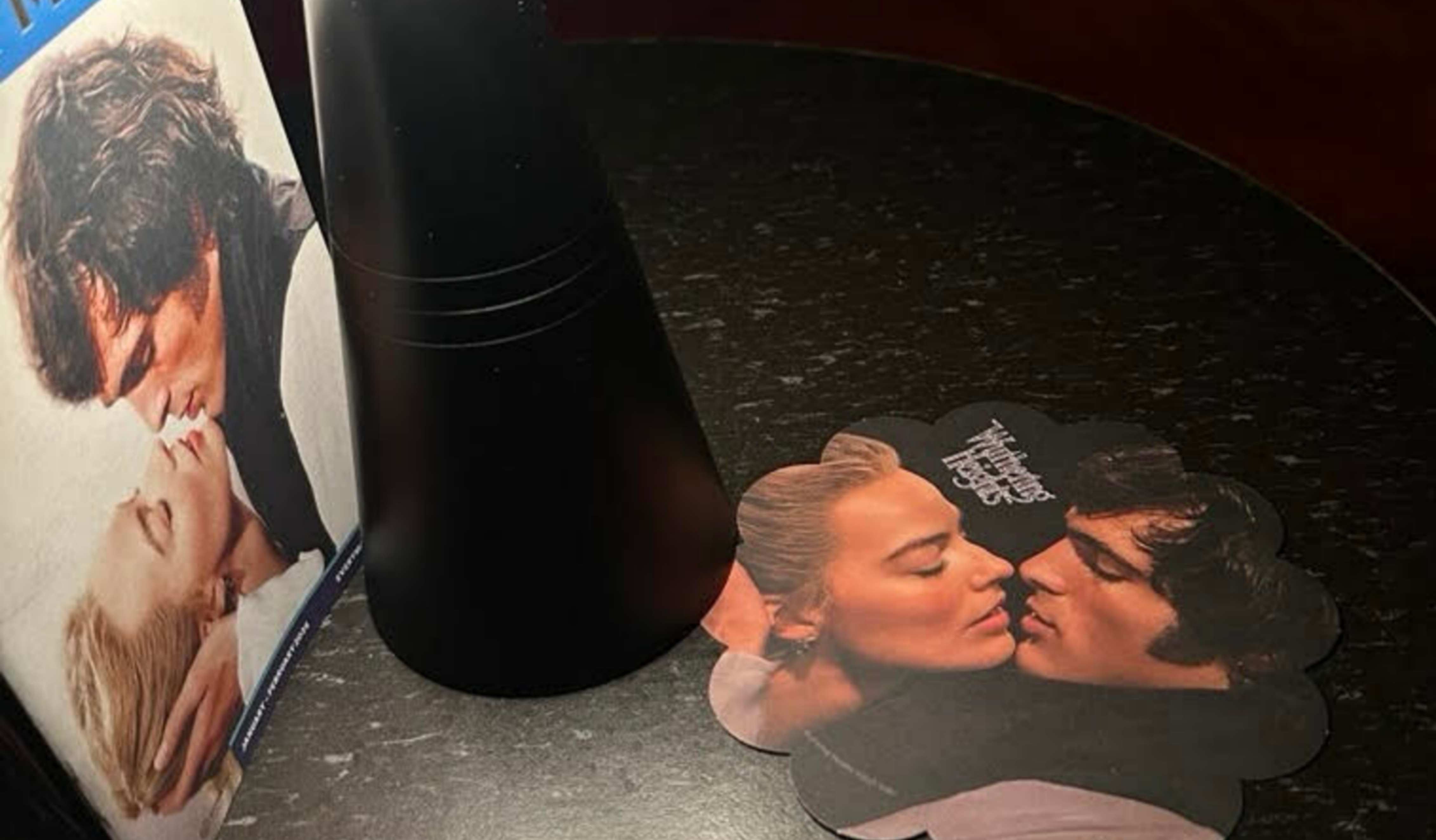
Following the recent release of Emerald Fennell’s Wuthering Heights and the subsequent discourse surrounding her work, Fennell is an interesting case study of the feminist auteur.
Auteur, a term meaning “author”, was coined by François Truffaut (French filmmaker and actor) in the 1950s and reworked by Andrew Sarris (American critic) in the 1960s.
It refers to a director whose personal vision and style are so present in their films that they become comparable to the author of a text.
A feminist auteur is typically a female filmmaker who challenges male-dominated narratives with a unique cinematic style.
Fennell comes from an upper-class background, as exemplified through her education at a top boarding school and later the University of Oxford to study English.
She is, in some cases, referred to as a “nepo baby”: her mother, Louise (née MacGregor) Fennell, was a screenwriter and novelist, while her father, Theo Fennell, is a jewellery designer with famous clients including Elton John.
Emerald Fennell’s career in television and film initially began as an actor, appearing in popular productions such as Netflix’s The Crown as Camilla Parker Bowles and BBC’s Call the Midwife as Nurse Patsy Mount.
In 2013, Fennell pivoted toward writing, and by 2019, she became the head writer and executive producer of Killing Eve, for which she received an Emmy for Outstanding Writing, having previously been nominated as an actress.
Promising Young Woman is the first of Fennell’s three works in which she serves as both screenwriter and director.
Starring Carey Mulligan, the film follows a woman seeking revenge against the men who harmed her best friend in the past. It is a gripping, funny, emotional and occasionally terrifying watch, with plenty left to reflect on and analyse.
This ground-breaking piece won Fennell an Oscar for Best Original Screenplay, making her the first woman to win in the category since 2007.
As her debut feature, the film established Fennell as a filmmaker capable of combining striking visual style with a sharp exploration of the female experience, cementing her reputation as a feminist auteur.
Fennell’s second feature film, Saltburn, moves away from a feminine focus to comment on class. However, much of it remains centred on the female gaze, similarly to Wuthering Heights. This focus is what, in union with Fennell’s incredible writing and directorial skills, makes her work inherently hers, with a clear confidence to push the limits in her portrayals of love and sex.
Like much of what is popular within female circles, her expression of pleasure and longing is seen by many as disturbing, destructive and unnecessary. But for others, while extreme, it is an honest demonstration of fantasies and yearning which many in today’s society crave.
Fennell states she made her third film, Wuthering Heights, as she did to capture the primal response she had when she first read it as a teenager.
Audiences of the film wanting to see an accurate adaptation of Brontë’s novel may be disappointed, however, if the aim is instead to see a film which is cinematically beautiful to watch, full of emotion and complex, real people – not to mention an original soundtrack by Charli XCX – you will thoroughly enjoy yourself.
This same focus on longing also runs through both Saltburn and Wuthering Heights in their engagement with class. In both films, desire is tied closely to status and social mobility, with characters drawn toward wealth, power and the worlds they represent.
Yet the perspective of this critique remains somewhat ambiguous.
Fennell often centres portrayals of middle and lower-class greed rather than speaking negatively of the upper class, who, in both cases, open up their homes to destruction. Whether this reflects a commentary on the dangers of capitalism or simply Fennell’s own understanding of class from a privileged perspective remains open to interpretation.
What is clear, however, is her desire and skill to capture the raw and messy complexities of character.
The discourse surrounding Wuthering Heights has been even larger than that surrounding Saltburn, particularly on social media, where audiences appear split between fascination and criticism.
One viral post claimed that viewers are either a ‘Hamnet girl’ or a ‘Wuthering Heights girl’, a framing that quickly spread across social media.
As someone who gave both films five stars, it is striking that within feminist spaces, women who enjoy Wuthering Heights are sometimes dismissed as lacking emotional intelligence or media literacy.
This kind of discourse risks pitting women against each other, placing two female directors – both auteurs in their own right – in an unnecessary opposition.
With Christopher Nolan’s upcoming film, The Odyssey, set to arrive later this year, it will be interesting to see if this project with rumours of adaptation accuracy will receive the same level of discourse being more male dominated.
Image credit: Meg Thubron





Leave a Reply