
It started with my fair-skinned grandmother trying to fix my brown skin colour. She took me to a doctor, asking him if there was a cure for it. Confidence in my own skin and existence is something that I have continually had to fight for.
In a country of doctors and engineers being the standard, I decided to study English literature. My parents did not force me to write the entrance exams to those courses — a choice which is virtually non-negotiable back home. But that did not mean that I was free. People outside my own family had opinions, which allowed fear to creep into my home. Family prestige was at stake.
It’s not to say that I didn’t try. I spent many sleepless nights trying to learn Calculus and Trigonometry. My brain, however, was not built for that. No matter how hard I tried, that was just a line drawn through water. It didn’t stay. The only excellence that followed me was in my essays where my words always earned brilliant remarks.
So, when I gained a spot on the Creative Writing course here at the University of East Anglia, I was ecstatic. That did not mean my friend, impostor syndrome, was not right there with me in my accommodation room. She was there every step of the way. But it was important for me to have people who write look at my work. My friends back home were always mesmerised by my words, but I needed people with craft knowledge to tear them apart so that I could build them all back up.
A whole new world opened up, and rebuilding began. I learned to trust my peers to help guide me through this overwhelming journey. Their feedback was always wisdom wrapped in sweet words. This made me forget that English is my second language and that I wasn’t always as quick as they were to spot a tense slip.
Yet I also felt a deep sense of guilt in not being able to match their critiquing skills. I felt like I didn’t have a lot to offer them in return. The first two months were hard. But I could feel that I was slowly improving and slowly, was good enough for me.
Then, the glass castle shattered. Someone in my wider workshop group in Norwich said that my draft was too raw to be workshopped. Since this was not a formal workshop opportunity, I was confused. My mind decided that there were a lot more grammar slips than I had anticipated. But that wasn’t it. The person continued, “Maybe you write the way you write because of how English is taught in India.”
I did not challenge that comment. It was a lot to process, and I nodded along. I also got the feeling that the person would just argue and not understand the weight of his words. Then, I thought about the student loan and how this might be a pipe dream for me.
I have been through enough spirals of second guesses by now to understand that this was not the end of the world. I booked a therapy session through UEA’s Student Wellbeing and Mental Health Support, which was the best move I could have made.
My therapist enlightened me about microaggression theory. She helped me understand that while the comment might have been deliberate, there was also a chance that the person hadn’t thought it through. I was told that my feelings were valid nonetheless, and that I had to take back my power — that my history with anger issues shouldn’t make me swallow valid anger.
The session nudged me back to my belief of English adapting to its cultural surroundings. The person who made the comment had already told me how he would love to read about my culture but complained that my language was getting in the way of it. But what he does not understand is that language also bends with culture. One cannot understand unfiltered culture through somebody else’s language, as words carry trauma and experience. I threw that rigid box out the window and took a deep breath.
The strange quality of my thoughts and language is my superpower. It is not supposed to be polished to somebody else’s reality. Stopping now meant stopping something that had crossed greater obstacles. I reclaimed my power and started typing again.
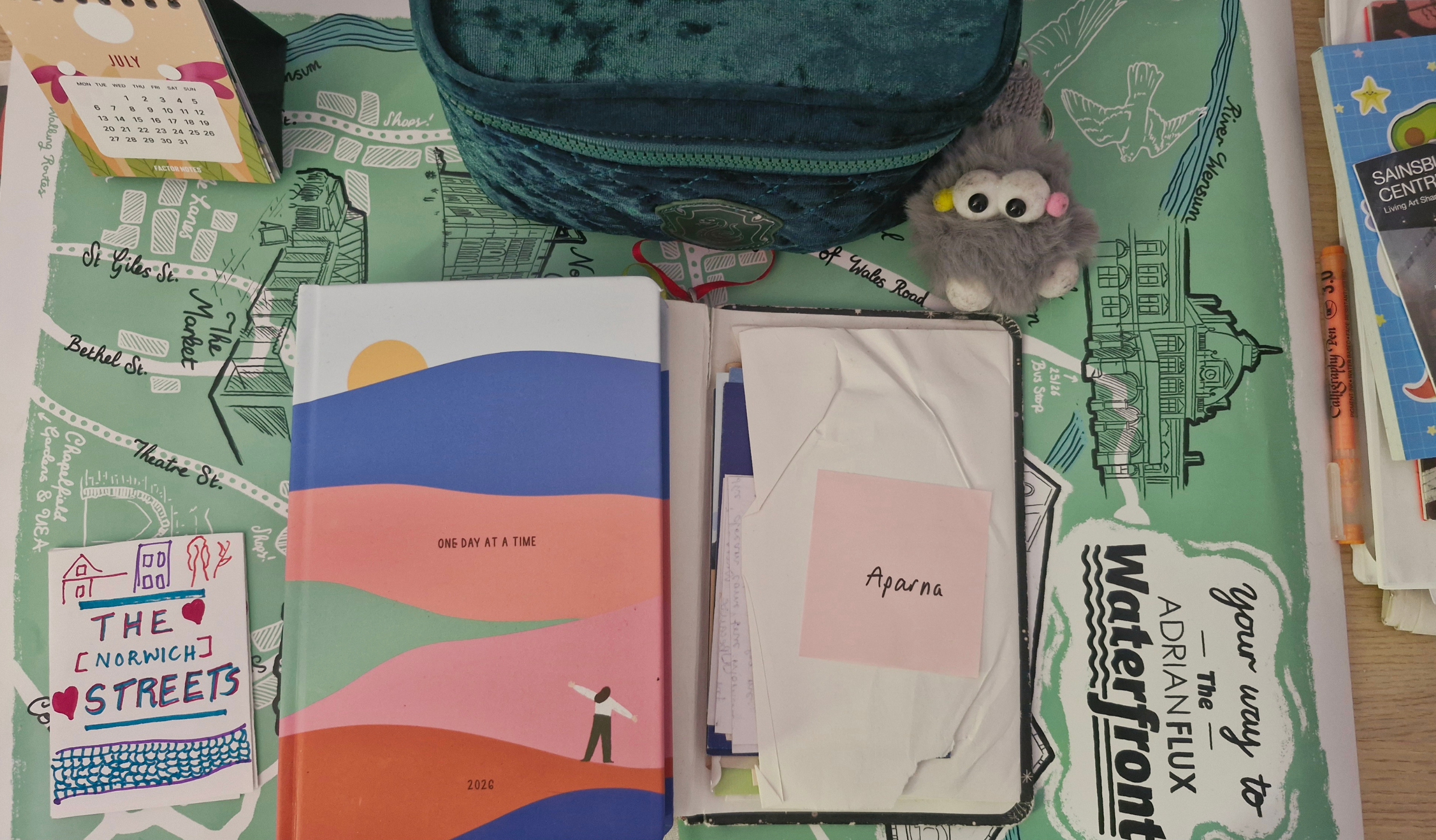
Image Credit: Aparna Shiva




Leave a Reply