
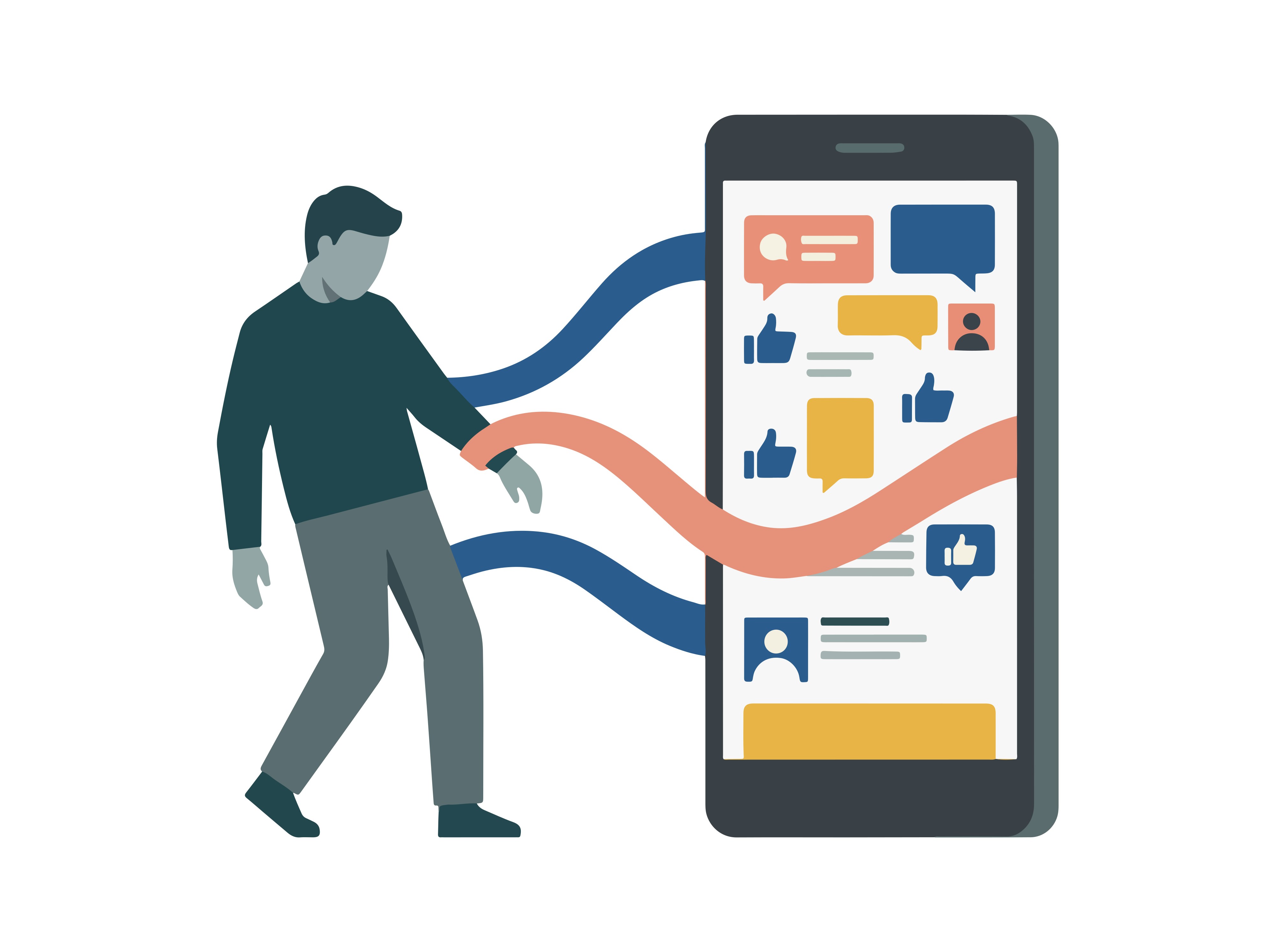
Social media companies are exploiting our time.
As my niece comes up to the age of 6, it worries me that for many, the famous “iPad kid” has become a normalised part of life.
Recently, this norm has come under fire after a landmark court case in the United States. Meta was found guilty of incorporating addiction as a feature of their platforms, agreed to pay the equivalent of £13.3 billion to consumers across the United States.
This has restored hope for me that change is possible.
Now law firm KP Law is expected to take similar action in the UK.
Anyone who has lost a whole morning doomscrolling on their phone will know the addictive nature of these platforms.
As part of the first generation that grew up with smartphones, I was in the middle of the transition. Others and I have seen the similarities between tech companies and the tobacco companies before them. Both denied that their products were harmful.
For this reason, it is important that we reflect on the impact that social media has had on our social lives, our childhoods, and our mental health.
Features such as personalised algorithms and notifications with infinite scrolling that employs the same psychology as a slot machine.
Is it any wonder that many of us find it so hard to put down?
The company’s main interest isn’t social connection.
It is profit.
I often come back to this line that I heard once: “If a product sells itself as free, you are the product.”
In Meta and Google’s case, more time on their platforms equals more advertisement revenue. Unfortunately for us, these billionaires are profiting from us.
The head of Instagram, in a court case in America over the addictive nature of the platform, said, “16 hours of Instagram a day does not strike me as an addiction,” and instead called it merely “problematic.”
If anyone feels as if they were a victim or suffered because of social media addiction, as I have, KP Law is preparing to launch a lawsuit in the UK if you want to find out your eligibility. Or, for the more activist-minded, the group smartphone-free childhood gives the next generation the space to have a childhood without the hook of smartphones.
The more people who take part, the more likely the government is to be forced to legislate change that will transform social media for the better.
Image credit: Maulana Ahmah, Unsplash




Leave a Reply