
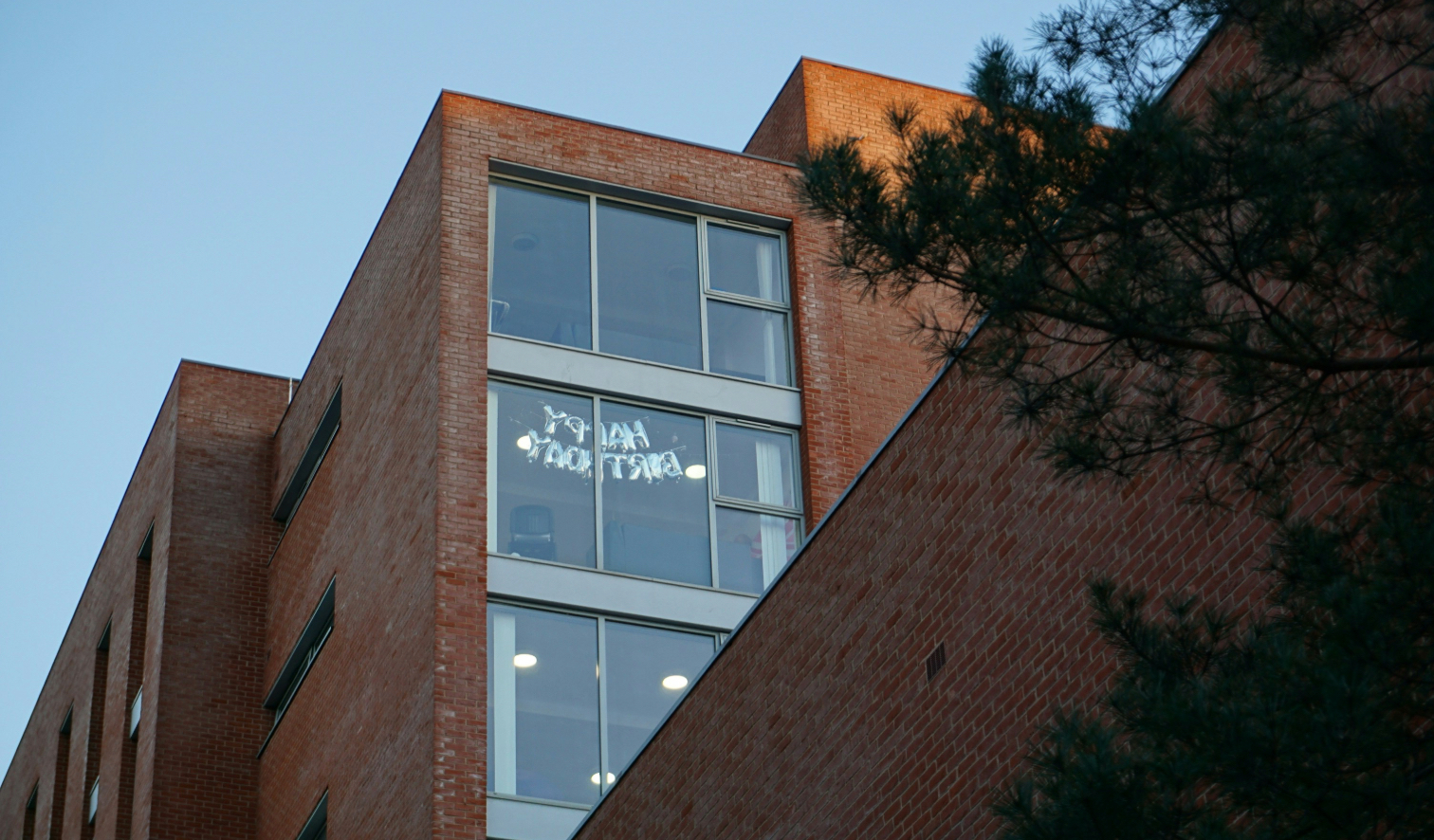
Living at university can teach you many things: independence, confidence at building new connections, how to navigate a new city, but it can also teach you the importance of budgeting and the value of money. For first years, living in halls is an exciting new experience to be out in the world on your own, however it is an expensive decision. Do you know how much halls actually cost?
The post A-level summer is all about getting prepared to live in halls for most students. Before even moving in things like bedding, kitchen equipment, toiletries, cleaning supplies, and storage boxes all have to be bought. These are the kinds of costs that are not necessarily included in moving into halls – most people think about rent and bills. Many students get part-time jobs to cover their living costs, because the government student finance doesn’t cover rent fully for most people.
Keiron, a second-year student, lived at home his first year of uni, trying to save money. “It felt like I saved a lot of money… although I did spend money on the train I still believe I saved myself about £3000.”
For second year, he is house sharing and realised “there are so many things I had no idea I had to buy, for example a shower mat”.
He says “its basic things like that you don’t think about before you move into a new place”. Shower mats, caddy’s, and even flip-flops are some of the hidden costs when moving into university which many students feel unprepared for.
Once moved into your halls, there are more costs to consider like laundry, replacement keys and fobs, cleaning and damage charges, parking fees, and buying things the room does not provide. Even decorating your room can become expensive, in 2023 UCAS found that on average students were spending £66 a week on ‘lifestyle’ items. This included posters, plants, cushions etc – things to make the place feel more like home.
Universities like UEA have a range of living options to try and accommodate to different incomes, but what does this pricing really say? En Suite Chrome and En Suite Barton/Hickling are the most expensive uni accommodations at £209.50 per week for 2026-2027. Facilities include an en suite, multiple mirrors and lights, a desk and chair, and a large kitchen with modern appliances. A yearly average would be £8590 for this coming academic year, whereas last year was even more expensive – £8810. The lower price shows how the uni is trying to uphold more reasonable prices for people to afford it.
Paige, who lived in halls for first year paid around “£200 a week. My room was okay, but the shared spaces like the kitchen lacked facilities and missed basic things like an oven and a washing machine.”
She was unaware of hidden hall costs like laundry and cleaning fees, and there were many maintenance issues including “poor plumbing systems which meant the sink would constantly break”.
She stated, “the place I lived at was not worth £200 a week”.
Experiences like this can show how university accommodation can be hard to navigate, and with the amount of money being spent can create a nervous environment for students. Halls are accommodative but can also have many hidden expenses that people are unprepared for.
The accommodations office of UEA responded to our query of how students’ budget for uni and prepare for costs they may not have thought about. They “encourage students to make use of the budgeting support” available, and “keeping track of of spending can help students manage their money confidently and effectively.” While they don’t directly acknowledge university pricing and how halls is a source of revenue for them, it is clear the university has schemes in place to help anyone who may be struggling.
Weekly maintenance is carried, with qr codes and schedules to make students aware, but some complained that reported issues took time to fix.
But just because it can be expensive and difficult to navigate, don’t rule out university accommodation. Just be fully aware of all the expenses and risks that are involved.
Home Is Where Community Is
Moving away from home for university can mean leaving behind more than family. For South Asian students arriving in Norwich; familiar food, music, language and community can feel much further away. There isn’t just one group of South Asians but more of a network of different communities within a main one. You have Bengalis, Punjabis, Pakistanis and so many more, with all different foods and culture and traditions. As the South Asian student population at UEA grows, students are creating new ways to feel at home.
For many students, starting university means leaving behind the people, places and traditions they have grown up with. For South Asian students, that can also mean finding themselves further away from the cultural communities that have always surrounded them. It can be hard moving away from such a close-nit community, but Norwich is growing with its diversity.
Norwich is an increasingly diverse city with a population 149,154 with around 7% being Asian and increasing and projected to be higher in the future. While this doesn’t compare to Britain’s larger cities like London or Birmingham, there are still groups around.
At the University of East Anglia, that community is growing.
In 2025, Sponsor Record reported that 9.7% of UEA students were Indian, with the figure growing this year. This may seem like a small amount, but the society is growing. Alongside this, societies including the UEA Indian and Hindu Society have created spaces where students from different backgrounds can meet through shared culture, religion and experiences. They are welcoming of anyone who wants to learn more about South Asian culture. Bollywood lessons, sharing food, trying to speak the language and making new friends are the foundation of these societies to bring some sense of home.
But what happens when you move somewhere where those familiar communities aren’t quite as visible?
For some students, the answer is to create their own.
The UEA Indian Society and Hindu Society are among the groups helping students find a sense of community away from home. From social events to cultural celebrations, they provide an opportunity to meet people who may understand the experience of growing up within a South Asian household.
And now, that connection is moving into one of UEA’s biggest student nightlife spaces.
On October 13, the LCR hosted a Bollywood event — the first of its kind at the venue. A poll results show that 55% who answered voted they would be excited to attend the new Bollywood night while 45% were not so keen. These numbers are useful to show how students are willing to be involved with other communities as well as feel more at home. 400 was the venue capacity and 351 tickets were sold – as commented by the SU.
For some students, it may simply be another university night out but for others, it represents something more.
Bollywood music is already a major part of South Asian culture, and bringing it into a mainstream student venue could offer students an opportunity to celebrate an aspect of their identity in a familiar university setting.
Amin Jawrawala is the event organiser, and he noticed there was a gap in the party culture for the South Asian community.
He felt “there was an opportunity to bring something different to the students’ night life experience.”
The purpose of the night is to “create a space where south Asian students connect with their culture and enjoy music they relate to”.
As the number of South Asian students increases, so too may the demand for spaces where culture is not something students have to leave university to experience.
In Norwich, students may have to look harder for those connections, but perhaps that is what university communities are beginning to change.
The Indian Society, Hindu Society and events such as the upcoming Bollywood night offer different ways for students to find familiarity while also introducing their culture to people who may not have experienced it before.
For a South Asian student, that could mean finding someone who understands the food their family cooks, recognising a song playing across a crowded dance floor, or simply meeting somebody who knows what it feels like to miss home.
Home, after all, doesn’t necessarily have to be a place but being with people who are similar to you.
Image credit: Sebastien Devocelle on Unsplash



Leave a Reply