
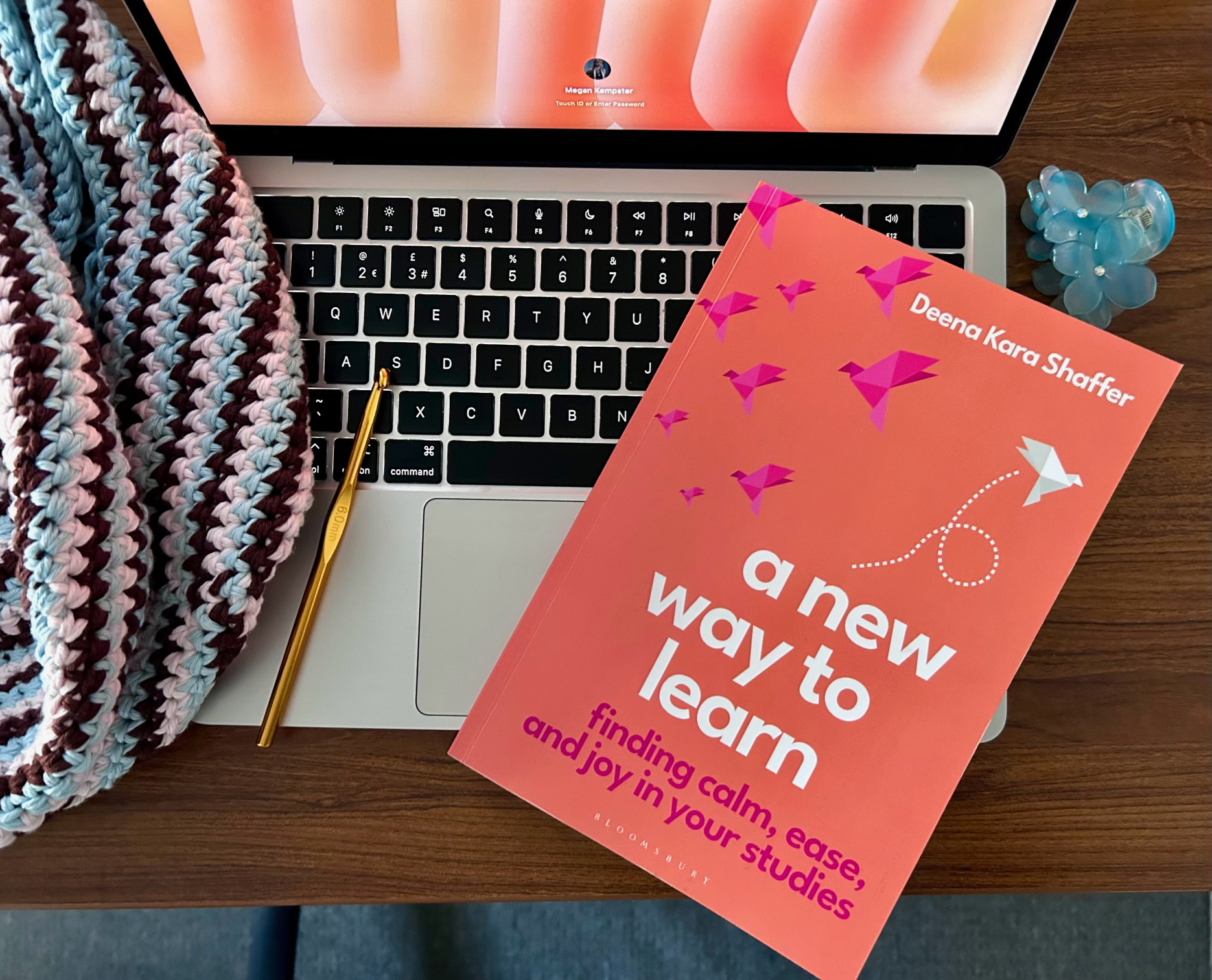
After reading this in one day, I was surprised by how much I enjoyed it.
In an attempt not to sound too pessimistic, I have always doubted study guides’ efficacy; the few I’ve read have often made me feel worse about my study process and how I approach learning. Shaffer’s book felt as though I was having a conversation with someone who truly cared and wanted to help.
It is so often thought that if a student isn’t exhausted, they aren’t doing enough. There is always more they could be doing. Shaffer reassures readers that sometimes more is less and that they are not robots; rest is necessary.
With a holistic approach, she helps readers to wrestle with time, disempower old study habits and find motivation all while maintaining their authentic voice and dreams. She even includes recommended readings and TED Talks at the end of each section for further help beyond her pages.
Everyone should read this guide at some point in their academic journey; I found it late, but I will definitely be using some of the methods as I continue through my final year at university, especially when writing my dissertation.
Simple yet effective methods like finding separate physical academic habitats for different types of tasks or even just stopping and acknowledging what kind of stuck you are, e.g. fog or fatigue. Even just taking the time to learn about your four flow states throughout the day in order to be the most productive version of yourself.
The guide also tackles common academic myths: hobbies aren’t avoidance, and short naps aren’t laziness; both can benefit the study process. They restore cognitive function and improve performance.
Of course, what works for some may not work for others; no one is the same. And while there is no universal formula, Shaffer’s guide covers as many variables as I’ve ever seen.
As someone who finds it difficult not to think about a million different things at once, I found the working with a wandering mind section incredibly helpful. The parking lot and thread methods will now be a part of my everyday life.
Also, the student voice parts in this guide not only help to see these methods in action but also reassure readers that they are not alone in their struggle. This book builds community and oozes care. Thank you, Deena, for changing the way I look at studying.
Image credit: Megan Kempster




Leave a Reply