
Among the issues of our world today, few are as pressing as the global climate crisis – the looming threat that hangs above and below our heads. It may even place you in fear and awe when you are reminded of how wild and complicated things can get, the anxiety of unpredictability.
But remember, when challenges on varying scales arise, solutions (short- or long-term, in big or small ways) may blossom and thrive.
For years, as society has become increasingly climate-conscious, there have been many efforts to tackle the climate crisis. For instance, adopting sustainable habits, campaigning for more environmentally friendly initiatives, or supporting pro-environmental causes.
Aside from the everyday efforts we tend to hear about – where else are we going from here?
Amazingly, scientific researchers have been making new discoveries and proposals, both wacky and wonderful… Apparently, through holding disco parties for corals, printing cookies from plastic, and judging our shopping choices in virtual reality (VR).
So, here are my top 3 ways for how scientists have been tackling the climate crisis:
- Deep-Sea Disco (“UZELA”)
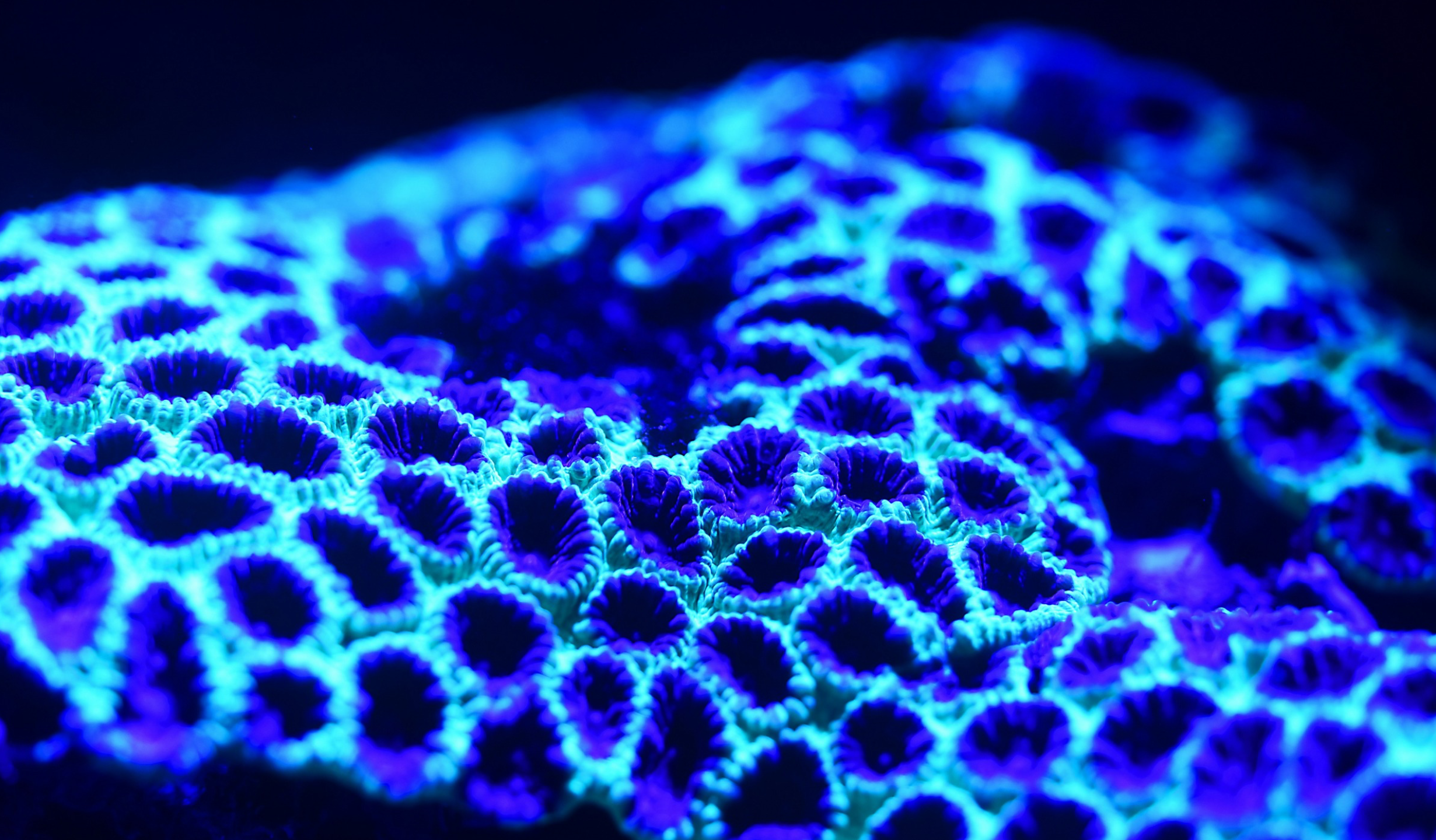
This first development relates to safeguarding the ocean’s coral reefs, our “bastions of the seafloor”, and their current “coral bleaching” crisis.
This involves the corals expelling algae (which help maintain nutrients) from within their bodies, triggered by the stress of extreme heat.
According to the U.S. National Oceanic and Atmospheric Administration (NOAA), a 4th global mass coral bleaching event occurred from 2024 to mid-2025, affecting 84% of the world’s coral reefs.
Unfortunately, as their numbers dwindle, so do their benefits, including, but not limited to, safe havens for marine life and natural coastal defences for human lives. Therefore, it is important that we continue to take care of their remaining kin or even encourage regrowth.
To brighten up the mood, researchers from The Ohio State University (OSU) (led by Professor Andréa Grottoli) have developed new light-emitting technology to help restore corals, growing their food by bestowing them the “life of the party”.
This dazzling device is known as the Underwater Zooplankton Enhancement Light Array (UZELA). As the name suggests, it is a submersible light that may increase zooplankton concentrations, which in turn gives corals more opportunities to feed.
With only a single lithium-ion battery, it can be deployed at a site for up to 6 months at a time. Then, for one hour per night, the device’s LED lights come alive. Illuminating the seafloor, these zooplankton are subjected to a daily disco, making them groove for a better tomorrow.
Though this solution is more short-term (not directly addressing the root cause of “coral bleaching”), it does frame the situation in a positive light.
For now, researchers are continuing to improve the technology’s scalability, ensuring many coral reefs get a chance to experience the brilliant festivities for themselves. Hopefully we can “sea” these corals flourishing one day!
- A Baker’s Dozen of Plastics (“µBites”)
Next, this development addresses our global plastics problem, which contributes to landfills and worsens our atmosphere through toxic gas emissions.
Research from the Organisation for Economic Cooperation and Development (OECD) estimated that in 2019, plastic products (throughout their life cycles) accounted for 3.4% of our global greenhouse gas emissions. 90% came from the production and conversion process from fossil fuels. Naturally, this has raised concerns and led to various developments in plastic waste management.
Most recently, a group of researchers at Southern Illinois University (SIU) developed a promising way to sustainably remove and upcycle plastic (and even agricultural biowaste such as corn plant leaves).
Dubbed “µBites”, these cookie-shaped creations are supposedly made from common plastics (“polyethylene terephthalates”, or PETs).
Through the fancy technique of “oxidative hydrothermal dissolution” (adding water and oxygen, with a little heat and pressure), these plastics are broken down into microscopic pieces that are then fed to yeasts. They are then reformed into food ingredients (e.g., proteins, fats), with fibres, starches and sweeteners added into the mix. Afterwards, they can then be 3D-printed into their brand-worthy “µ” shapes.
So how did we even get here?
Professor Lahiru Jayakody reasons that “Because plastic is carbon and food is carbon”, a door to upcycling plastics into food has opened. Initially made to help people in dire circumstances (e.g., rationing for deep-space exploration and disaster zones), scientists are now conducting taste tests and experimenting with different yeasts to make things deliciously sweet but optimally nutritious for everyday consumers. Munching our way through the climate crisis doesn’t sound so bad!
- Your Groceries [Let’s Try To Be Sustainable Edition] (“MELTDOWN”)
For the final development, we touch upon the importance of sustainability and its disconnect with our daily routines. Realistically, everyone may have some aspect of their lifestyle to critique, whether it has to do with sustainable habits or something completely unrelated.
But it begs the question: what consequences do certain actions hold?
Well, within the climate context, a group of students from the National University of Singapore created a virtual reality (VR) game named “Meltdown” to help communicate the action-to-impact risks of being unsustainable.
As players plug into their retro Meta Quest VR headsets, they are transported into a simulated scenario. This supports the game’s goal: “Gather ingredients, cook a meal, and prove that a zero-waste future is possible”. Players are asked to peruse the grocery shelves and clean up their kitchen scraps. When a player makes an unsustainable chain of choices, they are sent to a “GAMEOVER”-type scene where they face the projected consequences (e.g., global warming).
Conceptually, this development teaches players that even the smallest decisions can lead to compounding ecological consequences. It reminds us that we need to do our best to prevent the world from “melting down” in the end, by our very own hands.
With these 3 creative, scientific breakthroughs, our fight against the climate crisis certainly looks wacky. But it teaches us that climatic innovations don’t have to be sensible, especially if they work! Thinking outside the box could save the world as we know it.
Image credit: Unsplash


Leave a Reply