
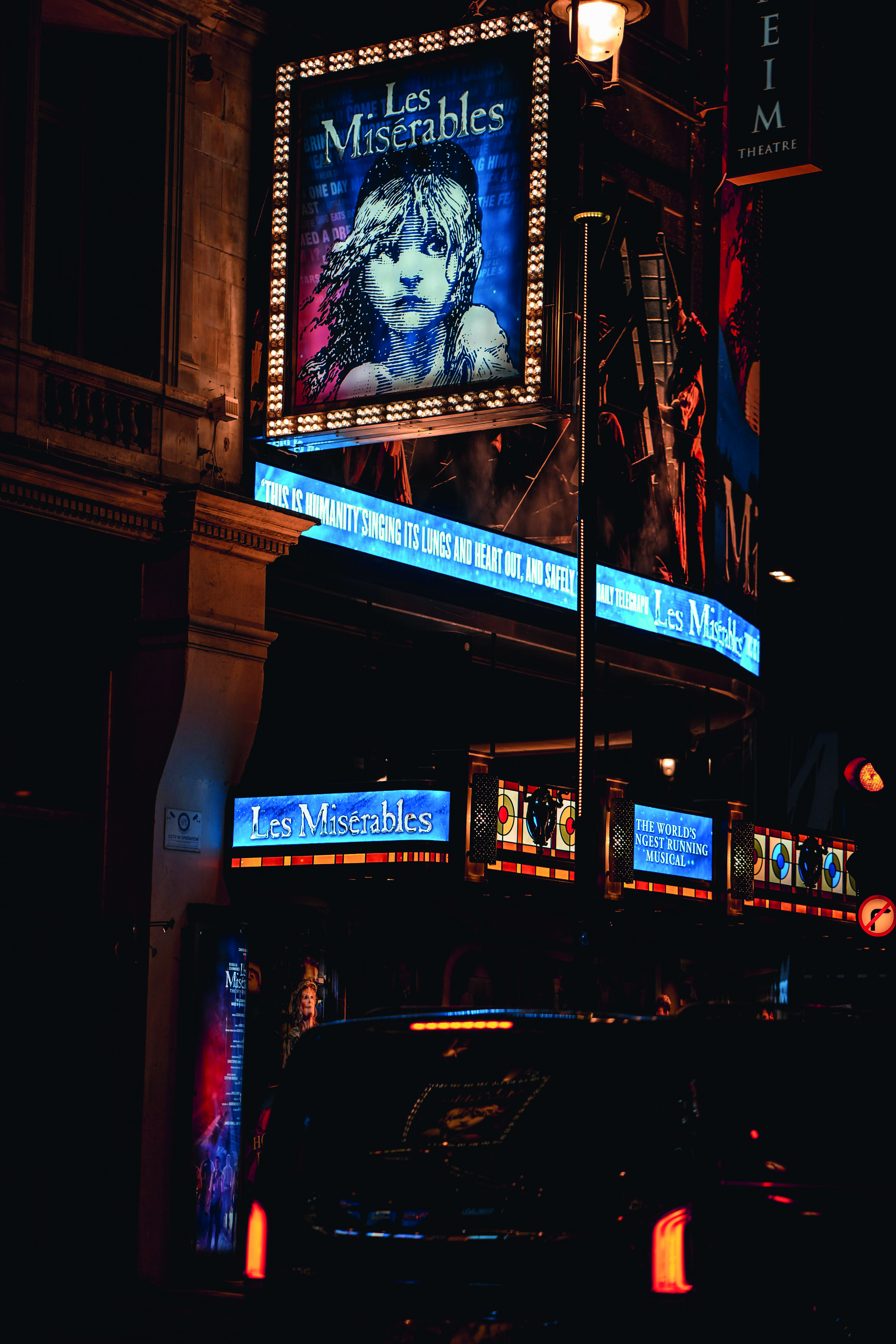
Les Misérables, an astounding musical, has once again captured the hearts and minds of its audience. As the second longest running musical in the West End, Les Mis has had over 13,000 productions since 1980. The current Sondheim Theatre cast has created yet another captivating production, retaining its magic and impact even after all these years; a tragic tale depicting how even in times of hardship and oppression, moments of passion and community continue to enrapture audiences.
As no connoisseur of musicals, I must confess I had some apprehensions about Les Mis. Yet as I took my seat and the lights darkened, I knew it was going to be a jaw dropping spectacle. Once the music started it did not cease until the curtain fell again. It was the speed and fast paced movement from scene to scene that first stood out, the audience feared missing even a single second. The characters immersed the audience into the world of the play. Hence the speed of the performance was necessary, not just to forward the plot, but also to contrast with the slower mournful songs accompanying the timeless moments. I dared not breathe in these moments, to not break the stillness and silence that the cast created. This stillness hung in the air like a veil, further establishing an intimacy with the performance.
Both Javert, played by Stewart Clarke, and Jean Valjean, played by Peter Jöback, dominated the stage whenever present. Javert’s height and rigid posture, along with his long dark hair created a stark contrast with the smaller, grey haired Valjean. When both characters occupied the stage, they created a true battle of harmonies as they fought for control over the space and plot. The scene in which Javert attempts to arrest Valjean, but releases him for Cosette’s sake, particularly illustrated this compelling battle, as the two men not only strived to fight and pull against each other physically, but also vocally, demonstrating the skill and power behind their voices.
The constant sound throughout the musical, coupled with its quick pace, made the occasional silences all the louder. One moment of silence that stood out was the death of Amena El-Kindy’s Eponine in the second act, a much bloodier half than the first. It was the stillness of Eponine’s death which morbidly prepared the audience for the slew of deaths to come. The heartache that this scene produced, enhanced by the lighting, only fuelled the audiences’ and characters’ rage for the next flurry of deaths. Soft light to oppose the hasher white light, shot through the stage creating an “x” upon the characters’ heads as they were shot and killed. This allowed each death to be individually and equally acknowledged as they died caught in this light. The very first time this target was created, there was an audible gasp in the audience, as little Gavroche, played so well by the young actor Elliott Norrington, was killed upon the highest point of the barricade. Where Eponine’s slow demise lead us into the brutal and harsher deaths of the rebels, Jean Valjean’s death left us with a cathartic ending.
Les Misérables was a truly exceptional experience, and one I hope I can experience again. With the last song, the characters broke the fourth wall and commanded the audience to rise, creating a moving ending to an intense performance. And yet ironically, this revolutionary play which advocates for an end to exploration of the proletariat, has been turned into one of the most expensive commercial shows on the West End, only fuelling a capitalistic system.
Image: Unsplash


Leave a Reply