
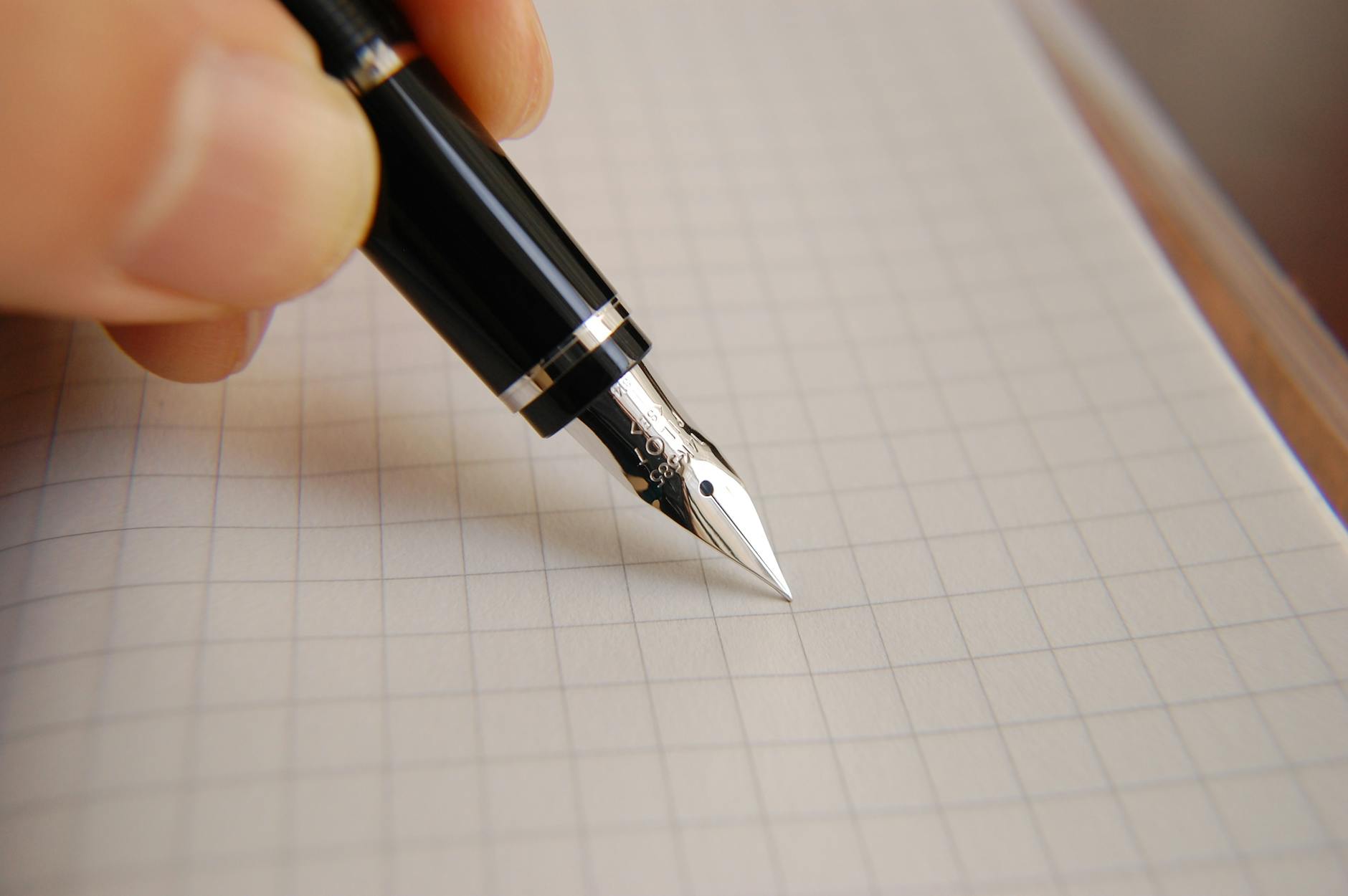
When you sit in a lecture theatre, how many people around you do you see making notes with a pen and paper? From my experience, it is one or two at the most and, even more bizarrely, this is for English Literature. It is both amazing and concerning to see in a subject centred around the (originally) written word.
I have always preferred a pen and paper for numerous reasons, the most important to me being for the joy in physical handwriting. There is something more rewarding about penning each individual letter, rather than pressing a key that produces the letter for me, that makes me feel that it is truly my baby. And it is physically here with me, cradled in my palms, in the present. I am aware of the irony of this article’s topic alongside the reality that I have had to type it but, as many students will understand, typing is a no-brainer in some cases. It is just more practical to type essays and other hefty projects, not least because the word count is calculated for you. Yet, as my sentences form on the screen before me, I feel like there is something missing.
A highlight for me, in studying English Literature, is seeing authors’ handwriting, albeit from digitalised manuscripts sometimes. Seeing the distinct curls and flourishes of Hester Pulter’s beautifully handwritten poem ‘Why Must I Thus Forever Be Confined’, circulated in manuscript form, provokes a whole new level of appreciation of both the poem and her that Calibri, Times New Roman and the like will never be capable of inspiring. Handwriting is human. It is a reminder that the writer is (or was) real and human. This connection is kept alive in the retaining of a handwritten letter, recipe or even shopping list of a loved one no longer with us. It is also why, though the idea seems to be fading away, a celebrity’s autograph is far more valuable to me (and, just to be clear, I don’t mean for financial gain) than any selfie.
For large, word-limited projects, I give in to the practicality of Microsoft Word. But writing with a pen and paper makes me feel alive. At the end of the day, writing is a life skill and will remain so as we enter new stages of the digital era; we will need a Plan B when the file that should have been backed up on OneDrive is nowhere to be found or the computer has a complete meltdown, afterall. In an evermore digital world, I don’t think we should be so hasty in letting go of a skill that represents our humanness.
Image: Pexels


Leave a Reply