
Nicolas Ruston, born in Epping, Essex in 1975, is an artist and founder of the advertising agency called Robot Mascot. He works locally in Norwich as well as in London after a three-year apprenticeship under sculptor John Warren and after graduating from De Montford University. He is mostly known for his silicone and mixed media works exploring artificial manipulation. He was even nominated for the 2009-2010 European Art Prize and is exhibited internationally across multiple private and commercial collections.
As summative season looms and the academic year 2023-2024 slowly draws to a close, ‘endings’ are certainly on everyone’s mind, even for those who aren’t looking forward to graduating. In the summer of 2016 Ruston crafted an abolutely incredible collaborative project with an intense focus on ‘The End’ and it raises some very intriguing thoughts about the whole ordeal.
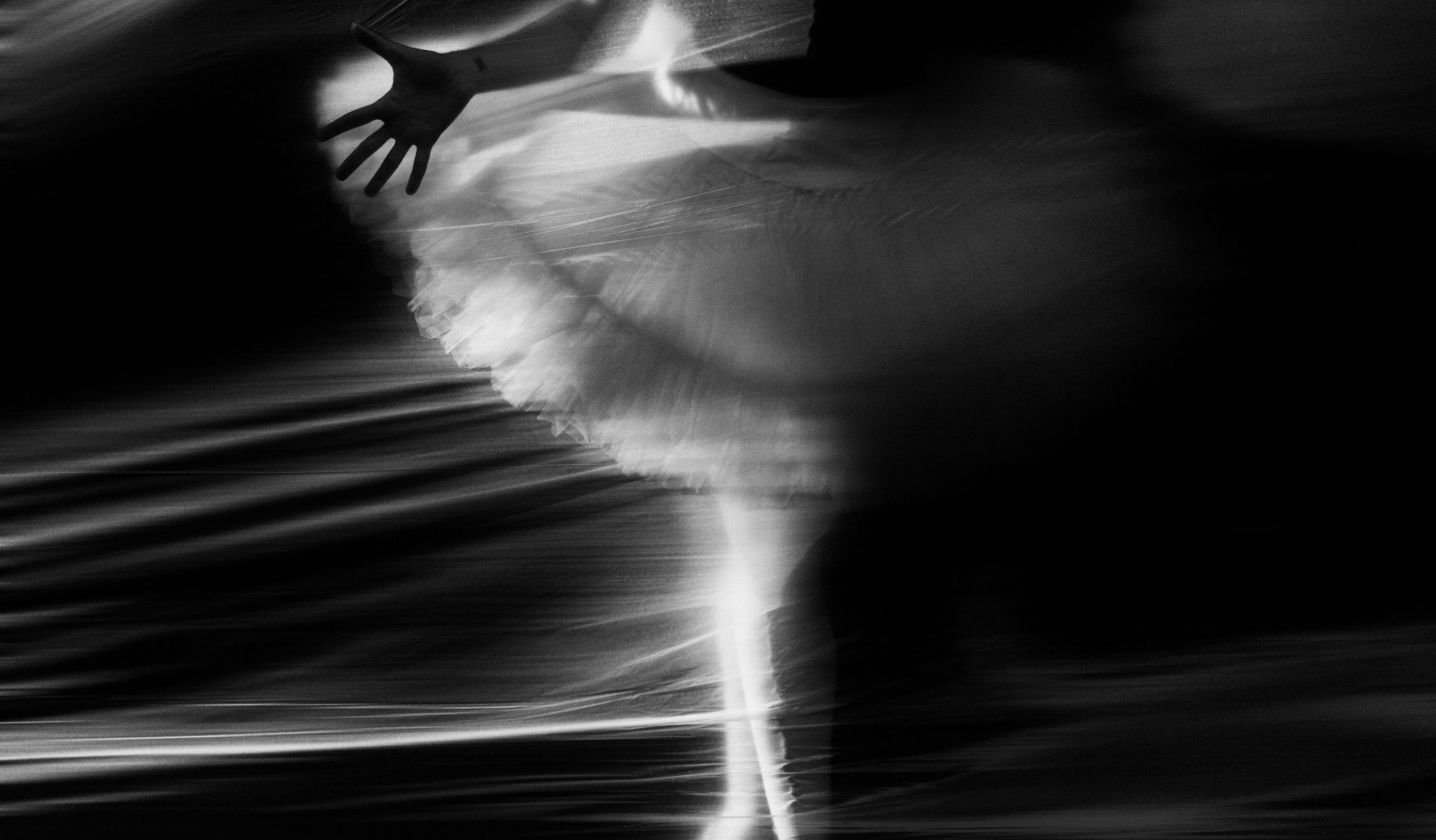
The project involved Ruston creating fifteen different paintings which are all, in his own words, “trapped behind a frame; the figurative element suffocating behind its End.” Writer and editor Ashley Stokes (born in 1970 in Carshalton, Surrey and who has actually got an MA in Creative Writing from UEA) then commissioned and curated fifteen stories from fifteen different writers to go along with each painting. The writers had complete control over their interpretation of the paintings and Ruston was not able to influence their methods of decoding his work.
Ruston’s paintings themselves are quite ambiguous, although his intended genre is occasionally implied in the typography or figurative nuance. The entire series of paintings echoes the look and feel of stills from the ending title sequences seen more commonly in older movies. It is a very unsubtle choice, as every single painting literally spells out ‘The End,’ reminding us of an age in which it was necessary to explicitly mark an ending.
The final presentations of ‘The End’ included an exhibition containing the wall-mounted paintings on canvas of course, as well as the final lines of the short stories. However, ‘The End’ was also turned into a book: The End: Fifteen Endings To Fifteen Paintings published by Unthank Books in August 2016 and the whole project was even turned into performances and book launches. Ruston’s blending of different artistic mediums to not only breathe life into the project, but to then show it to the world is incredibly creative and a fairly unique idea, certainly one that is not seen in mainstream media particularly often. It’s interesting to note how the differing forms can amplify differing aspects of the same concept, sometimes presenting it from an entirely differently angle and sometimes mirroring it in an identical manner. In fact, it was indeed Ruston’s intention to examine the notion of ‘The End’ by exploring how an art form can operate through different media and the changes that take place when one group of artists interprets the others’ form.
For the duration of ‘The End’s’ display, the writer’s interpretations of Ruston’s artworks were the sole ‘truth’ guiding the publics reflections and thus on some level, influencing and manipulating their opinions. It is truly curious to think how many of our ideas are our own, how many are original and how many have been tainted or marked by all the external information we consume. This is not to say, however, that all suggestions or inferences form outside sources are negative ones. For instance, the paintings being both the start and end of the stories suggests in a way that endings have a very cyclical nature.
An ending is perhaps just a new beginning, and what a brilliant message that is to end this year with.



Leave a Reply