
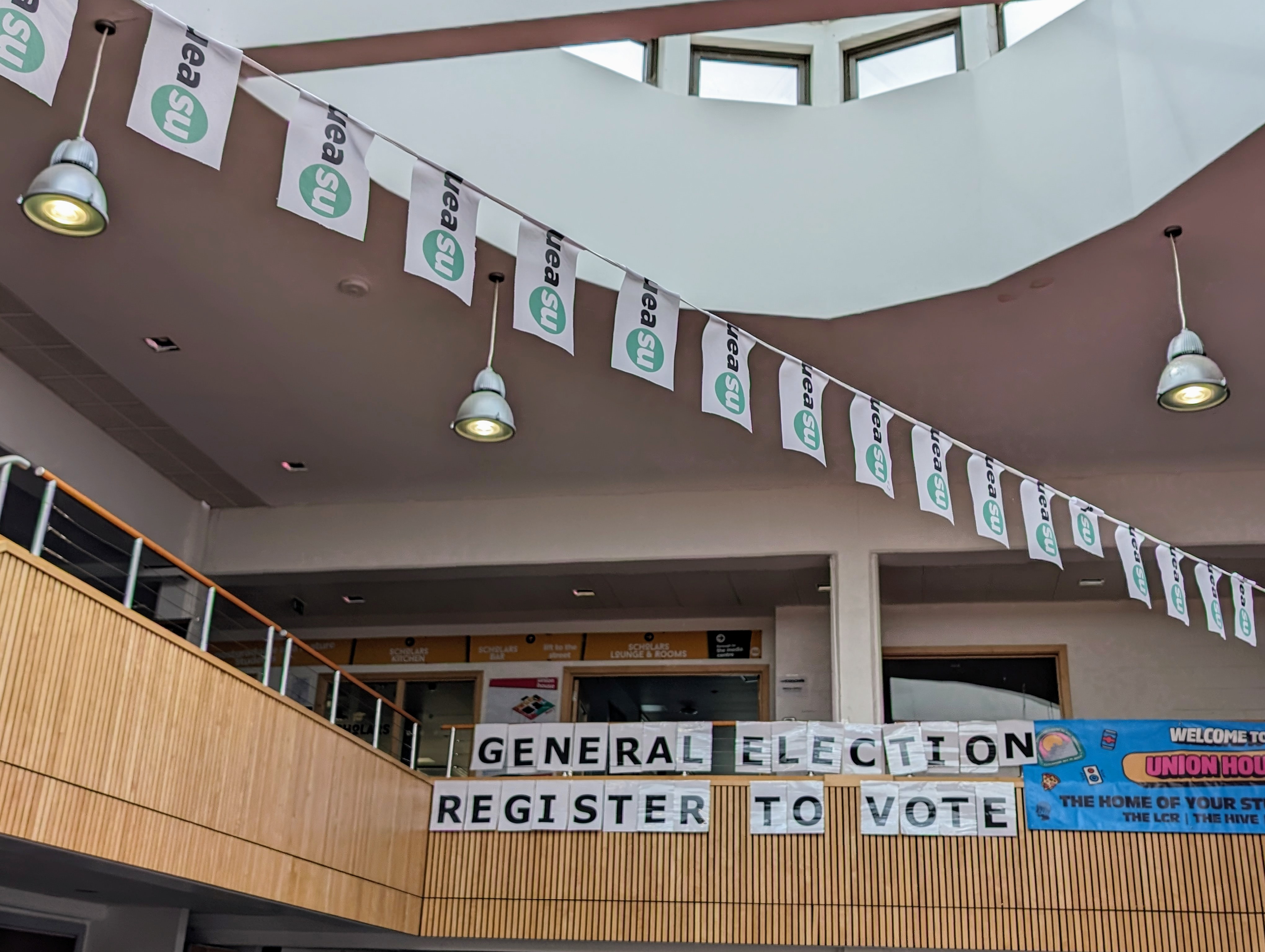
This general election, I’m the least enthusiastic I’ve ever been.
I voted for the first time on 6th May 2010. I was a year too young to vote in 2005, so I was going to savour this.
‘Iron chancellor’, Gordon Brown, had been exposed as a rather rusty Prime Minister; David ‘hug a hoodie’ Cameron offered a new, green, husky sledge-riding conservatism; and anyone under 25 would assure you that “guaranteed” abolition of tuition fees and the legalisation of recreational cannabis had won our vote for the Lib Dems and a new, young disruptor of the status quo by the name of Nick Clegg.
The Coalition Government, the tripling of tuition fees, and a decade and a half of bitter Tory mismanagement weren’t what I’d imagined as I knocked on every friend’s door between my house and the Polling Station. This, my first foray into electoral politics, really did set the tone for the next 15 years.
In the first draft of this article, I called for you to think tactically about your vote, to think where you can best kick the Tories in their proverbial [insert favoured body part here], and how to ensure a Labour government in No.10 Downing Street. This final version has taken a different tone, however.
The Tories are still mad, bad, and dangerous to have in charge of anything more important than their own thoughts; they clearly don’t deserve to be within a mile of public office. But I am also now convinced that Labour is as bad, just with extra steps and the occasional smile.
Since the announcement of the general election (4th July), it would seem all the worst impulses of our Prime Minister-in-waiting, Keir Starmer, have been unleashed with new vim and vigour.
We’ve seen the Party place a self-described “Zionist Sh*tlord” and open, paid lobbyist for Israel by the name of Luke Akehurst in North Durham, which is one of the safest Labour seats in the country. At the same time, Dr Faiza Shaheen has been barred from re-running in her constituency for, among other things, sharing a clip of The Daily Show with John Stewart critical of advocates of the Israeli state. This is at a time when a majority of the British public and a vast majority of the Labour Party blame Israeli Prime Minister Benjamin Netanyahu for the continuation of the violence. As the party blocks Lloyd Rusell-Moyle and Jeremy Corbyn from re-standing in their constituencies for the Labour Party, it also insists that Natalie Elphicke, one of the most rabidly right-wing Tory MPs in Parliament is a “good fit” for the party under Keir Starmer. All of this should make even the staunchest “political pragmatist” reflect on how and for whom our government will be run for the next five (likely ten) years.
Unlike the American system, there are little-to-no ‘checks and balances’ in the British political system. Much like the monarchical system it was birthed from, the will of the sovereign is the law. Rather than one hereditary, sovereign like in the days of yore, now Parliament (or, more accurately, the Prime Minister) is sovereign.
If current polling is to be believed, Starmer will have a majority of over 190 seats. For those who don’t live and breathe electoral politics – this would be an unprecedented level of control of parliament. John Major won in 1992 with a 21-seat majority. Margaret Thatcher’s first election gave her a 43-seat majority. Even Tony Blair only got a 179-seat majority.
It took 8 years before Blair and New Labour were defeated in a Parliamentary vote. That’s 8 years of anything Tony Blair wanted being done the way Tony Blair wanted it done – no need to compromise, negotiate, or reflect on criticism from MPs. Media moguls and talking heads like Piers Morgan and Rupert Murdoch held far more sway than elected and accountable MPs. For them, if you didn’t like it, there were 178 other people to get the vote over the line. Little wonder the Westminster system has been described as an “elective dictatorship” on more than one occasion.
Unlike Starmer, however, Blair had principles that he stuck to. They were bad, short-sighted, and amoral principles, but you knew where you and your government stood. So, what is to be done?
With the collapse of the Tories certain, the political necessity for Labour to “claim the middle ground” by moving to the right is greatly reduced. That said, at the same time, the vacuum created in the space the Tories inhabit will be tempting to some in Labour, the Liberal Democrats, and proto-Fascist parties like Reform. Post-1997, political operative, friend and ally to Tony Blair (and real-world inspiration for Voldemort), Peter Mandelson, was a driving force of New Labour’s shift to the right and responsible for several scandals which saw him resign from the Cabinet (twice). “They have nowhere else to go”, he declared of left-wingers who opposed the Labour Party’s new direction of travel.
Voting Green in those constituencies where a Tory defeat is assured builds pressure on Starmer’s incoming government to throw the left a bone now and then or face popular political unrest. It also increases the visibility of our deeply unrepresentative electoral system (First-Past-the-Post or Winner-Takes-All), which rewards big parties with oversized prizes and punishes small parties with tokenistic voices in parliament. In this election, millions of Green voters are hoping to double their representation to a historic 2 MPs.
Voting is very low effort; the cost/benefit analysis on voting is a massive win for you. It takes an average of 25 minutes from leaving your front door to getting back home again – and is one of the few times that you can have a direct, quantifiable impact on the direction of the country. That isn’t where your engagement should end, though. Democracy isn’t an event every four or five years. We need to engage in activism around us, join groups and unions, go on marches, contact your representatives and be engaged and engaging with the people, community, and events around us.
In my constituency, Norwich North, there is a 92% chance of a Labour win. It would take a hitherto unseen political earthquake to change the likely outcome of this election for me, locally and nationally. But that doesn’t mean that my vote doesn’t count. I’ll be voting against Labour and the Tories by voting Green.
No one is coming to save us. We must save ourselves from the Tories, the Lib Dems, and yes, even from Labour.




Leave a Reply