
With the general election just over a week away, millions of people across the country are scrambling to read manifestos and considering which party to support. Along with housing, the NHS, and the economy, the climate crisis is one of the most important elements of the election. However, the topic has come up surprisingly infrequently in interviews and debates.
But how do we know which party is most committed to mitigating climate change? Don’t they all, to some extent, mention the environment? With 91% of global emissions coming from fossil fuels in 2022, the party’s policies on oil, gas and renewables are the clearest way to decipher which parties are taking the issue seriously.

Source: climatebrief.org
The Conservative Party
While the Conservative party government did publish a carbon budget delivery plan, it was overthrown in a High Court legal challenge brought by Client Earth and Good Law Project. This was primarily due to a lack of sufficient policies in place to cut greenhouse emissions. Under the Climate Change Act 2008, the UK has a legal obligation to fulfil its climate targets, but the plan is not sufficient in cutting emissions. The party have also
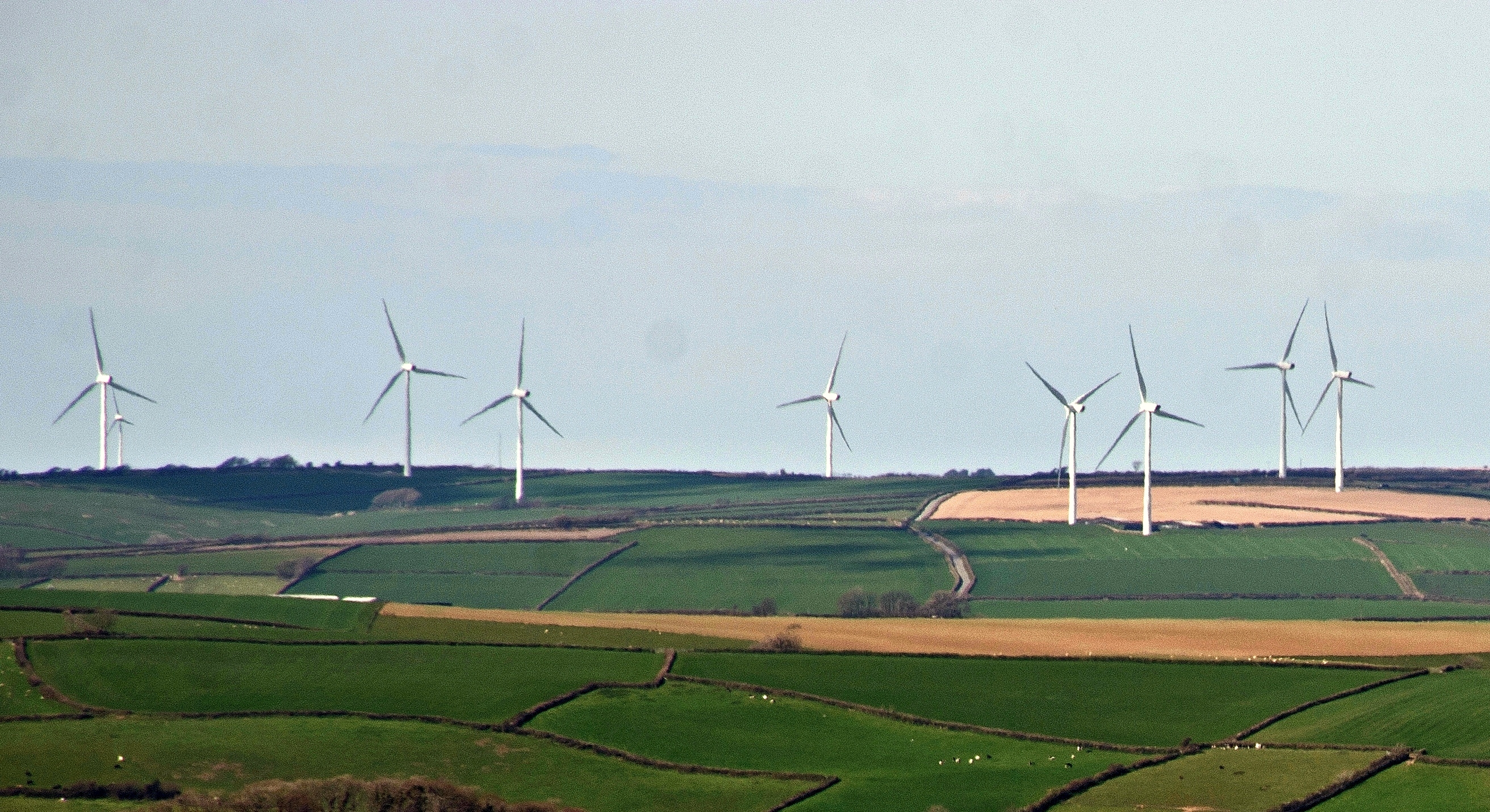
committed, in theory, to decarbonising the grid. However, the party has made the implementation of onshore wind almost impossible, and former net zero minister Chris Skidmore has admitted that these policies alone are costing the public over £5 billion per year; he went as far as saying publicly that he would be forced to vote Labour as a result! Sunak also recently announced that fossil fuel companies will be allowed to extract oil and gas from reserves underneath offshore wind sites, going against advice from the International Energy Agency and causing outrage amongst environmentalists. The party has also restricted the installation of solar panels on British farmland, claiming it will increase food insecurity, despite Alethea Warrington, of climate charity ‘Possible’, remarking this is
“utterly detached from reality”. Continuing to invest in oil and gas while actively hamstringing renewables further increases energy bills for families. The party fails to see that investing in renewables is inextricably linked with this. In 2022, more than 40 billion was spent subsidising energy companies due to high market prices rather than investing in insulation at a fraction of the cost to reduce energy demand.
Labour
Labour’s pledges are perhaps more complicated due to their sometimes-contradictory nature. Starmer’s party has stated it will implement a Green Prosperity Plan, aiming to provide clean power and 650,000 jobs across the country by 2030, and that this transition to clean energy will also “end the era of high energy bills” for British families in the long term. However, despite scientists warning we must rapidly transition away from fossil fuels to clean power by 2030 to limit warming to 1.5 degrees, Starmer has said that “North Sea oil and gas will be with us for decades to come”. Furthermore, in February 2024, Starmer announced a complete U-turn on many of his previous green policies, outraging some Labour backbenchers and environmentalists. This involved the “watering down” of a £28 billion green investment pledge promised for Labour’s first term of government. Starmer claimed it was not financially viable. However, Jess Ralston, an analyst at the Energy & Climate Intelligence Unit, stated, “If we want energy independence and reasonable bills, then we need green investment”.
Liberal Democrats
The Liberal Democrat party have brought the 2050 net zero target down to 2045. While this is better than the targets of both Labour and the Conservatives, it is still too late to limit heating to 1.5 degrees. They have stated that they will remove Conservative bans on solar and wind, expand incentives for household solar panels, decouple electricity prices from wholesale gas prices to reduce bills and maintain a ban on new coal mines and fracking (a technique that involves injecting high-pressure water, sand and chemicals into rocks beneath the earth’s surface to release the oil and gas inside). This is all to ensure that 90% of the UK’s electricity is renewable by 2030. The manifesto, however, fails to rule out new oil and gas licences, leaving us to wonder where the remaining 10% of electricity will come
from.
The Green Party of England and Wales
The Green party have stated that they will achieve net zero as soon as possible and “more than a decade ahead of 2050”. They plan for onshore wind alone to provide 70% of the UK’s electricity by 2030, with offshore wind and solar making up the remaining 30%. They also plan to invest in renewable energy storage capacity, something which no other party
mentioned, as well as stopping all new fossil fuel projects in the UK. They will also reverse previous fossil fuel licences already granted, such as for the Rosebank oil field (the only party to pledge this) and remove all fossil fuel subsidies. Environmental organisations, such as Friends of the Earth and Greenpeace, have said that the Green Party’s environmental
policies are the strongest.
Reform UK
The new alt-right sensation of Reform UK, led by Brexit-veteran Nigel Farage, continues to support policies that actively go against climate change mitigation. The manifesto pledges to scrap ‘Net-Zero’ emission targets altogether, as well as fast-track North Sea oil and gas licences. Despite their assertions that these measures will alleviate the cost-of-living crisis, Greenpeace has said it is our dependence on fossil fuels that has made us so vulnerable as we are “one of the most gas-dependent countries in Europe”. Aside from a few mentions of “reducing single-use plastics”, there is little to no observation of the severity of the climate crisis and what a prospective government of the 6th largest economy in the world can do
about it.
With recent heatwaves killing thousands in Asia, research expecting an ’ice-free’ Arctic at the end of this summer, and UK energy bills soaring due to fossil fuels, the climate crisis is one of the most pressing issues of our time. It is paramount that government policy enables rapid emission cuts this decade, therefore making this election crucial in mitigating climate breakdown.






Leave a Reply to Richard EssexCancel reply