
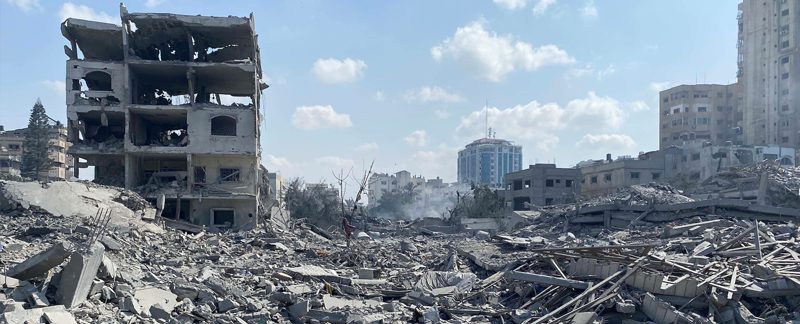
The assassination of Ismail Haniyeh, a top Hamas leader, in late July has dramatically intensified the Israel-Hamas conflict, leading to significant political and humanitarian repercussions in Gaza and the broader Middle East.
Haniyeh, who had led Hamas’s political wing since 2017, was killed in Tehran, a stronghold of Iranian support for Hamas. His death has triggered heightened tensions, especially between Israel and Iran, raising concerns about the potential escalation into a wider regional conflict. Iran and its allies have vowed retaliation, and there are fears that this could provoke further violence involving various militant groups supported by Tehran, such as Hezbollah and Palestinian Islamic Jihad.
The attack took place just hours after Israel targeted a building in Dahiya, a busy neighbourhood in Beirut, Lebanon, on Tuesday evening. This strike resulted in the death of Fuad Shukr, a high-ranking commander in the Lebanese militant group Hezbollah. The Beirut strike followed an earlier incident where 12 Druze children were killed in the Israeli-occupied Golan Heights. Israel has blamed Hezbollah for the attack in the Golan Heights, although Hezbollah has denied any involvement.
There have been concerns that the assassination might disrupt the ongoing negotiations between Israel and Hamas. In response, Hamas quickly appointed Yahya Sinwar, a hardline leader in Gaza and one of Israel’s most wanted figures, to replace Haniyeh. Unlike Haniyeh, who was seen as a relatively moderate leader living in Qatar and subject to pressure from his host nation, Sinwar is believed to be in Gaza, making him much harder to reach and less susceptible to external influence.
Mediators involved in the ceasefire talks between Hamas and Israel are making a final push to revive stalled negotiations as the Middle East braces for a potential Iranian strike on Israel. A crucial meeting is scheduled for Thursday, where Qatar, Egypt, and the United States will present a plan to implement the ceasefire-hostage deal initially proposed by U.S. President Joe Biden in May. However, unresolved issues, including last-minute demands from Israeli Prime Minister Benjamin Netanyahu and the looming threat of military escalation, threaten to derail the negotiations.
What we know about the peace talks so far
In May, President Biden introduced a three-phase proposal, reportedly submitted by Israel, aimed at pairing the release of hostages in Gaza with a “full and complete ceasefire” and the release of Palestinian prisoners held in Israel.
The first phase, set to last six weeks, called for the withdrawal of Israeli forces from all populated areas of Gaza and the release of a number of hostages, including women, the elderly, and the wounded, in exchange for the release of hundreds of Palestinian prisoners. This phase would also see the implementation of a temporary truce. The second phase would focus on the exchange of all remaining living hostages, including male soldiers, for a permanent end to the fighting. In the final phase, a major reconstruction plan for Gaza would begin, and any remains of hostages who had been killed would be returned to their families.
Despite initial optimism from both Hamas and Israel, the two sides struggled to agree on the finer points of the proposal, such as the sequence of the hostage-prisoner exchange, the number of Palestinian prisoners to be released, and the extent of the Israeli military’s withdrawal in Gaza.
Prime Minister Netanyahu has been accused of undermining the agreement, with far-right members of his ruling coalition threatening to collapse the government. This pressure comes despite urging from the United States and the families of hostages to move forward with the deal.
Ahead of last month’s meeting in Rome, a source close to the negotiations revealed to CNN that Netanyahu planned to present last-minute demands, including a mechanism to prevent armed men from entering northern Gaza from the south and the continued Israeli control of the Philadelphi corridor, a key strip of territory along the Gaza-Egypt border.
A senior U.S. administration official mentioned this week that while the “bulk of the work” on the deal has been completed, it is unlikely to be finalised at Thursday’s meeting. Both sides still have unresolved positions on several key issues, with four or five points of contention remaining.
What to expect from upcoming talks
Ceasefire negotiations have emerged from a significant diplomatic initiative led by Qatar, Egypt, and the United States, aimed at ending the war and securing the release of hostages as Iran readies to strike Israel.
The mediators highlighted the critical nature of these talks with an unusual joint statement last week, urging the conflicting parties to resume negotiations. They presented what they termed a “final bridge proposal” to address unresolved issues, although specifics of the proposal have yet to be disclosed.
Israel has agreed to send a delegation to the ceasefire talks, while Hamas has declined to partake in them, instead requesting a plan to implement the proposal put forward by President Biden in July, rather than entering further negotiations.
Meanwhile, U.S. and Middle Eastern diplomats are working to persuade Iran against launching an attack on Israel, which could escalate into a broader regional conflict. Both Iran and the U.S. have confirmed that communication channels between them remain open through intermediaries.
Note: All facts, figures, and other information are correct to the date of publication.
Photo credit: Rawpixel.com




Leave a Reply