
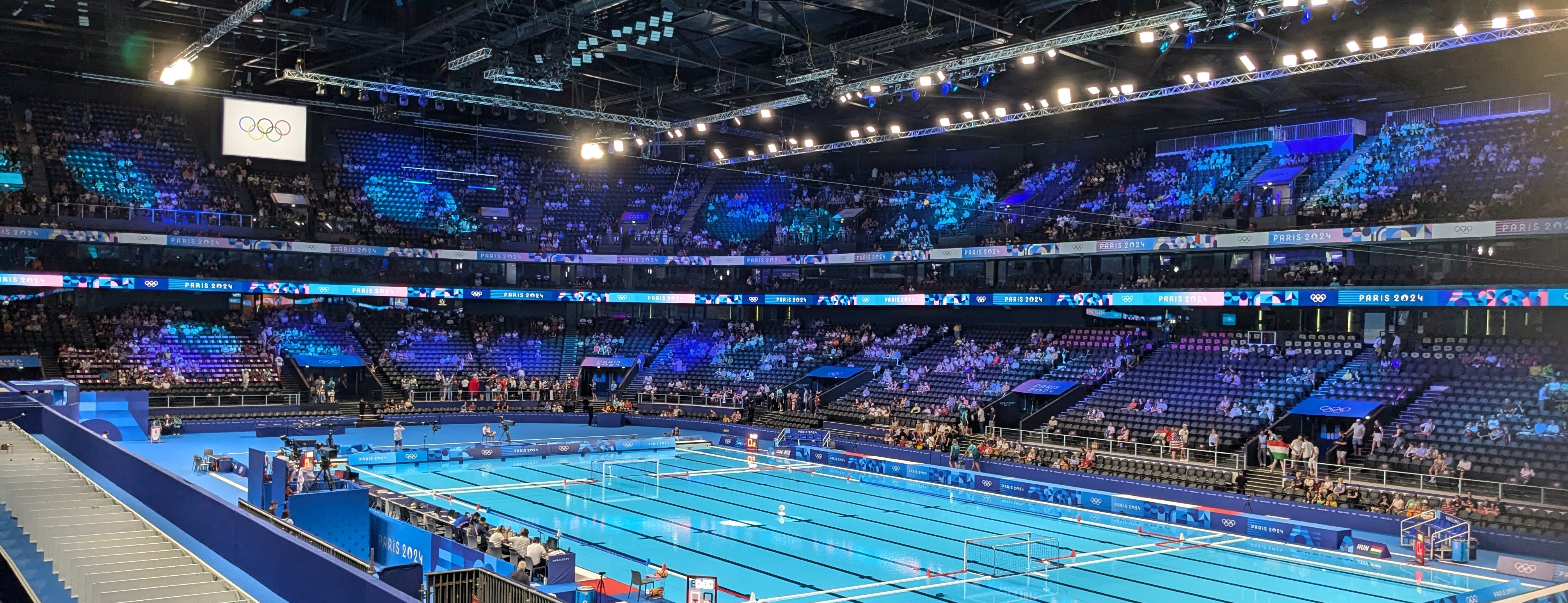
As we say “au revoir” to the 32 sports of this year’s Paris Olympics, many viewers will be left with an empty feeling, reflecting on the highs and lows of another Olympics. However, the highs and lows will be felt amongst the swimming team of China more than anyone. The high? Taking home 12 medals. The low? Having a tainted cloud hung over a team plagued by a doping scandal.
It was revealed that 12 members of the Chinese swimming team did not receive any punishment after positive tests revealed traces of banned substances. It seems that the Chinese swimming team have been under fire for quite some time, starting before the 2020 Tokyo Olympics when 23 swimmers tested positive for traces of trimetazidine (TMZ) in their systems. The drug is a heart medication and performance enhancer that has been banned at all times, including during training due to its endurance and speeding up recovery benefits. To some olympians, they know TMZ all too well. Russian figure skater Kamila Valieva, who, back in 2021, was sentenced to a four-year suspension from competing due to doping with the same drug. Whilst Valieva’s career ended before it had the chance to start, a different story goes for China’s Zhang Yufei who was amongst the 23 swimmers that tested positive. Even if she takes home half of China’s swimming medals from Paris, Zhang has yet to be punished.
In an investigation, the Chinese authorities stated that Zhang and her fellow teammates had unintentionally consumed TMZ from a hotel kitchen that supposedly was contaminated with the drug. The authorities used a similar excuse in 2022 when it was reported that two more Chinese swimmers tested positive for doping; this time with a drug called metandienone. Used by bodybuilders, the drug is a banned steroid and like TMZ, and comes with public disclosure and a four-year suspension. The swimmers were punished, albeit quietly and the suspension was revoked later. Upon another investigation, the Chinese authorities claimed that the traces of metandienone were sourced from contaminated burgers from a restaurant in Beijing. They blamed Australia and New Zealand as they have imported the meat – even though both countries have strict food regulations and it is not an agricultural substance. Aside from that – the simple truth is no athlete from either country has ever faced doping allegations due to meat consumption.
Facing the voices of public opinion, many of China’s swimmers have been advised by their team not to talk with journalists in Paris. For the few that did, they were defensive. In a press conference, Zhang argued, “Why should Chinese swimmers be questioned when they swim fast? Why did no one dare to question USA’s Michael Phelps when he got eight gold medals?” What Zhang fails to understand is that Phelps, amongst many other decorated swimmers, has never tested positive for doping. Moreover, numerous teammates of Zhang’s have also failed these drug tests and were cleared despite the fact that there is probable cause to say that the authorities have lied. Since Zhang’s first incident with doping, she has since been awarded 10 Olympic medals. Her teammates, who also tested positive for TMZ, competed in both the Tokyo and Paris Olympics, acquiring the remainder of the total 12 medals won. If anything, this scandal has tarnished the reputation of any Chinese swimmer – more importantly, those that have won their races fairly. GB swimmer Adam Peaty spoke out against the team, stating “there’s no point in winning if you’re not winning fair”, whilst Phelps holds the World Anti-Doping Agency (WADA) accountable for the events that have ensued. Ahead of the Paris Olympics, Phelps said, “As athletes, our faith can no longer be blindly placed in WADA, an organisation that continuously proves that it is either incapable or unwilling to enforce its policies consistently around the world.” WADA’s lack of knowledge of China’s doping was so extreme that the board were only aware earlier this year. Whilst they deny any wrongdoing, the organisations lack of awareness has caused the authorities to turn a blind-eye on the rules that have been put in place.
In hindsight, it is hard as spectators to not raise suspicion when so much evidence is clearly distorted in favour of a callous and undeserved victory. Amongst every allegation and finding, for competitors worldwide, the question as to whether they lost in fairness or unmerited circumstances may never be known.
Photo credits: Wikimedia Commons





Leave a Reply