

Earlier this year, the University of East Anglia’s Students’ Union (UEASU) welcomed a new leader in Jumara Stone. An already seasoned professional in higher education, Jumara stepped into the role of Chief Executive Officer (CEO) in January after the departure of the former (interim) CEO, Caroline Wilson.
With a career spanning multiple universities, including SOAS, Durham, and UEA itself, Jumara brings a self-confessed, deep-seated passion for student welfare to a union facing significant changes.
In an exclusive interview with Concrete, she shares tales of her journey back to UEA, her vision for the future, and reflects upon the role and relevance of the organisation she now leads.
An Unexpected Return to UEA
“I joined clubs and societies at UEA, which really helped me stay at uni in Norfolk, having initially struggled to acclimatise to life in Norwich.“
Reflecting on her initial reaction to the role, Jumara admits, “I was quite happy as the CEO at [the University of] Suffolk SU, but I came there as the ‘turnaround’ Chief Exec, so there was lots to do, and I just got to a point where I could start actually enjoying the fruits of my labour as such.” At this stage, she was not actively seeking new opportunities and even admits, upon seeing the job advertisement, remarking, “Good luck to whoever goes near that!”
It wasn’t until she was approached by UEASU Officers that she began to reconsider. “I had the then five full-time Officers message me collectively, saying they wanted to talk to me about this job. I thought, ‘Oh God, I’m not going to say no because that’s just rude’. I then met with the then-chair of the board, Taylor (former Undergrad Officer) and she did an incredible job of making me remember why I love UEA.”
For Jumara, the decision to take on the role was deeply personal. Although she attended Norwich University of the Arts (NUA), her connection to UEA runs deep. “Because the societies weren’t as big [at NUA], I joined clubs and societies at UEA, which really helped me stay at uni in Norfolk, having initially struggled to acclimatise to life in Norwich.” The opportunity to return to UEA and contribute during a time of crisis felt like a way to give back to an institution that had given her so much, she explains. “It wasn’t the CV,” she emphasises. “It was purely the fact that I genuinely love UEA, and I think you’ve got to love the place to do this kind of job.”
Redefining the Role of the Students’ Union
“If a union isn’t moving with the times and moving at the time for its students, it’s not really a union.”
One of the key challenges Jumara faces is redefining the role of the Students’ Union in the eyes of the student body. Reflecting on this, she says, “I think the fact that students have had that kind of conversation [questioning the purpose of the SU] says to me, that’s why I’m here.” For her, a Students’ Union must be “adaptable and responsive” to the needs of its students, adding, “If a union isn’t moving with the times and moving at the time for its students, it’s not really a union.”
She highlights the necessity of agility within the SU, especially in response to the rapidly changing landscape of higher education. “Universities are, of course, education-focused, but they’re also business-focused. I think SUs have an element of being both those things, but they have to be adaptable—Covid taught us that.”
“The thing we’ve learned most from students, and what we need to be, is community building, purpose driving, and liberation leading,” she explains. With hopes of achieving this, the SU has begun consulting with students in new ways, hosting drop-in sessions and engaging directly with them around campus. “Our strategy completely shows all of that”, Jumara highlights, concluding, “The most important question for this SU now is, how do you bring people together for a common cause?”
Learning from the Past, Preparing for the Future
“I don’t think we’ve learned from lots of political things that have happened.”
Jumara is candid about the challenges the SU has faced in the past and the importance of learning from these experiences. She reflects, “People weren’t as agile as they are now. For example, people expected Brexit not to have an impact on the way our student demographic looks; how people feel culturally and how they feel psychologically”, adding, “I don’t think we’ve learned from lots of political things that have happened.”
Emphasising the need for the SU’s strategy to be a “living document” that evolves annually, she says, “The five-year strategy that we’ve now got coming is agile. So, every year, while the themes will stay there, what we deliver under those will change to benefit and suit what is happening to us as a community and politically.”
Jumara also stresses the importance of keeping students at the core of the SU’s mission, commenting, “Students are the brainiest group of people that we have in this country. They are resilient; they are headstrong; they are innovative. Sometimes, I feel like we forget that we work for students. We don’t do the stuff we think is right—they feed us the creativity.”

Image: Jumara Stone in the UEA SU offices on the 1st floor of ‘The Hive’.
Credit: Jamie Bryson/Concrete.
Addressing Criticism and Building Resilience
“I feel like people’s responses come from a valid place”
When asked about the perceived negative or apathetic attitudes towards the SU, Jumara’s response is empathetic and measured. With a background in mental health, she is acutely aware of the complexities of student experiences. “I feel like people’s responses come from a valid place” she begins. “Where there is criticism of the SU or where there are good reviews of the SU, there’s always something we can learn from it.”
She acknowledges the challenges her team faces, especially the young Officers who may be new to handling criticism (referencing the often-toxic nature of online platforms such as ‘concrete confessions’ (not affiliated with Concrete)). “I’m protective of them as people because there’s a human being on the other side of that feedback”, she adds. “Everyone has a right to express how they feel, but let’s do it in a way that’s constructive.”
Creating Inclusive and Engaging Experiences
“Students are powerful”
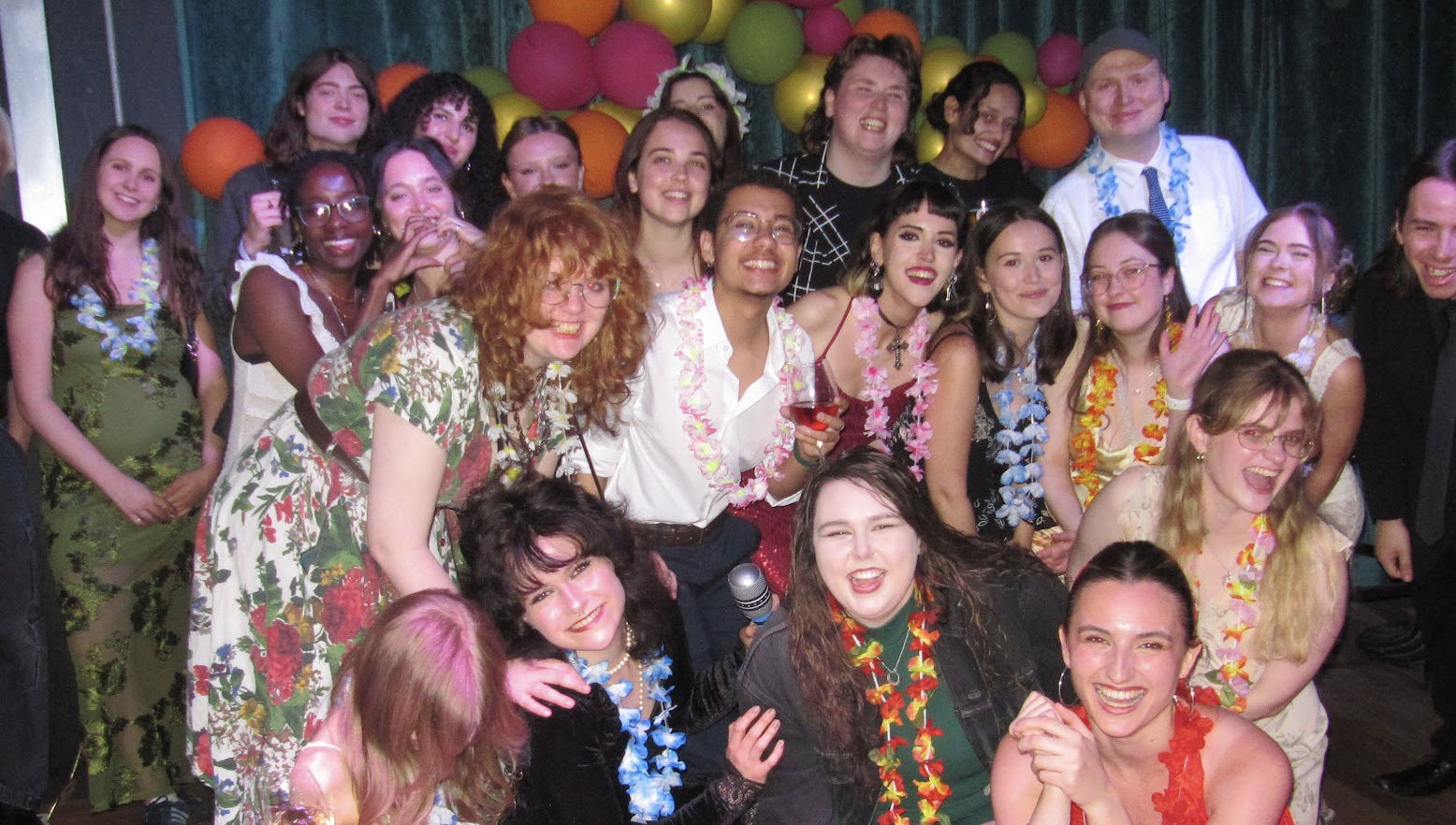
Jumara is particularly proud of the inclusive events the SU has already hosted under her tenure, such as the after-party for Norwich Pride in July. “It was incredibly inclusive,” she beams. “To take somewhere like the Waterfront in the city centre and make a pride-focused event was magical. People had fun, felt safe, and the team loved having such a diverse range of people there.”
Looking forward, Jumara is optimistic about the role of the Students’ Union in shaping the university experience. “Students are powerful” she asserts, adding, “Welcome Festival will be about enhancing that power, not just at UEA but beyond.”, in reference to a new semester-long series of events for freshers and returners.
As she continues to lead the SU through challenging times, her commitment to students appears unwavering: “My goal is to develop students to handle the good, the bad, and the challenging, so when they leave university, they’re prepared for whatever comes next.”
In a time of uncertainty, Jumara Stone’s leadership at the UEASU offers a renewed sense of purpose and direction—one that is deeply rooted in love for UEA and a genuine commitment to student welfare.
UEA students can contact Jumara Stone via email at jumara.stone@uea.ac.uk, or head up to the UEASU Welcome Desk on the first floor of the Hive. To find out more about the new UEASU strategy click here.




Leave a Reply