
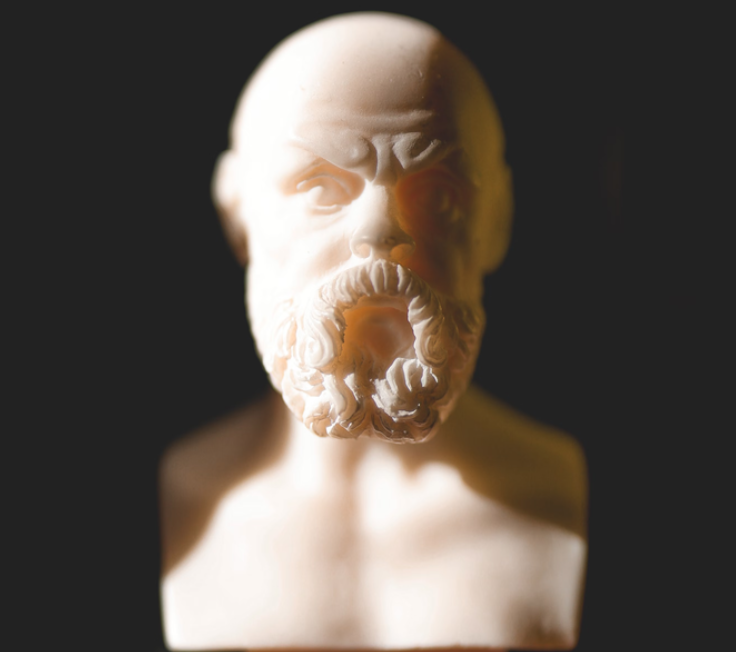
For the average student, the philosophy of art, also referred to as aesthetics, is perhaps the most relevant branch of philosophy. Everyone now is into film and music and wants to talk about them, fancying themselves a cultural critic. It’s hard to attend a social gathering without someone asking you what you think of a new album or film; the more niche or ‘deep’ it is, the better. The conversation quickly fizzles into an implicit contest to see who can name the most esoteric arthouse films, underground bands or transgressive novels.
Philosophy transforms our thinking about art, allowing it to become interesting and productive again. Many common topics of cultural discussion fall squarely under the purview of philosophy: Is there objectively ‘good’ or ‘bad’ art? Is traditional art ‘better’ than modern art? What is ‘art’ anyway, or creativity, or beauty, or taste? Is there a difference between art made by generative AI and art created by humans? Is it possible for musicians to ‘steal’ songs? Is pop music or genre fiction inherently shallow? Does art, and aesthetics generally, have a moral dimension, or social responsibility? Does it matter if an artist doesn’t live the lifestyle they rap about? Is censorship ever justified? Do artists have a responsibility to tell the truth?
Philosophising about art simply means taking such questions seriously. Not joylessly or humourlessly, but simply treating them as worthy of our fullest possible attention – and there are few questions more rewarding and satisfying to give our attention to than those concerning works of art and the creative process. Aesthetic philosophy can be analytical, showing us the boundaries of what we can meaningfully say about art; but it can equally be creative, expanding our horizons with useful concepts such as the male gaze.
But I hear some of you protest that philosophy is too distanced from the objects of its study, and eventually leads us away from this world into a realm of abstractions. It’s an understandable complaint given popular caricatures of philosophy, but nothing could be further from the truth. To philosophise means to shake ourselves and wake up from the sleepwalking that characterises our usual existence. The uncritical life, that takes things as they first appear, that forms judgements within seconds and clutches them as if they were truth – to live this way is not only wretched but frankly dangerous.
Good philosophy brings the individual into closer contact with the rest of their world. It allows us to lift the veils of ‘common sense’, received opinions, and social conditioning. It lets us pause for a moment to critically adjust our most basic thought patterns and behaviours. In this way it reduces abstraction by letting us apprehend reality in a better way.
Remember that the night will come soon when you are called upon to become the Plato of the party or the Socrates of the smoking area. You owe it to yourself to be able to intelligently dissect beliefs about the art you and your friends love, and thereby increase your appreciation and enjoyment. But equally you owe it to society to be ready to shatter the arrogance of the snobbish ‘softboi’ or the insufferable indie guy, to play him at his own game and confront his pseudo-intellectualism.
Either way, you had best be adequately prepared.
Some suggestions:
Aesthetics: A Very Short Introduction, book by Bence Nanay
The Work of Art in the Age of Mechanical Reproduction, essay by Walter Benjamin
The Pervert’s Guide to Ideology, film starring Slavoj Žižek
Photo Credits: Unplash



Leave a Reply