
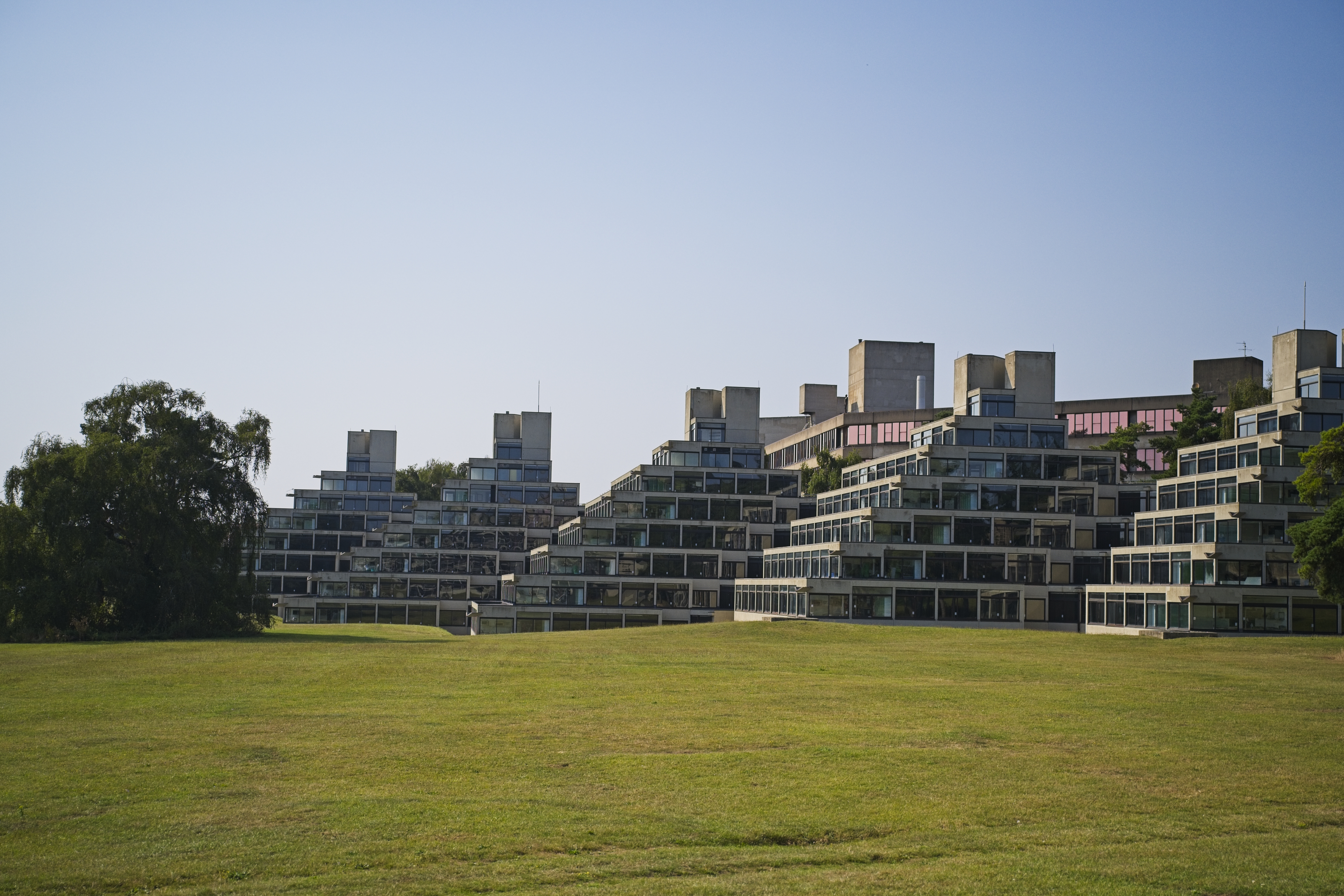
Many will be surprised to find out that the foundations of the University of East Anglia are not made simply of concrete, but of paper, ink, and radical ideas. More specifically, of letters upon letters, of meetings upon meetings, of proposals, appeals, decisions, and revisions.
On the 19th of April, 1960, a letter was sent from the University Grants Commission- the advisory committee for the distribution of grant funding amongst British universities- to town clerk Gordon Greenway Tilley. It read: “We have been authorised by the Government to enter into discussions with your University Promotion Board with a view to the establishment of the proposed University College of East Anglia at Norwich.”
This letter ended up becoming the one of the most important assets to UEA’s history. Not only does it testify to the origins of UEA, but also to the radical nature of such origins. Indeed, as recounted by Michael Sanderson in his book The History of the University of East Anglia, Norwich, Gordon Tilsley immediately telephoned the UGC in order to refute the term “University College” after he received the letter. The name was too inextricably bound to its Victorian definition of a college undergoing the transition into university. Despite all the initial anxieties and tensions, it was most important to clarify one thing: if UEA was to be instituted, it had to be granted independence and excellence from the very start.
Three years later, in the form of a prefabricated Village located opposite Earlham Park, UEA was officially inaugurated by the chairman of the UGC, Sir Keith Murray. Then, following the arrival of the first students on the 7th of October 1963, UEA finally began delivering its curriculum through progressivist methods of teaching.
Instead of the traditional Oxbridge system of lectures and tutorials, UEA employed and installed a system of seminars and coursework. So far, the traditional methods had created educational environments which were extremely hierarchical, with the lecturer being at the apex to impart knowledge down onto the students at the base. In a way that seems radical at the time, seminars created environments of participation, collaboration and egalitarianism. The students were no longer to remain silent and passive but were instead encouraged to seek their own learnings through active debate and interaction.
As if seminars weren’t already shocking enough for the 1960s, UEA’s Vice-Chancellor Frank
Thistlethwaite decided to build the university’s departments around the practice of
multidisciplinary faculties and schools. Informed by his own scholarly experiences of moving between and combining the disciplines of History, English, and Economics, Thistlethwaite wished his students to embark on educational journeys which would be just as exciting and novel.
Except for the School of Chemistry, the other Schools at UEA were officially declared to be multidisciplinary. This meant that students within one School could attend a broad and stimulating array of subjects. To bring a most famous example, a student from the School of Literature, Drama and Creative Writing could (and to this day still can) select modules from any of those three disciplines.
In 1967, the opportunity to combine subjects across Schools was made possible, with UEA’s
multidisciplinary ideals developing further still into the interdisciplinary. Not only had UEA opened up trades between sister disciplines, but it also opened up trades between similar and dissimilar Schools. This was truly a most radical and unprecedented event in the British history of curricular diversification.
Like many who “do different,” UEA’s forward-thinking attitudes were not exactly met with
universal acceptance. On the contrary, teaching and student bodies both internal and external were quick to criticise, belittle, and vilify UEA’s interdisciplinary and seminar-based
education. They believed it responsible for the deterioration of the staff-student ratio, for high costs in faculty time, and for its own graduates’ academic inexcellence.
Today UEA is known as the “Home of the Wonderful,” -of those who amaze, who stun, who upturn expectations. It is the home of all those who are brave enough to reject the educational patterns of hierarchy, conformity, and exclusivity. It is the home of those who speak their minds, who listen, who change opinion, who work hard. Of those who make their own excellence.
Photo Credit: Maggie Read/Concrete



Leave a Reply