
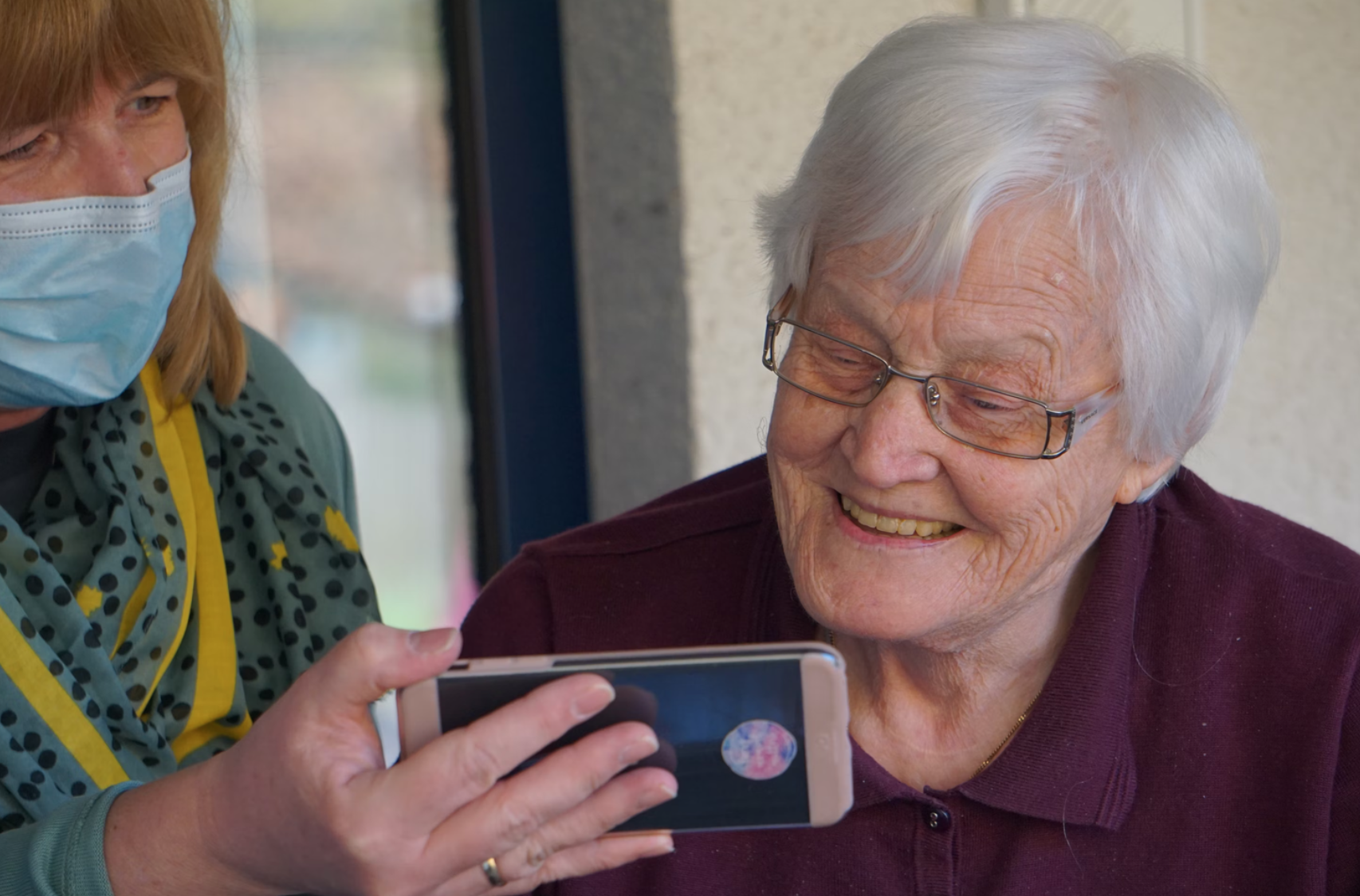
My aunty is a gardener for older people in my hometown who can no longer look after their gardens. She tolerates lots of them, the bossy, grasping ones; but a few have become important friends and elders. Over the summer, one of these employer-turned-friends had a major health setback and needed regular care after returning from the hospital. My aunt, her partner and mother-in-law, a trained career, all took on the role as a collective. One of these trusted and capable friends will drop in every morning and every evening, wanting the best for a member of their community.
There are around half a million people living in adult social care across the country so what is the reality of this care in the UK? Care options are limited primarily by cost and location; the lifetime cost of social care for older people varies greatly depending on their needs, and it is often near impossible to estimate this before entering care. Appropriate care for complex needs can be hard to find in your area; for many conditions it’s something of a postcode lottery.
In 2021/2022, around 818,000 people received publicly funded long-term social care, mostly in care homes or nursing homes. However, many people who receive this type of care must contribute towards the cost out of their own income; in 2022/23 approximately £3.5 billion was spent on these additional costs. The financial burden of care can quickly become huge, the Department of Health and Social Care estimates that one in seven people entering care will face costs of more than £100,000 in their lifetime.
In Britain, grandparents often play a significant role in raising their grandchildren. According to Age UK, 68% of grandparents look after their grandchildren 2-3 days a week, with 12% looking after their grandchildren every day. So, how can we best care for the older people in our lives when they need looking after?
Many people in Britain like the idea of having a ‘granny flat’ attached to their home, and would love to have the freedom to care for their parents or grandparents as they age. However, the average working person juggling factors like full-time work, childcare and housework often does not have the time or energy to provide adequate care for their loved one, especially those with more complex mental and physical needs. Caring for those with sight and hearing impairments, complex physical and psychological needs, and dementia or Alzheimer’s often require training and around-the-clock availability.
Care homes and nursing homes are a part of the lives of many families in the UK, but the types of care that these services provide can vary greatly. Many facilities provide short term care for those recovering from health setbacks before they can return home. Others provide long-term care for those who need low-level support such as meals and daily check-ins. Some provide 24-hour support for those with complex needs, often for people who can no longer care for themself in basic ways; these facilities often provide nursing and regular medication alongside care support. Just under half a million people live in these facilities.
Our reliance on care homes is cultural; it is something of an expected last resort. According to WTW’s Financial Wellbeing Study of over 4000 UK employees, 36% of UK workers are living paycheck to paycheck with no emergency savings. There is little wriggle room for the families of those who are beginning to require care. A difficult financial environment means old people are forced into at least partially state-funded care.
What is the ideal situation for those who require care? In the case of my aunty and her employer, a situation arose in which members of the community with no childcare responsibilities and flexible work schedules were able to step in and share the care-workload of a financially independent woman who was able to compensate them fairly.
This ‘ideal reality’ of community care is typically successful in terms of the care provided. However, for this arrangement to take place, stars must align in terms of scheduling, money, and relationships. Factors like an improved state pension, a ‘proper’ standard living wage for freelance carers and better childcare and flexibility for working people would bring us closer to this ideal situation. On top of this, a cultural shift to bring elderly people into the community would create bonds between older and younger people, squaring the circle of bringing potential community care to those who need it.
We all want the best for the people who have raised us, been close companions or helped us throughout our lives, whether they are family, friends or elders. However, the current social care system is far from optimal. Without proper provisions for those who require it, struggling to find suitable and dignified care is a difficulty we may all face.
My aunty is a gardener for older people in my hometown who can no longer look after their gardens. She tolerates lots of them, the bossy, grasping ones; but a few have become important friends and elders. Over the summer, one of these employer-turned-friends had a major health setback and needed regular care after returning from the hospital. My aunt, her partner and mother-in-law, a trained career, all took on the role as a collective. One of these trusted and capable friends will drop in every morning and every evening, wanting the best for a member of their community.
There are around half a million people living in adult social care across the country so what is the reality of this care in the UK? Care options are limited primarily by cost and location; the lifetime cost of social care for older people varies greatly depending on their needs, and it is often near impossible to estimate this before entering care. Appropriate care for complex needs can be hard to find in your area; for many conditions it’s something of a postcode lottery.
In 2021/2022, around 818,000 people received publicly funded long-term social care, mostly in care homes or nursing homes. However, many people who receive this type of care must contribute towards the cost out of their own income; in 2022/23 approximately £3.5 billion was spent on these additional costs. The financial burden of care can quickly become huge, the Department of Health and Social Care estimates that one in seven people entering care will face costs of more than £100,000 in their lifetime.
In Britain, grandparents often play a significant role in raising their grandchildren. According to Age UK, 68% of grandparents look after their grandchildren 2-3 days a week, with 12% looking after their grandchildren every day. So, how can we best care for the older people in our lives when they need looking after?
Many people in Britain like the idea of having a ‘granny flat’ attached to their home, and would love to have the freedom to care for their parents or grandparents as they age. However, the average working person juggling factors like full-time work, childcare and housework often does not have the time or energy to provide adequate care for their loved one, especially those with more complex mental and physical needs. Caring for those with sight and hearing impairments, complex physical and psychological needs, and dementia or Alzheimer’s often require training and around-the-clock availability.
Care homes and nursing homes are a part of the lives of many families in the UK, but the types of care that these services provide can vary greatly. Many facilities provide short term care for those recovering from health setbacks before they can return home. Others provide long-term care for those who need low-level support such as meals and daily check-ins. Some provide 24-hour support for those with complex needs, often for people who can no longer care for themself in basic ways; these facilities often provide nursing and regular medication alongside care support. Just under half a million people live in these facilities.
Our reliance on care homes is cultural; it is something of an expected last resort. According to WTW’s Financial Wellbeing Study of over 4000 UK employees, 36% of UK workers are living paycheck to paycheck with no emergency savings. There is little wriggle room for the families of those who are beginning to require care. A difficult financial environment means old people are forced into at least partially state-funded care.
What is the ideal situation for those who require care? In the case of my aunty and her employer, a situation arose in which members of the community with no childcare responsibilities and flexible work schedules were able to step in and share the care-workload of a financially independent woman who was able to compensate them fairly.
This ‘ideal reality’ of community care is typically successful in terms of the care provided. However, for this arrangement to take place, stars must align in terms of scheduling, money, and relationships. Factors like an improved state pension, a ‘proper’ standard living wage for freelance carers and better childcare and flexibility for working people would bring us closer to this ideal situation. On top of this, a cultural shift to bring elderly people into the community would create bonds between older and younger people, squaring the circle of bringing potential community care to those who need it.
We all want the best for the people who have raised us, been close companions or helped us throughout our lives, whether they are family, friends or elders. However, the current social care system is far from optimal. Without proper provisions for those who require it, struggling to find suitable and dignified care is a difficulty we may all face.
Photo Credit: Unsplash




Leave a Reply