
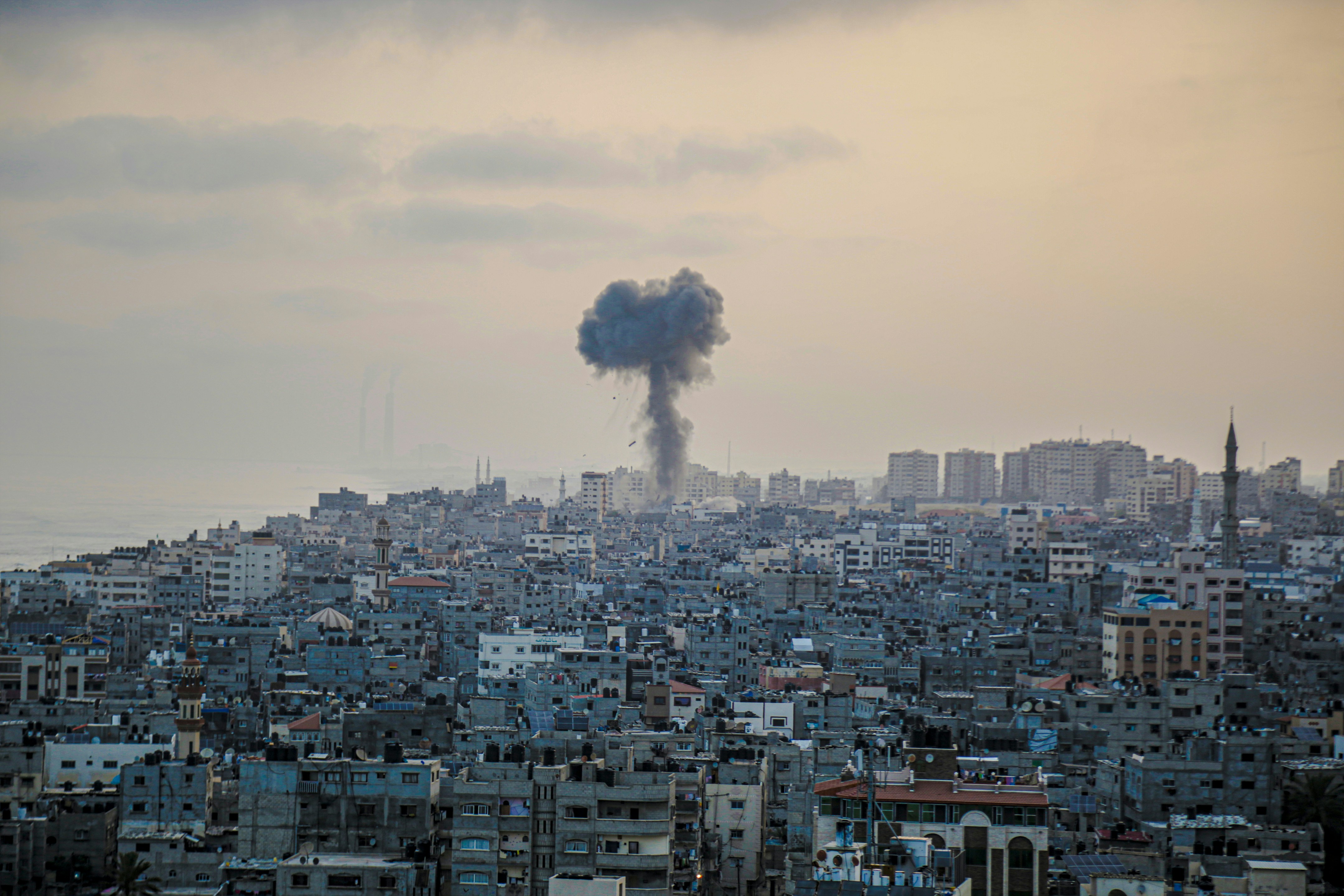
As the one-year anniversary of the October 7 terror attack on Israel approaches, memories of that harrowing day remain vivid for many. The unprecedented attack by Hamas – a group described as terrorists by the UK government – saw an estimated 1,200 Israelis killed and 251 people taken hostage. It’s understood that 97 of these hostages remain in captivity.

In the days that followed, the Israeli state began a devastating counteroffensive in Gaza. The Hamas-run health ministry in Gaza estimates at least 41,000 Palestinians have lost their lives as a result.

In the months since, the violence has reverberated far beyond Israel and Palestine, touching millions of lives and fuelling fierce debates across the globe.
Images of destroyed homes, grieving families, and unrelenting bombings continue to dominate the headlines, while the deeper causes of the conflict—occupation, blockade, terrorism, and the humanitarian crisis in Gaza—remained unresolved. As tensions simmer, airstrikes and rocket fire continue. In the West Bank (an Israeli-occupied Palestinian territory), Israeli settler violence has spiked, adding another volatile layer to the conflict. For those living far from the violence, the anniversary is a moment to reflect not just on the lives lost but on the enduring complexities that have kept peace elusive.
On university campuses like ours, where global events spark passionate debate, October 7 has left its own mark. As students navigate the political and personal implications of the conflict, many are confronting the weight of their own identities and histories. To better understand how this conflict has shaped campus discourse, I sat down with two students particularly close to the conflict: Ali Sabba, Vice President of the Palestine Solidarity Society, and Mark Etkind, Vice President of the Jewish Society. Their stories reflect the emotional toll this conflict continues to take—far from the battlefields of Gaza and Israel, but no less deeply felt.
For Ali, the past year has been marked by anxiety, grief, and a sense of helplessness. “We might be far from the physical battlefields, but the emotional toll is staggering.” Like many Arab students, Ali’s connection to the conflict is deeply personal. Watching from afar as Gaza endured yet another round of bombings, he has struggled to cope with the constant fear for the Palestinian people. “Every time a helicopter flies over, we flinch. Our hearts race. It might seem irrational to someone who isn’t connected to the situation, but for us, those sounds trigger trauma.”
The psychological toll has been immense. “Mentally, we are not okay,” Ali confessed, describing the strain of trying to focus on schoolwork while worrying about the escalating violence in Gaza. His words reveal a stark truth: for many Arab students, the conflict isn’t just a political debate—it’s a lived reality that shadows their daily lives. “We’re not just angry; we’re traumatised,” he remarked. “This isn’t just a political issue for us, it’s personal. It’s about our families, our homes, our futures.”
Ali’s frustration extends beyond the emotional toll. He is disillusioned with what he sees as the performative nature of international solidarity, particularly in how the crisis in Gaza is covered by the media, feeling that the humanitarian disaster in Gaza is reduced to numbers and soundbites, making it easier to ignore the human toll of life in Gaza. For Ali, real solidarity means more than social media posts. “It requires sustained, meaningful action,” he explained, pushing for tangible change through protests, policy advocacy, and public pressure. Ali also spoke of challenges the Palestine solidarity society had faced, including an instance where, after months of trying, the society managed to secure a meeting with the Vice Chancellor that was abruptly cancelled, as well as the unwillingness of the university to speak up on students who had been assaulted for wearing pro-Palestinian memorobilia.
Mark Etkind has faced his own challenges as a Jewish student navigating the aftermath of October 7, expressing, “Everyone was quite shocked because nobody saw it coming…It’s been a very turbulent time”. “Most Jewish people I know have family in Israel,” he explained. “There’s always this fear that something could happen to them.” For many Jewish students, including Mark, the attack was a chilling reminder of the vulnerability their community has long felt.
“Every Jewish person has their own complicated relationship with Israel” he acknowledges, adding “being Jewish isn’t just about Israel, but this conflict makes it a big talking point”. Mark also acknowledged that the conflict has exposed some divisions within Jewish communities, particularly between Zionist and non-Zionist Jews (Cambridge Dictionary defines a Zionist as “someone who belongs to or supports a political movement that had as its original aim the creation of a country for Jewish people, and that now supports the state of Israel”). Yet, within the Jewish Society (JSOC) at the university, Mark and his peers have worked to foster an inclusive environment. “We’ve made it clear: JSOC isn’t a Zionist or anti-Zionist society. We’re here to support Jewish students, whatever their political beliefs.”
Even so, navigating the delicate terrain of identity and politics has been fraught. Mark recalled how the society had planned to hold a memorial for the victims of the October 7 attack but ultimately decided against it, fearing it might spark backlash. “We wanted to commemorate the lives lost, but we were worried it would be too contentious on campus,” he said. “This was very upsetting for us all – we wanted to commorate people who were killed and support our members”, Mark adds, also highlighting how “issues of rising antisemitism” has made some Jewish students feel unsafe on camus over the past year.
Both Mark and Ali are keenly aware of how the conflict has reshaped their respective communities, not just globally but here at university, with Ali adding how their have also been divisions within the Arab student community, particularly around the best way to advocate for Palestinian rights. “Solidarity isn’t always comfortable,” he noted, “but it’s necessary.”
As the anniversary of October 7 approached, both Ali and Mark reflected on a conflict that offers no easy answers and no foreseeable resolution. For Ali, the weight of the past year has been unbearable at times, “We’re just trying to survive day by day holding onto the hope that someday, somehow, the violence will stop” but also emphasised it was important for Palestinians to be seen as more than victims of violence: “ activism isn’t just about standing against violence; it’s about standing for humanity, for peace, and for the right to exist without fear.” Mark echoed this sentiment, acknowledging the persistent fear that has gripped his community. “We just want our students, out members, to feel safe.”
One year later, the violence of October 7 continues to shape the lives of students on campus. For Ali and Mark, the conflict is not just a political issue—it is a deeply personal struggle. And as they navigate the intersection of activism, identity, and trauma, one thing remains clear: for all the differences that divide them, there is a shared hope for their communities to heal.




Leave a Reply