
I vividly remember my aunt consistently dropping off fresh guavas at my door for free. She had a few trees in her backyard and there was always an abundance of fruit, so she thought she’d give them to us since she was never going to get through them before they spoilt. My family and I ate like royalty since they were always expensive at the grocery store.
One time, when my mom was dropping off my friend at her house, she stole two pomegranates from a neighbour’s tree. In her mind, it was free since the branches were hanging over the fence. I agreed, but the pomegranates were quite sour so we didn’t think we’d steal someone’s fruit again. It was hilarious to see my mom so eager for free pomegranates.
On a walk with my best friend I noticed the house behind the fence had a nice mandarin tree. We managed to grab one off an overhanging branch and I was eager to eat it. I quickly winced at how sour it was. Sometimes stealing fruit has its consequences.
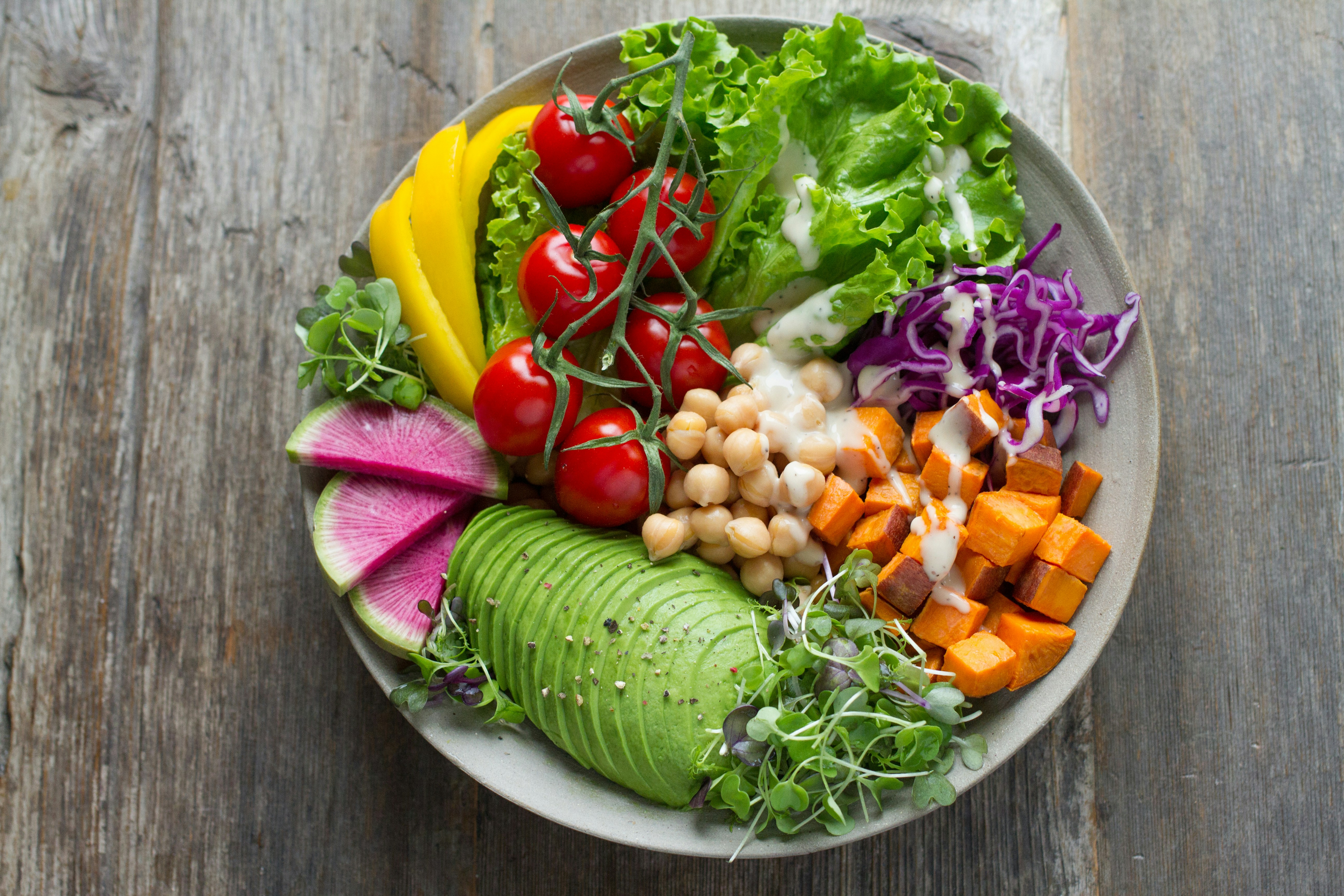
Growing up in Southern California, there was always an abundance of fresh produce. Oftentimes, fresh produce was cheaper than processed food, so I never had a Dino Nugget as a kid, but I did have jicama slices with chilli salt instead. It’s incredibly easy to eat healthy and I ended up with a stereotypical Californian rabbit diet, needing a mountain of veggies with every meal and fruit as my dessert, otherwise I felt like I would develop scurvy after three days.
When I moved to the UK, I tried replicating the same Californian diet but found it more difficult. Fruits and vegetables I had known and loved back home weren’t as readily available and it was much more difficult to get things to taste ‘right.’ I suppose it’s true that you can’t really eat like a Californian everywhere!
A stereotype that’s quite prevalent is that Americans are ‘fat and lazy’ due to some of the worst food abominations you’ve probably seen online, such as Krispy Kreme donuts being used as hamburger buns (not a true representation of American food!) or a cheeseburger drowned in cheese. I was quite confused, because I always was under the assumption that everyone was able to eat healthy, that everyone had an abundance of guavas and the sweetest strawberries. I, too, boiled it down to people being lazy, but that was my ignorance speaking since I grew up privileged and spoiled with healthy food.
It never crossed my mind that there were people in the United States and United Kingdom that lack access to fresh, affordable produce. Food deserts are urban or rural neighbourhoods that have limited access to affordable, healthy foods. People living in such areas often rely on convenience stores as larger grocery stores are scarce, resulting in higher rates of health issues such as obesity and diabetes. According to an analysis done by the Association of American Medical Colleges and USDA, 23.5 million Americans live in food deserts and 54 million Americans experience food insecurity, and according to Kellogg’s in a study conducted in 2018, 1.2 million Britons are living in food deserts.
But the term ‘food desert’ implies that scarcity of affordable, fresh food is naturally occurring. A new term, ‘food apartheid’ was coined by Karen Washington, a New York based community activist and urban farmer. Food apartheid better addresses the systemic issues that have led to communities, mainly low-income communities of colour, not being able to easily access healthy food, and having to rely on cheap, ultra-processed foods.
One could argue that people could just travel to the next borough or city to do their grocery shopping, but given that places, such as Jaywick, Essex and South Los Angeles are already impoverished, meaning that public transportation isn’t necessarily an option. Having a car is notoriously expensive, and a lot of people don’t have access to a car and can’t simply drive 30 to 40 minutes to Aldi or Walmart in the next city to do their shopping. Instead they’re forced to rely on convenience stores like Costcutter, Dollar General or their local 7-Eleven.
One of my favourite TikTok accounts that highlights the issues of food apartheid and accessibility is @dollartreedinners. She creates budget recipes using ingredients from Dollar Tree or Dollar General (think of these as the American version of Poundland) while being aware that everyone’s situations are different- after all, we don’t have the same 24 hours in a day.
Eating healthy is a massive privilege that people take for granted. It’s a lot easier to blame disadvantaged people for being ‘fat and lazy’ instead of looking at the bigger picture. Sure, the United Kingdom and the United States both have varying degrees of unhealthy foods, but should we really blame the individuals who don’t have as much agency within their structures instead of the food system that has denied people of colour equitable access to fresh, affordable foods?
Image credit: Photo by Anna Pelzer on Unsplash



Leave a Reply