
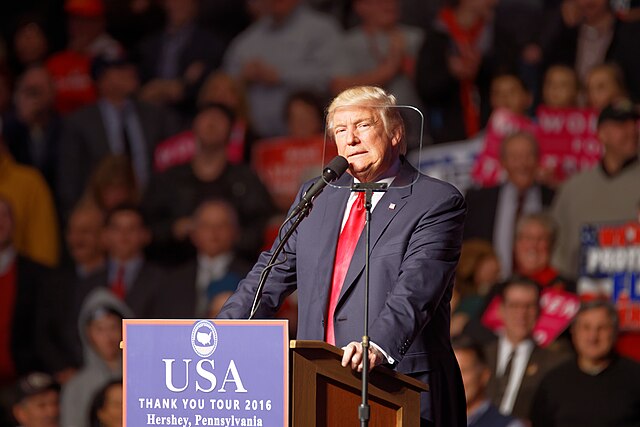
Donald Trump’s decisive victory in the 2024 U.S. presidential election represents a tectonic shift in American politics. Driven by economic frustration and scepticism towards the Biden administration, the outcome underscores an enduring truth in U.S. elections: when Americans face economic hardship, they often reject the incumbent party. Trump’s campaign promises of economic revival and a “rebirth” of American greatness resonated powerfully with an electorate weary of inflation and stagnant wages.
“For many voters, the economy was the big issue,” explained Dr. Emma Long, a lecturer at the University of East Anglia, “and historically, voters in the U.S. have tended to favour Republicans on economic matters.” Trump’s platform, rooted in promises to revitalize industry, create jobs, and restore economic stability, tapped into long-standing distrust of Democratic economic management, particularly among working-class voters who saw him as a figure who understood their grievances. His support among white voters without college degrees surged, and his appeal expanded to urban Black and Latino communities—a development Dr. Long identified as “a realignment not seen since the Reagan era,” when working-class Democrats migrated to the GOP.
The election also highlighted Harris’s struggle to connect with voters on economic issues, despite attempts to distance herself from Biden’s record. Biden’s approval never exceeded 43% in major swing states, and disapproval rates above 55% created a substantial barrier. Harris’s team tried to pivot the campaign from a referendum on Biden to a forward-looking choice about leadership, yet her efforts were thwarted by her inability to overcome widespread economic dissatisfaction. “There was something quite specific about her experience that she could have brought to the campaign,” Dr. Long observed, alluding to Harris’s personal background. However, Harris’s approach to emphasize policy over identity may have made her less relatable to some voters, an approach Long suggested may have missed an opportunity to connect with diverse demographics.
The 2024 election data reflects an unprecedented demographic shift, notably among Latino voters, who supported Trump at levels unseen in previous elections. Trump made substantial gains among Latino men and women, particularly in states like Nevada and Texas, traditionally Democratic-leaning regions. Dr. Long attributed this trend to a deeper heterogeneity within the Latino community that Harris’s campaign may have underestimated. “The term ‘Latino’ encompasses a broad range of social, economic, religious, and cultural backgrounds,” Long explained, pointing to a complex voter group that resists easy categorization. For these voters, economic concerns often eclipsed social policy issues, aligning them with Trump’s message of restoring the economy.
Trump’s ability to harness this discontent was bolstered by his adept use of social media, which created an echo chamber for his messaging and circumvented traditional media narratives. Harris’s more conventional campaign struggled to break through this polarized media environment. As Long noted, “There were entire streams of social media posts that were misogynistic and racist,” which contributed to an environment where Harris’s policy points were often overshadowed by toxic commentary, making it more difficult for her to present her vision.
Social issues like abortion rights, which the Democrats hoped would galvanize their base, ultimately had limited impact on voting behaviour. Although exit polls showed two-thirds of Americans support legal abortion, many voters still backed Trump, prioritizing economic stability over social concerns. In states like Michigan and Pennsylvania, where ballot measures supported abortion access, voters felt they could support Trump while ensuring abortion protections locally. As Long remarked, “For people struggling financially, other issues may seem less immediate,” pointing to a dynamic in which economic anxiety trumped other considerations.
In the aftermath of his victory, Trump faces the challenge of translating his populist campaign promises into concrete policies. His win, while a triumph for the GOP, raises questions about potential shifts in foreign policy and international relations. Trump’s previous criticisms of NATO and promises to pull the U.S. out of international agreements like the Paris Climate Accord indicate a possible return to his isolationist “America First” approach. “We might see a more isolationist America,” Dr. Long noted, suggesting Trump’s second term could strain U.S.-European relations and heighten global unease, especially as other democracies contend with similar populist pressures.
As Trump prepares to assume office, millions of Americans await the economic restoration he promised. His supporters see his win as a rebuke of the bureaucratic inefficiency they associate with the Biden administration, while his critics fear the social and political consequences of his aggressive agenda. For Trump, the real test lies in fulfilling his economic pledges without deepening the divides that have come to define American society.
Photo Credit: Wikimedia Commons





Leave a Reply