
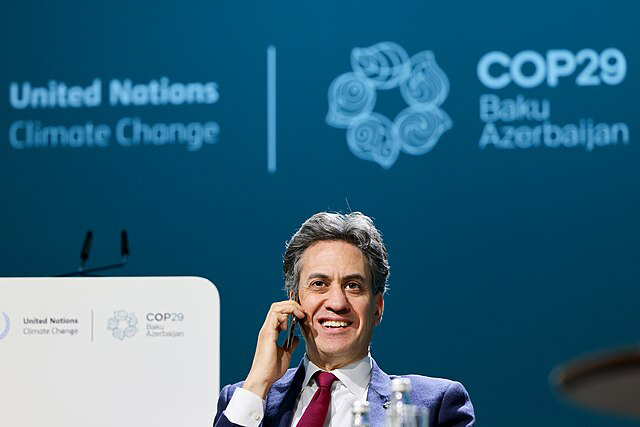
In 1992, over 150 countries came together in Rio de Janeiro, Brazil, to form the first ever United Nations Framework on Climate Change (UNFCCC). After more than 50 years of evidence that global temperature had been dramatically rising, and over 30 years of proof that this was due to the burning of fossil fuels, governments were finally meeting to work towards a solution. Their objective, to “stabilize greenhouse gas concentrations in the atmosphere at a level that would prevent dangerous anthropogenic interference with the climate system,” as outlined in the COP 29 Observer Handbook.
Today, the United Nations Conference of Parties (COP) is the largest annual summit, with over 190 countries and nearly 4,000 organisations attending or participating in the COP 29 negotiations which are currently taking place (11-22 Nov) in Baku, Azerbaijan.
But what is a COP, who attends one, how are decisions made, and most importantly, how can you get involved?
While there are three different Conferences of Parties, the most famous and most attended is the Climate Change COP — this years’ being COP 29. At the summit, delegates including heads of state and representatives of parties, observer organisations, and the media will be attending. This two-week summit, dubbed the ‘finance COP,’ will be where the UNFCCC’s new finance goal, known as the New Collective Quantified Goal (NCQG) is to be decided. But what is this NCQG for?
COP21 in 2016 was a seminal moment, where 196 parties signed the ‘Paris Agreement’: the first legally binding international treaty on climate change. The agreement included limiting global warming to below 2 and at preferably 1.5 °C, and to work in 5-year cycles towards increasingly ambitious climate actions. These actions are decided by Nationally Determined Contributions (NDCs), in which each party have put forward the most ambitious contributions their circumstances allowed.
The NCQG is also a key element of the Paris Agreement, and it will be a new financial target to support developing countries in their climate actions. It builds on the $100 billion target set in 2009 and aims to provide a more ambitious annual financial framework, declared within the Paris Agreement. Currently, only a few of wealthy countries pay UNFCCC finance and will be due to pay the NCQG. However, there have been calls for reform regarding which states pay to adapt to the rapidly developing and recently countries that emit the most greenhouse gasses.
Finance raised at COPs go towards a number of different funds, from a Least Developed Countries Fund and a Green Climate Fund to, most recently, a Fund for Responding to Loss and Damage, established at COP 28.
However, COP finances have a problematic history, not only was the $100bn 2009 funding goal reached 3 years late (last year), but 70% of this money has been given in loan format from the Global North. Critics argue that this may be severely crippling to the developing countries who will be using this fund. It is generally the least polluting and poorest countries who need the fund the most, and since the money provided to them might be in loan form, they will suffer from crippling interest rates and impossibly large costs to pay back afterwards.
Experts argue that the Global South will require around $1 trillion per year by 2025 for costs due to climate change, and that this number will increase to $2.4 trillion by 2033. While we watch the annual NCQG budget being decided during COP29, if the parties of the UNFCCC aim to match expert advice, we should expect an annual pledge much closer to these above numbers, as opposed to the $100bn floor. But with a failure from parties to provide sufficient funding already, there is speculation that this number will be smaller than needed, which is worrying when considering the pledge for decreased spending from major polluters like America, by the new Trump presidency.
Next year, at COP30 in Brazil, countries will have to redefine their Nationally Determined Contributions (NDCs). Experts suggest that, according to parties’ current NDCs and results from COP28’s global stocktake, we are not nearly on track for the Paris Agreement’s 1.5°C goal. If a catastrophic post-2°C climate disaster is to be prevented, parties must majorly increase their ambitions within their NDCs.
Right now, the British Government will be choosing how much funding it pledges to the NCQG, and it will also be working on its new NDC for COP 30. Britain has a strong influence within the UNFCCC space; if the UK pledge a large amount of funding and an ambitious NDC, then other countries and country groups may follow along. So, in quoting a speech from another member the ‘UK Youth Climate Coalition,’ “write to your MP, share the word, be an activist, and push for a more ambitious UK within COPs; because the UNFCCC is the best chance the world has to prevent further climate change catastrophe.
Photo Credit: WikiMedia Commons



Leave a Reply