
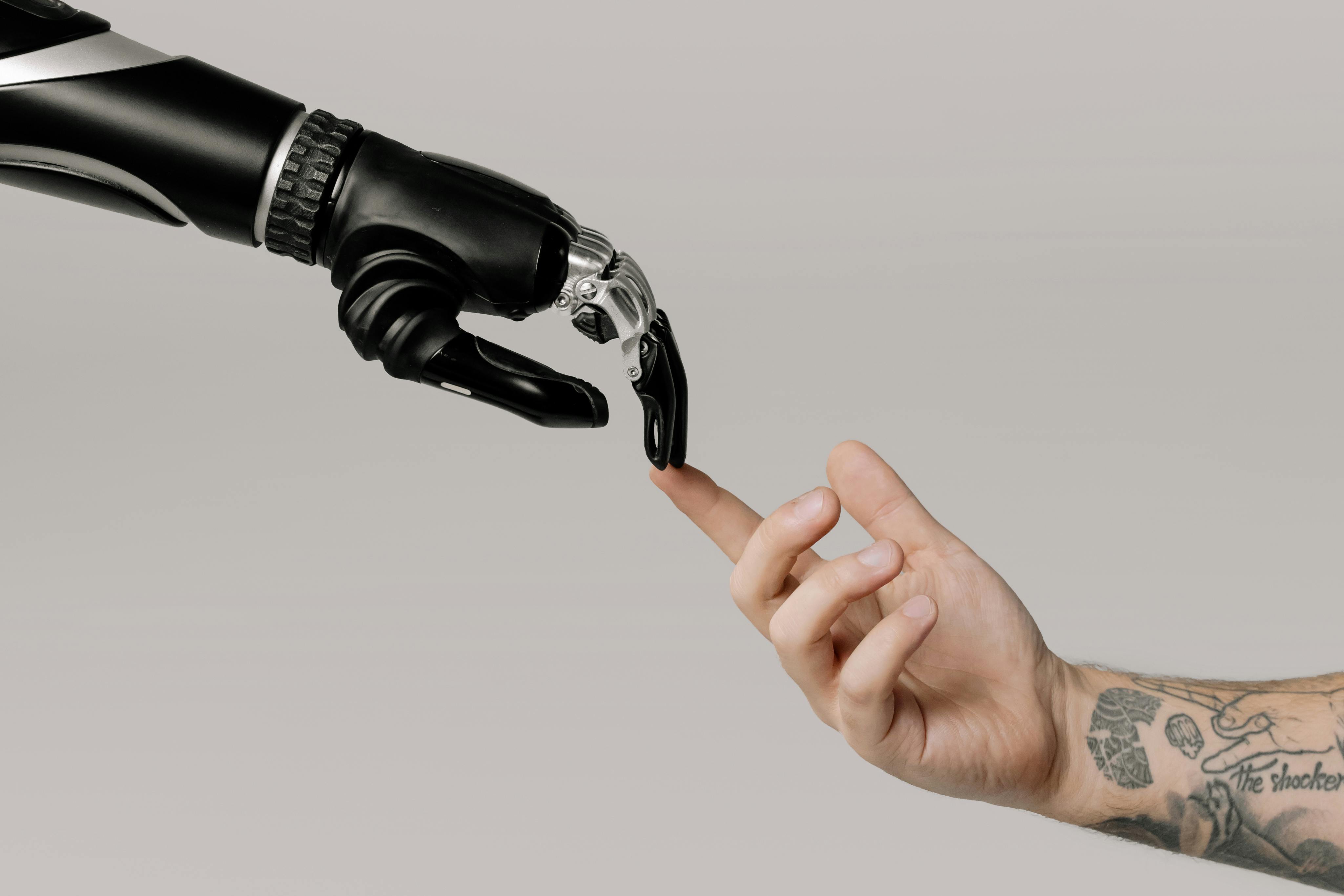
Generative AI programmes are predicted to hinder young people’s entry into the workforce. The Institute for Public Policy Research (IPPR) has investigated the potential outcomes of companies’ and governments’ increasing use of generative AI. They refer to generative AI being computer software that can “read and create text, software code and data.”
Newer programmes, like ChatGPT and DALL-E, are now able to produce original content, solve complex problems and execute multi-step tasks. Already, 11% of work-related tasks in the UK economy are exposed to generative AI, according to the IPPR. With continued technological advancements this number will continue to rise.
Some companies have replaced certain responsibilities with AI programmes, such as using chatbots instead of customer service operators. IPPR holds that the integration of generative AI into the economic market will initially affect entry-level, part-time and back-office jobs. These “exposed occupations” include secretarial and administrative jobs, data input roles and customer service professions, which are traditionally entry-level positions. The disruption to these roles would mainly impact women and young people.
Previously, entry-level positions have enabled people to “climb up the career ladder.” However, automation has replaced many tasks fulfilled by these jobs. Subsequently, many entry-level jobs have disappeared, and those that still exist involve responsibilities that companies often consider unsuitable for recent graduates. Virgin Media O2 reported that over 74% of 25-34-year-olds have been rejected from entry-level jobs due to a “lack of experience.”
The advancement of AI has led to a deficit of such positions, leading to higher demand towards on-hand experiences. In fact, StandOut CV reported that one-third of current entry-level positions require on average 2.5 years of prior experience. As such, young people have resorted to using internships to gain this necessary level of experience in order to compete with AI.
Companies that use AI to fill roles have been reducing their hiring, rather than laying off current employees. For example, IBM announced it would pause on hiring jobs that AI can perform. Therefore, the workforce disruptions will largely be experienced by those entering the job market or transitioning between sectors.
However, CEO of OpenAI, Sam Altman, has argued that AI is a “tool” and therefore is unable to “substitute expertise.” He believes that AI could create new jobs in unforeseeable sectors and services. As such, he has encouraged young people to “learn AI skills like programming and engineering.”
A study by McKinsey Global Institute estimates that by 2030, AI could create over 20 million new jobs globally. Other AI researchers have predicted that young people could exploit the rise of AI if they acquire the right skills to adapt to its technologies. The UK parliament has already proposed introducing AI skills development in schools, to prepare children for the digital workforce.
Alternative attitudes on AI’s influence over the workforce include Geoffrey Hinton, the AI “godfather.” He advised that the jobs that would survive AI would be the ones that are “very adaptable and physically skilled, and plumbing’s that kind of job.”
Image credit: Pexels





Leave a Reply