
Emily Pitt-Shaw Investigation Editor
Petra Todd Environmental Correspondant
Jaz Brook Environmental Correspondant
Image Credit: Security Intelligence
A proposal to remove two large engines that supply power and heat at the University of East Anglia may mean an 80% reduction in carbon emissions at the institution is still on track.
Concrete’s investigations team can reveal that plans to get rid of the Jenbacher Combined Heat & Power (CHP) plant could see the machines being removed earlier than the previously planned 2030.
The anticipated cost of the removal will match the revenue made from selling the equiptment, but has not yet been confirmed.
They currently produce 2 million watts of power and 1.7 million watts of heat per hour each – enough to power approximately 3,310 homes every day.
The action alone would reportedly reduce scope one and two carbon emissions by 66% (versus 2015) – leaving the University of East Anglia to reduce a further 14% by 2030 to meet their 80% reduction committment.
The University of East Anglia has committed to a net zero goal by 2045, with scope three emissions being the primary reduction focus from 2030 onwards.
The reshaped Sustainability Committee and its Implementation Teams have been tasked with delivering the changes required to meet such commitments.
UEA’s Head of Sustainability for the Estates Directorate, Matthew Bray, said: ‘‘the removal of the CHP plant is the most critical element of reaching the 2030 target”.
Instead, the University of East Anglia will now buy all of its power from the grid.
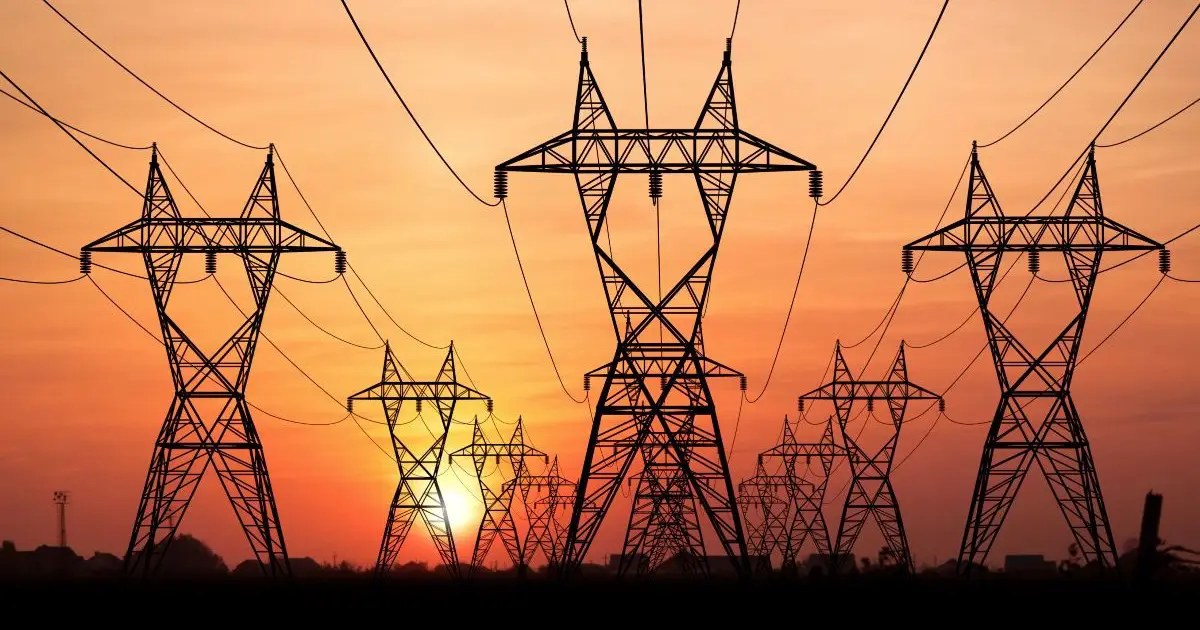
So, what is ‘the grid’?
The power grid is an interconnected network of power-lines and stations that transmit and distribute elctricity to consumers.
With the removal of the Jenbacher engines, all of UEA’s power supplies will be bought from the grid, which currently supplies them with just 10-20% of power. This will be 100% renewable.
Matthew Bray suggested that the University of East Anglia could also improve the quality of the renewable guarantee of origin (REGO) by limiting it to solar and wind generators, but no concrete plans have been confirmed as of yet.
The next question is the heat – what will this be replaced with?
There is mention of some renewables, but it will mostly rely existing on gas fired condensing boilers. Additional ones are to be installed later this year in Energy Centre Two (previously Biomas). The phase out of this method has not yet been determined.
Why does this matter?
With recent data announcing that January 2025 was 1.75 degrees above pre-industrial levels, compared to the 1.5 degree maxi- mum, the climate crisis is more serious than ever.
The past few weeks have been disconcertingly hot for March, and despite how nice it’s been to not be cold all the time, the heat is proving that rapid decarbonisation is needed across all institutions.
The climate crisis has been caused by the burning of fossil fuels. They release warm gases into the atmosphere and cause what can be described as catastrophic consequences.
Just recently it was reported that February 2025 saw global sea ice at a record low, yet oil and gas fields continue to be explored by fossil fuel companies and governments. Despite the problem stemming from the top, all institutions have a part to play in the low carbon transition and universities are no exception.
It is vital that the University of East Anglia is part of this green transition. Educational institutions carrying out genuine carbon reductions portrays the severity of global heating to students.
In turn, these students will hopefully be inspired to make positive changes in their future careers and lives.
The climate crisis will massively affect our generation and devastatingly, our children’s childhoods will be very different to that of our own. If the world continues to carry on with business as usual, we risk societal collapse from crop failure, global water shortages, and extreme weather events. The California wildfires are just one of many examples of such.
These consequences pose global health risks to the populations, and even death in the most severe of cases.

Image Credit: Freepik
But what will it all cost?
With the University of East Anglia’s budget deficit of £7.6 million, not including Pension Schemes, in 2023/24, there may be some speculation around the financial implications of any decision.
Matthew explained that: “the CHP plant, since they were installed in 2017, have saved us [on average] over £1 million per annum – but that have depended on many factors; engine reliability, power and gas price, carbon price and maintenance contractor performance”.
In the last two years, energy market price volatility has affected these savings.
Instead, the university is looking to secure a fixed price virtual power purchase agreement from a portfolio of generators. This would allow them to remain in line with both the long-term financial forecast and stay on course to cut carbon emissions by 80% by 2030.
This strategy delivers a more stable and predictable financial and emissions outlook.
Matthew Bray said: “predictable and stable costs that guarantee to deliver the current financial forecast are preferable to potential savings that come with a very high level of risk and require a lot of manpower and effort to control”,
“Staying within the long-term financial forecast is key, and that is why the collaborative, engagement and synergy ele- ments of the Environmental Sustainability Strategy are our immediate focus”.
What does the future look like?
Opinion by Jaz Brook
“Net Zero by 2045 is the commitment date for all three scopes”. But how will this be achieved?
Close connections to other institutions and networks may be key.
“For example, we are members of EAUC and AUDE and they are both a source of detailed guidance as well as hubs for communicating with our peers across the sector”, said the Head of Sustainability.
The Environmental Association of Colleges and Universities and The Association of University Directors of Estates are large-scale national networks for higher education that host events and develop and share resources that facilitate sustainability.
However, their strategies focus on scope one and two, pitching scope three as a future issue. As specified by the Carbon Trust, scope three includes all additional value chain emissions from waste disposal to employee commuting, investment to product inputs.
Although it’s reasonable to start with scopes one and two, this piece-meal approach might seem like sustainability isn’t prioritised or embedded in the whole institution but is instead tokenistic.
As states on the website for Higher Education Statistics Agency, UEA’s total scope three emissions total to approximately 113.712 tonnes of CO2 every year. This includes waste, water supply and wastewater treatment. The emissions of procurement, investment and employee travel aren’t mentioned or measured.
Matthew said: “In addition to being members of various groups we have also had some mutual/exchange style visits with other institutions, most recently Lancaster”,
The Lancaster University is definitely one to watch when it comes to decarbonisation.
They recently launched its groundbreaking Net Zero Energy Centre which, according to their website, “is part of a sector-leading renewable energy project to virtually eliminate the use of gas to heat its Lancaster campus.”
These connections in higher education decarbonisation are incredibly important for impactful action, but to me, it’s unclear how this will support scope three. In fact, it’s perhaps unclear any net zero strategies what the future will look like post-scope two.
Keywords
1.5 degrees above pre–industrial levels = industrialisation was the point where we started adding warming gases into the atmosphere. Scientists have identified that the safe limit of warming is 1.5 degrees above what the global average temperature was before this time.
Scope 1 = direct emissions that a company generates from its own operations and controlled sources.
Scope 2 = indirect emissions from the generation of electricity, heat, steam, or cooling that a company purchases and uses.
Scope 3 = all other indirect emissions that occur in a company’s value chain
Decarbonisation = this describes the process of moving away from fossil fuels
Tyndall centre = a centre of climate research at UEA.
First Student-Led Climate Week in the UK at UEA 17th-21st of March
Are you ready for a fun-packed week of over 35
completely sustainable, student-led and inclu- sive events?
Youth Climate Solu-
tions and the UEA
Student Sustainability Network are proud to announce Climate Week at UEA from the 17th -21st of March 2025.
I’m Jaz Brook and I’m an Environmental Cor- respondent at Concrete. I’m also a DEV stu- dent, an activist and a social entrepreneur, and in collaboration with my organisation Youth Climate Solutions and the Student Sustainability Network here at UEA we are bringing you an amazing line-up of events.
I, along with others, feel that university is falling short of truly preparing us for the complexities of the world we’re about to enter.
So we’re taking matters into our own hands!
All careers need climate-conscious skills and young people need the skills to manage their wellbeing and fight injustice. This week is an incredible testament to our power as students when we come together for change.
Our team of over 20 students have worked tirelessly over the past few months to create a schedule of events that truly has something for everyone.
We’ve included climate action talks, workshops, fairs on careers, wellbeing and psychology, med- icine, plant-based food, business, policy, fashion, grassroots, art, waste, yoga, communication, sport, travel, campaigns, dance, social justice, energy and more.
You will also find the University of East Anglia’s Sustainability Team there.
In the meantime, you can reach out to him and the team at sustainability@uea.ac.uk to ask any questions about this article, or other topics.
We hope you can make it!





Leave a Reply to MelCancel reply