

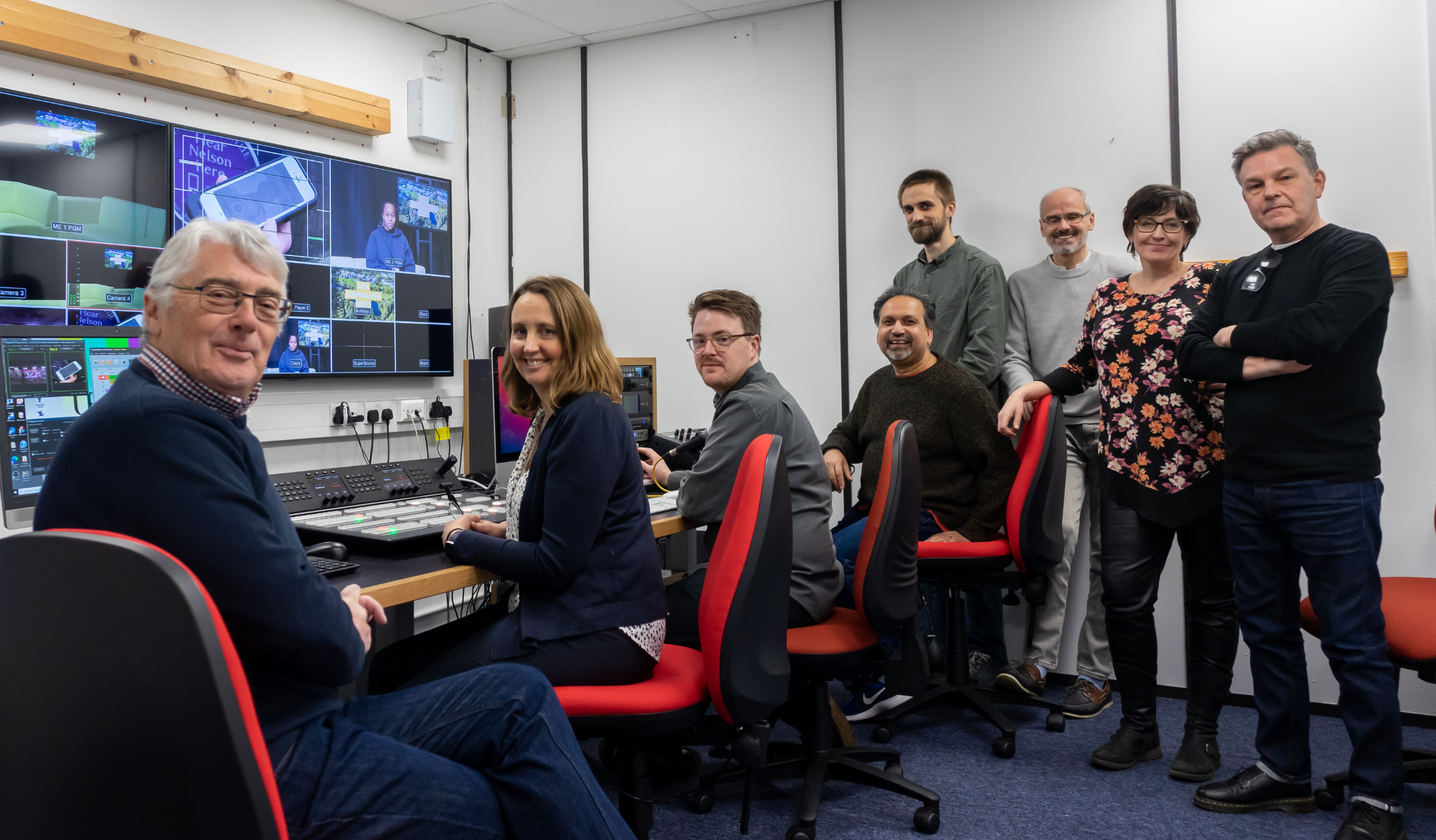
On March 5th the School of PPA (Politics, Philosophy and Area Studies) welcomed distinguished guests Major General (retired) Zahid Mahmood, Professor Lee Jarvis and Dr Suzanne Doyle to discuss the ongoing socio-political impacts of the War on Terror. The event, organized by PPA’s Dr Ra Mason and assisted by School Convenor Syed Muhammad Hamza, was well-attended by students and multiple faculty members. Attendees reported that the event, which had a panel discussion and Q&A structure, was one of the most well- attended “Politics on Wednesdays” events.
Professor Lee Jarvis, a specialist in international security and professor of international politics at the University of Loughborough, opened the event by discussing the lingering impact of the War on Terror in the post 9/11 period; arguing it is forever embedded in international security through the ever-present counter-terrorism measures in the international community. Professor Jarvis gave an outline of how the concept of counter-terrorism measures became more apparent to the Western public in the post 9/11 period, but cautioned against assuming the same outside of the West. Jarvis explained that for regions such as South Asia, the emphasis on such ‘new security challenges’ predated the horrific 9/11 attacks. Professor Jarvis also discussed the shifting attitudes towards the U.S.’ military response to 9/11, arguing in the immediate period after the attack there was “diminished space” for criticism. Only after the 20-year anniversary of the attacks previously taboo views, such as the counterproductivity of military forces, were able to be discussed in the mainstream.
Joining from Pakistan, Major General (retd) Zahid Mahmood, a former two-star Pakistan Army General, brought his expertise from the front lines of the War on Terror. In 2008, as a Lieutenant Colonel, Mahmood commanded a battalion in the Bajaur region of Pakistan, a particularly turbulent area bordering Afghanistan and sustained a severe injury losing his right leg in the line of duty. The Major General retired as a highly decorated military official, receiving Tamgha-i-Basalat (Medal of Valour) for his bravery. The General is currently a defense analyst appearing daily in the Pakistani media. A strong speaker, Major General (retd) Mahmood opened with a striking statement that, regarding the War on Terror, the global south is still “ground zero” and claimed the U.S.’ withdrawal from Afghanistan comprised of “unmet promises hindering the path of peace”. Major General emphasised
Pakistan’s unwavering efforts to combat terrorism however, in the wake of the U.S.’ withdrawal from Afghanistan, terror attacks in Pakistan continue to increase. Additionally, Major General stressed the importance of separating acts-of-terror from religion for effective resolution. UEA’s Dr Suzanne Doyle, closed the discussion by reflecting on the “legacy of violence” left behind by the War on Terror, arguing the war can never truly ever be over, as the language of anti-terrorism is embedded in our everyday – giving the example of the British Transport Police’s slogan “See it, say it, sorted”. Dr Doyle discussed the importance of seeing security policies as contextual, arguing that the security threats faced by regions will differ. As the Q&A session closed it was clear all three speakers could agree on one thing: as it stands, the future of global politics is unsettling and uncertain.



Leave a Reply