
If you were to turn on the television in 1973 you might have been so lucky to have been greeted with a public information film going by the name of ‘Lonely Water’. Featuring the Grim Reaper as he stands ominously by the side of a pond, the audience watches as young children fall into its depths. The message is clear yet terrifying; water is dangerous, don’t play near it. Shown during advertising breaks as a way of educating the general public, the Central Office of Information produced countless 1-2 minute films such as this. Although they may not seem particularly remarkable today, it might be useful to note that the genre, atmosphere and overall tone was a sharp deviation from the bright cartoon visuals that were shown in the 1960s. In many ways, this was due to the growing interest in the supernatural, the esoteric and in other words, ‘the occult’ — a counter-culture that was gradually seeping into the mainstream.
An occult revival was no new phenomenon in Britain in the 20th century. The 1920s had seen a steep incline in those becoming involved with Spiritualism, a belief in the possibility of contact with the spirits of the dead. This can be understood to some degree as an after-effect of the First World War, with many struggling to comprehend their grief in a meaningful manner within the more traditional framework of the church. However, it was in 1951, when the Witchcraft Act of 1735 was repealed, that now infamous literature such as The Witch-Cult in Western Europe and the writings of Gerald Gardener were to be published. Gardener’s writing in particular was hugely significant in establishing the neo-pagan Wiccan religion, inspiring many to explore witchcraft and practical spell work. Although these books had begun to seep into the cultural consciousness, the 1960s as a time of social upheaval and rejection of mainstream values can also be seen as laying the foundations of what was to come.
But what did the 1970s occult revival actually look like? With roots in the newfound popularity of the esoteric bookshop, ‘alternative’ practices such as astrology, divination and mysticism were becoming increasingly available to the masses. Although many of these customs were harmless, Britain was entering the heyday of the tabloid press, with its love for ‘real-life’ stories on witch cults and satanic rituals almost exclusively revealing a darker side to the occult. It was these shocking and often sexualised stories that began to be represented within the film and television of the time, with Robin Hardy’s The Wicker Man and Piers Haggard’s Blood on Satan’s Claw coming to be characteristic of how the public saw the occult. This transition into the mainstream can be seen to be fully realised by the BBC’s broadcasting of dark and supernatural motifs in what is essentially the agent of the establishment; a public information film (e.g. Lonely Water).
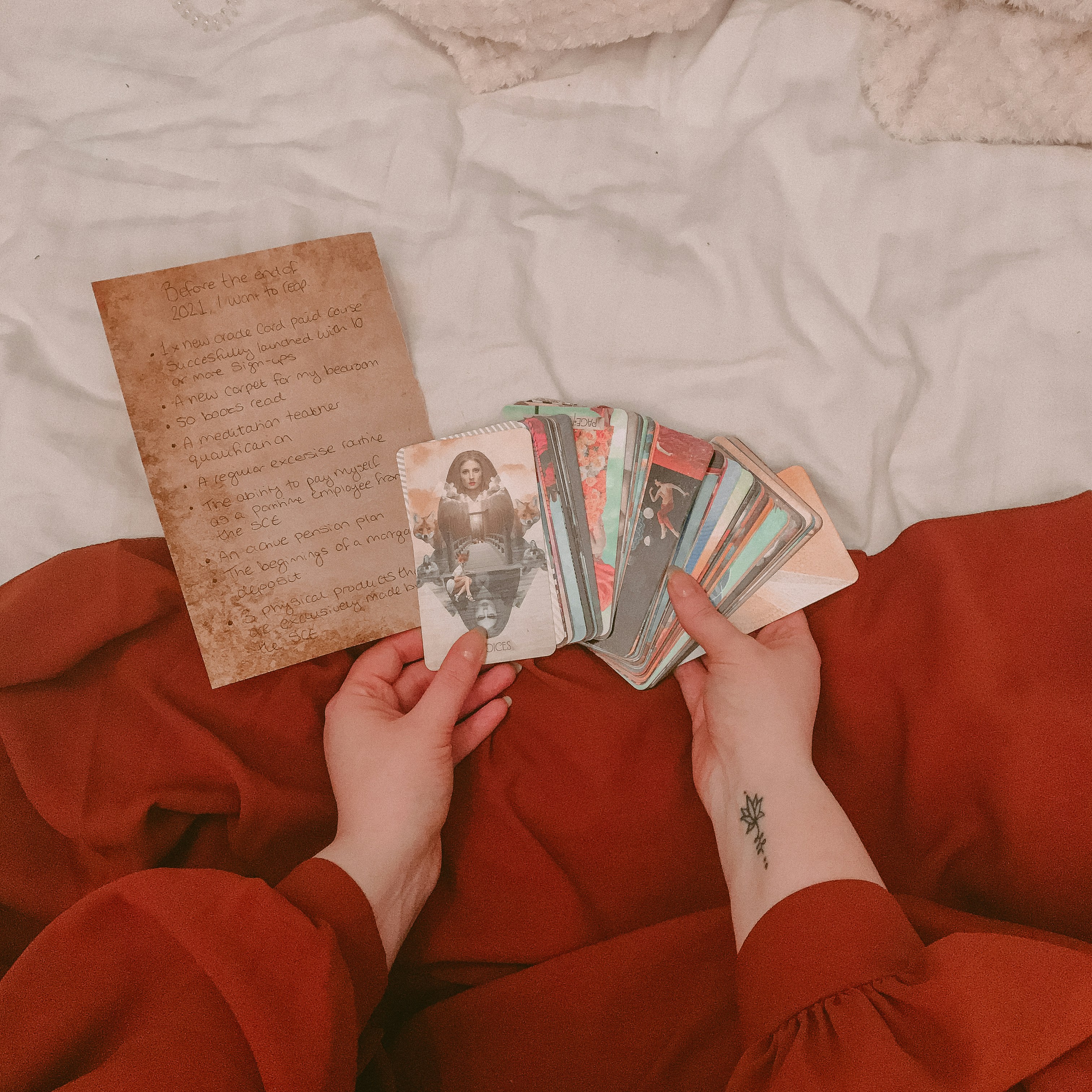
But can this whirlwind of supernatural curiosity during the 1970s tell us anything about today? Post-Brexit, and indeed Post-Pandemic, there has been a sharp rise in spiritual and occult interest, with sales of tarot cards tripling in 2020 and pagan Wicca being one of the fastest growing religions worldwide. Again we can see this being translated into certain passionate subsets in art and media. For instance, independent film and production company A24, with their involvement in the promotion of folk horror as a genre in film and as a result, literature. However, whether we can say that this has entered the mainstream or even the cultural zeitgeist is a little bit more ambiguous. With signs pointing towards what could either be a repeat or a red herring, the question is as follows — are we on the precipice of an occult revival or will we be balancing on the edge for another decade yet?
Photo credit: Unsplash



Leave a Reply