
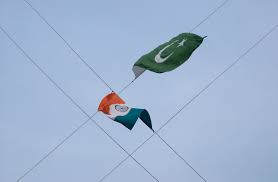
On the 22nd of April, a deadly terrorist attack in Pahalgam, Indian-administered Kashmir, claimed the lives of 26 Hindu tourists, sparking intense political and military tensions between India and Pakistan. The attackers opened fire on a bus carrying pilgrims visiting a Hindu shrine, marking one of the most significant assaults on civilians in the region in recent years. Indian officials immediately blamed Pakistan-based militant groups, specifically the Resistance Front (TRF), which has links to Lashkar-e-Taiba, a notorious terror network with a long history of cross-border insurgency in Kashmir .
Pakistan vehemently denied involvement in the attack, and Islamabad’s foreign ministry called for an independent investigation, denouncing the accusations as unfounded . However, Indian intelligence agencies reported evidence suggesting that the attackers had crossed into Kashmir from Pakistan-administered territory, fueling further suspicions of state-sponsored terrorism . This marks a stark escalation in the already volatile Indo-Pakistani relationship, where both countries have historically struggled with mutual distrust and sporadic violence along their disputed borders.
In response, India launched a large-scale military retaliation, codenamed “Operation Sindoor,” on the 6th of May. Indian air forces conducted precision missile strikes on nine locations across Pakistan and Pakistan-administered Kashmir, targeting what it described as “terrorist infrastructure” linked to the Resistance Front and other militant groups. The sites hit included alleged training camps, weapons caches, and command centers . The strikes were described by India’s Defence Ministry as a justified retaliation against those responsible for the Pahalgam attack, aimed at dismantling militant networks that threaten Indian sovereignty.
Pakistan, however, condemned the airstrikes as unprovoked aggression, accusing India of violating international law and escalating the conflict unnecessarily. According to Pakistani military officials, the Indian strikes resulted in significant civilian casualties, with at least 31 Pakistani civilians, including women and children, killed in the bombardment . Pakistan’s military claimed to have downed five Indian fighter jets in the subsequent aerial clashes, though India dismissed this claim as “pure fabrication” and insisted that its forces had successfully completed their objectives without sustaining significant losses .
The situation quickly escalated beyond military exchanges, with severe diplomatic consequences. On the 7th of May, India announced that it was suspending the 1960 Indus Waters Treaty, a landmark agreement that regulates water sharing between the two countries. India’s Ministry of External Affairs stated that the suspension would remain in place until Pakistan “credibly and irreversibly” ceased what it deemed cross-border terrorism. The Indus River, which provides around 80% of Pakistan’s irrigation water, is vital for the country’s agricultural sector, and India’s decision to cut off water from its share of the treaty has been seen as a highly provocative move.
In retaliation, Pakistan’s government closed its airspace to Indian aircraft and halted all cross-border trade with India, significantly reducing economic exchanges that have been ongoing since the two countries signed trade agreements in 1999. Additionally, Pakistan began preparing for a legal challenge, signaling its intention to bring the issue to international courts. Islamabad also imposed visa restrictions on Indian nationals, further stoking the flames of an already tense situation . Pakistani officials warned that any future attempts to block water flow from the Indus would be treated as a violation of their sovereignty and would provoke military action.
As military tensions mounted, both countries’ armed forces moved their troops to heightened alert along the Line of Control (LoC) in Kashmir. The conflict seemed to be on the brink of a full-scale war, a reality made more chilling by both countries’ nuclear arsenals. With nuclear weapons at the ready, many international observers began to express serious concerns about the possibility of a nuclear escalation. The U.S. and China, two of the world’s largest military powers, along with other Western countries, called for immediate de-escalation and urged both sides to return to the negotiating table .
The global response included calls for restraint from the United Nations, the European Union, and Saudi Arabia, all of which urged both India and Pakistan to avoid actions that would lead to irreversible military conflict. UN Secretary-General António Guterres issued a statement calling on both sides to “exercise maximum restraint” and to work toward a peaceful resolution . The International Committee of the Red Cross (ICRC) also warned that the conflict could have disastrous humanitarian consequences for the civilian population living in the disputed regions, especially in Kashmir, which has seen persistent violence for decades .
The crisis raised fundamental questions about the stability of South Asia and the long-term prospects for peace in the region. Both India and Pakistan have suffered from decades of animosity, with the Kashmir dispute at its core. Since the partition of British India in 1947, the two nuclear-armed neighbors have fought three wars, and tensions over Kashmir have triggered numerous border skirmishes and insurgencies. Despite several peace processes over the years, including the Shimla Agreement in 1972 and the Lahore Declaration in 1999, both countries have struggled to establish lasting trust or compromise.
The question of nuclear weapons further complicates the situation. Both India and Pakistan have publicly maintained “no first use” nuclear policies, but experts warn that any significant military conflict risks crossing thresholds that could provoke a nuclear response. In this context, even small-scale skirmishes could quickly spiral out of control with catastrophic consequences for the region and the world .
In the days following the military strikes, a fragile ceasefire was brokered by the U.S. and other international powers. However, the situation remains volatile, with both sides maintaining large military presences along the LoC. As tensions persist, the world watches closely, hoping for a de-escalation before the crisis turns into a broader war.
Image Credit: WikimediaCommons



Leave a Reply