
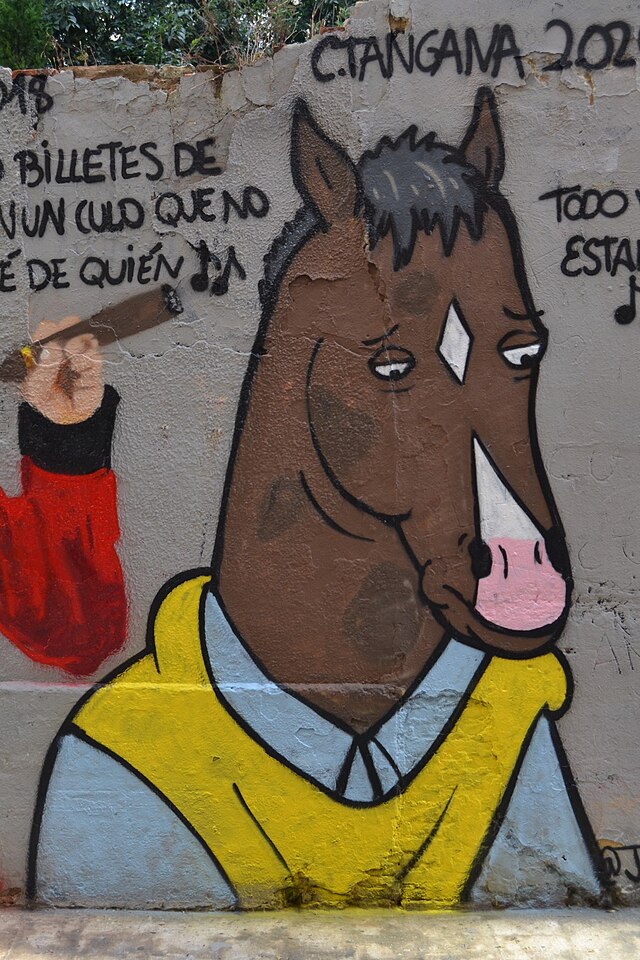
Netflix’s BoJack Horseman isn’t the first animated show to feature a dysfunctional protagonist, but it’s arguably one of the few to treat mental health with such raw honesty. What sets it apart is not just its willingness to dive headfirst into topics like depression, addiction, and trauma—it’s how it balances these themes with irreverent humour, absurd visual gags, and anthropomorphic animal characters. The show’s ability to take mental illness seriously while simultaneously embracing its satirical tone allows it to be emotionally resonant without becoming unbearably bleak. The expertly balanced tone is one of the reasons BoJack Horseman has become such a poignant depiction of mental health in modern media.
The central character, BoJack, is a washed-up sitcom star grappling with self-loathing, addiction, and unresolved trauma. His internal struggles are not presented as obstacles to be neatly overcome by the series’ end, but as ongoing battles. This depiction of mental illness as a chronic, messy part of life is relevant to many people, especially with how much of a challenge navigating it poses. What makes this realism palatable, however, is the show’s commitment to humour that’s clever, darkly comic, and sharply satirical.
For example, the show often uses visual absurdity to mask bleak emotional darkness. In one scene, BoJack delivers a slurred, broken monologue to a room full of mannequins—each dressed as people from his past—while high on painkillers. It’s a surreal, almost comical image, but the scene itself is a brutal depiction of a man at rock bottom. The humour is imperative to the tone of the show, highlighting the disconnect between how BoJack sees himself and the reality of his actions. The show plays with this duality constantly using its irreverent style to reflect the chaos and irrationality of mental illness itself.
Season 4’s portrayal of BoJack’s mother, Beatrice, is another example. Her dementia is shown in the episode “Time’s Arrow,” where viewers see the world through her fragmented memories. It’s a tragic, intimate depiction of cognitive decline, yet it’s surrounded by cartoonish imagery and flashbacks. The irreverent structure—jumping between timelines and perspectives—helps the audience emotionally process a painful reality without being overwhelmed. Instead of numbing the impact, the surreal tone gives us space to feel the full weight of her trauma and its ripple effects across generations. It also shows how cartoonish imagery and storylines can beget harsh realities, providing levity to them before they get too dire.
Another standout episode, “Stupid Piece of Sh*t,” invites the audience into BoJack’s internal monologue as he berates himself over minor social interactions. The animation style becomes scratchier and more chaotic, reflecting his mental spiral. But despite its bleak content, the episode is also funny as BoJack’s insults toward himself are exaggerated and absurd. This blend of self-deprecation and visual comedy not only makes his depression more relatable, but underscores how mental illness often manifests in mundane, and even ridiculous, ways.
The show also tackles how society treats mental illness. In Hollywood (or “Hollywoo,” as it comically gets renamed to), therapy is a punchline, rehab is a career move, and vulnerability is monetized. This satirical lens critiques real-world attitudes while grounding the characters in emotional truth. Diane Nguyen’s struggles with antidepressants, Princess Carolyn’s infertility and workaholism, and even Mr. Peanutbutter’s relentless optimism are all layered with nuance, showing that mental health issues are not confined to one type of personality or background.
BoJack Horseman ultimately works because it demonstrates the fundamental messiness and complexity of the human condition. Its irreverent tone doesn’t undermine its emotional depth—it enhances it. By using humour, absurdity, and satire, the show creates a safe space to explore painful realities without offering easy solutions. Instead, it reminds viewers that healing is non-linear, that self-awareness doesn’t guarantee change, and that even in a world of talking animals, emotional pain is deeply human. It is ultimately a very thought-provoking show, as heartbreaking as it is hilarious. This level of emotional maturity is not inherently uncommon in the world of animation, but few programs have portrayed the human condition in as honest and raw a way as BoJack Horseman while still being incredibly funny.
Photo Credit: Wikimedia Commons





Leave a Reply