
The 2019 Fridays for Future movement, pioneered by Greta Thunberg protesting outside the Swedish parliament, pushed conversation around planetary destruction into the mainstream.
Since then there have been various global setbacks in the call for environmental protection.
The promotion of climate denialism from right-wing parties, supported by corporate interests and billionaires, has played a huge part in this.
Despite this ‘business as usual’ approach from world leaders and many people ‘burying their heads in the sand’, drastic action has never been more urgent.
According to the Organisation for Economic Development, plastic pollution is set to almost triple by 2060.
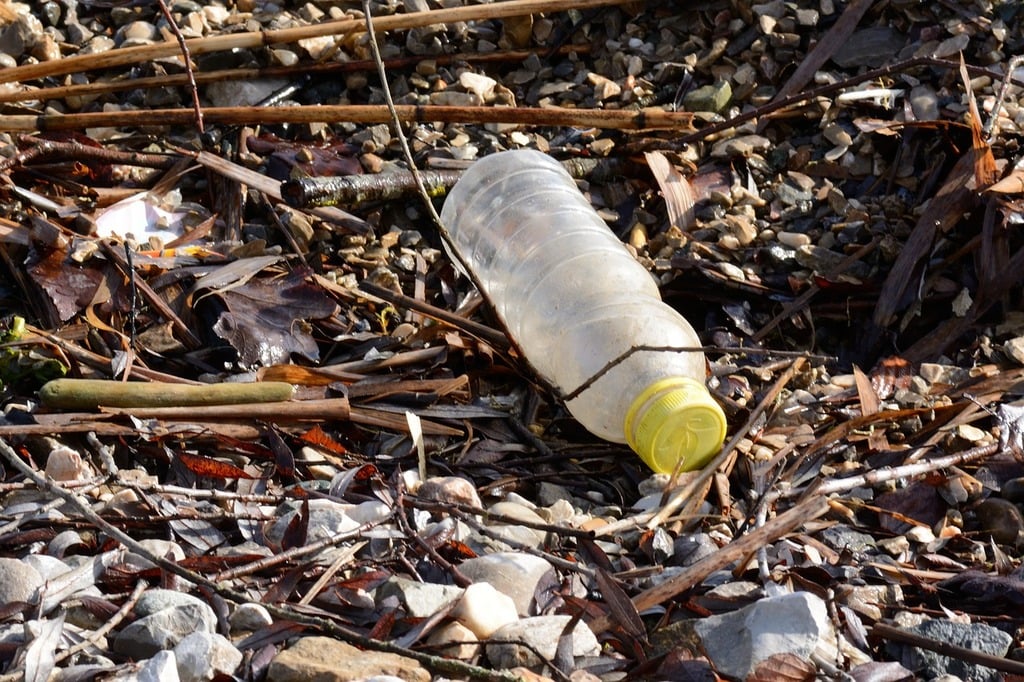
The situation is an ecological and health disaster: ten million tonnes of plastic enter our oceans every year, wiping out huge numbers of marine animals.
Around 68,000 microplastic pieces are inhaled daily, filling our lungs, brain and blood.
What was hoped to be the last round of the UN Global Plastics Treaty negotiations kicked off on the 5 August in Geneva.
Had the talks been a success, a legally binding international agreement on plastic pollution would have been created. However, after over 10 days of negotiations with delegates from 184 countries, it became clear in the early hours of day 11 that no solution was to be found.
So what caused this lack of success?
One of the contentious points during negotiations was ‘recycling vs production’.
The High Ambition Coalition (a group of countries committed to a set of strong environmental goals) argued that plastic pollution needed to be dealt with at source; ie. limiting production.
Other countries, including petro-states like the US, Saudi Arabia and Kuwait, called for more of a downstream approach focusing on waste management to protect the economic growth plastic production brings to these states.
During negotiations, they expressed the ‘sovereign right of states’ to exploit their own resources, as well as pushing for pledges to be nationally rather than globally enforced.
The High Ambition Countries refused to accept a treaty that allowed exponential growth in production to continue, and therefore ruled out discussing the unambitious text.
Despite countries like the UK being part of the High Ambition group, Desmog revealed in 2023 that the UK imported nearly £20 billion of fossil fuels from states such as Saudi Arabia and Kuwait – demonstrating that even within this group, support for these petro-states is still high.
The presence of petrochemical and fossil fuel lobbyists was another contributing factor in the derailing of talks, whose corporate interests over-ruled the health and scientific concerns.
Over 200 were present, with 19 sitting on the national delegations of Egypt, Kazakhstan, China, Iran, Chile and the Dominican Republic.
Campaign groups such as Greenpeace continue to protest for the removal of these individuals from environmental and climate talks.
So what now?
The UNEP’s Inger Andersen has stated that talks will continue, but no further details have been given.
The process itself has been questioned, with many suggesting moving away from consensus to majority voting.
High ambition countries such as the EU, Norway, Rwanda and the UK, are talking about continuing talks without the petro-states in the hope of finally reaching an agreement.
Experts and campaigners are outraged by the outcome of the most recent negotiations, with environmental group Surfers Against Sewage labelling the outcome as ‘environmental heartbreak’.
Without significant developments in international talks, exponential growth in plastic production – driven by fossil fuel expansion – is set to continue with catastrophic consequences for climate, nature and human health.
The potential for the High Ambition Coalition to continue negotiations without the petro-states may be the breakthrough needed.
After all, as suggested by a Greenpeace report from July 2025 about the talks, action is only likely when planetary and human health prevail over short-term economic and financial interests.
Image Credit: PICRYL





Leave a Reply