
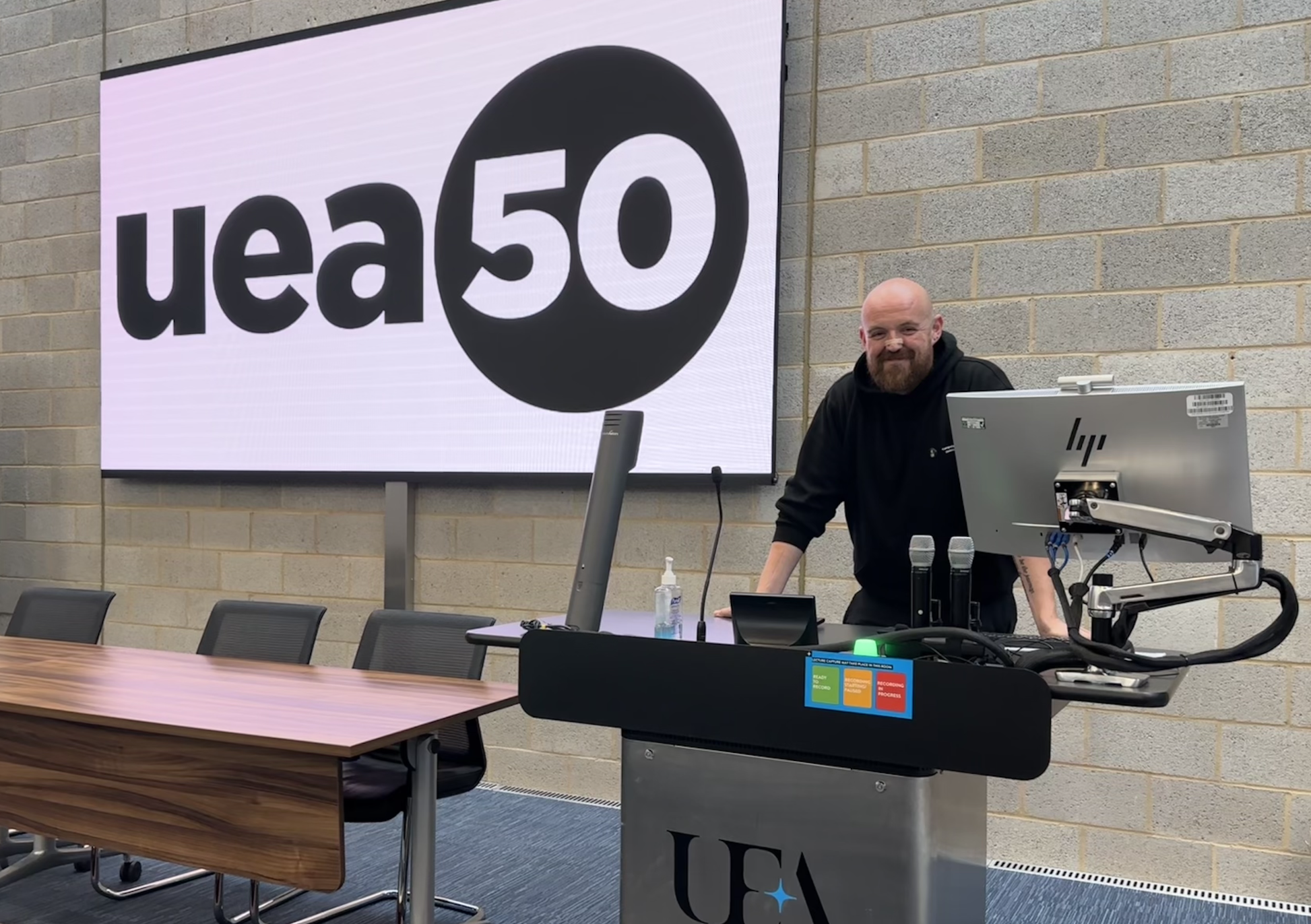
The university Students’ Union is introducing a new democratic process this academic year, UEA50, which will dissolve the Union Council and see changes to the way core issues are discussed and actioned.
For around 60 years, SU democracy relied upon a parliamentary-style system of representation similar to that of an electoral college, through which each club or society would elect a representative member.
Those who were on the Union Council would attend meetings and provide insight into a range of different student issues, including rising food prices, society committee structures, and changes to byelaws.
Whilst it sounds like a simple and effective system, representative members found it to be disorganised, stressful, and inadequate.
In 2019, the Students’ Union started a democracy review, during which issues with the Union Council were raised, though there was uncertainty with how to address them.
Spearheaded by Chris Kershaw, the SU’s Campaigns and Democracy Officer, the prior democratic process is being replaced entirely by UEA50.
The new process has been designed with Counterculture, an outside body that has assisted Students’ Unions across UK universities to adapt their democratic processes.
UEA50 aims to provide democratic access to the wider student community, with the aim that decisions will therefore be more representative of the student community.
The process uses a sortition system, whereby 50 students will be selected at random, in a manner similar to jury duty.
“This sortition system means we will have a system where all students can talk about things that actually matter to them,” Chris explained.
For the first two terms, the 50 students will be chosen entirely randomly by the university whilst the Students’ Union is in the process of gaining diversity information from a data sharing agreement.
By the third term, Chris’ hope is that whilst the students are still chosen randomly, they will ensure that they are statistically representative of the diverse student body.
When discussing how diverse voices will be heard throughout the democratic process, Chris said that “any student can still turn up and make their voice heard, [but] it is the decision making that will be done by that random selection [the UEA50].”
In order to make participation worth the chosen students’ time, all participants in UEA50 will be paid £50.
Chris said the decision was made due to the cost of living crisis and NUS statistics that state 65-70% of undergraduate students are forced to work during their studies.




Leave a Reply