
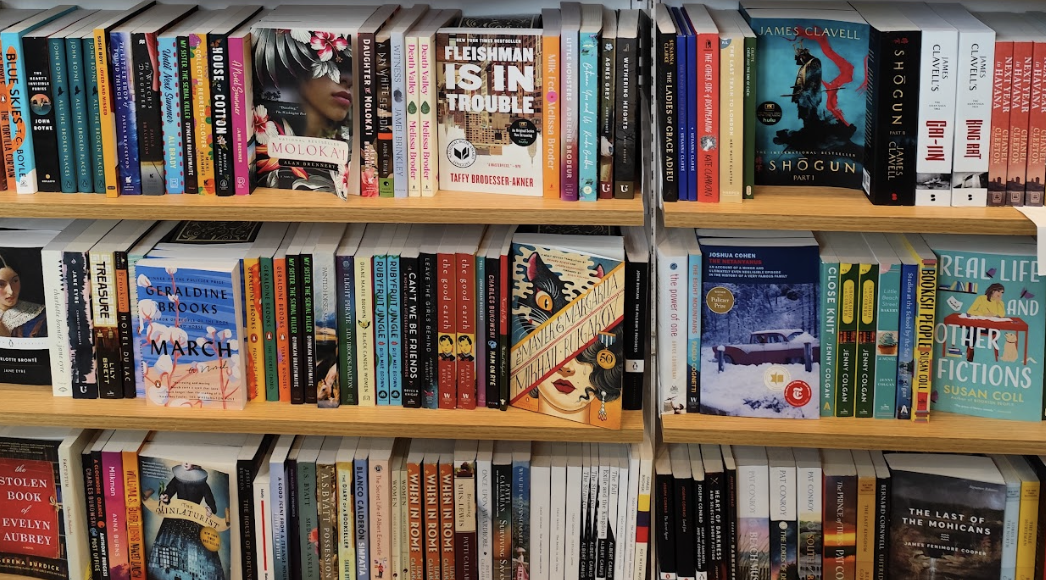
Artificial Intelligence (AI) is rapidly becoming more prominent within literature, with publishers and retailers alike warning against computer generated content.
Women’s sports biographies have been particularly affected, with quickly created books about Chloe Kelly and Michelle Agyemang appearing on Amazon following the Lioness’ recent Euros victory. Their covers are the same, despite being two different biographies, with a picture of an American football on the front.
However, AI in this genre is not just merely incorrect, it also exploits the suffering women in sport have faced.
Similarly to Kelly and Agyemang, Afghan football player Khalida Popal’s autobiography My Beautiful Sisters has recently been imitated online. Containing harrowing accounts of Popal’s escape from the Taliban, and reflections on experiences of sexual assault faced by her teammates, Popal’s memoir is incredibly important for women in similar situations to show hope can be found in darkness.
Though the AI versions have now been removed, its existence was both saddening and terrifying. By rewriting Popal’s life-story, the computer dehumanised her account, limiting its authenticity.
On an individual level, this exploitation of Popal’s trauma is invalidating, but on a bigger scale, it begins to silence the voices of women completely.
If a computer can write a story about the injustices women face, will women be granted the space to tell their stories?
The issue is not just tucked into the corner of sports biographies; it can even be tied to our campus.
Ex UEA lecturer, Angela Carter, is one victim of AI tales poorly mirroring her work, particularly her feminist short story collection The Bloody Chamber. The main culprit is the website Storynest, a self-described ‘creative’ hub where writers share their AI generated creations.
In particular, Carter’s retelling of the German folktale ‘The Erl King’ found its computer-generated counterpart on the site. The AI narrative follows the romance between a knight and princess, and briefly explores the princess’ entrapment within her own metaphorical ‘prison’, with the knight’s acknowledgement that “she didn’t belong in that gilded cage”.
A comparable notion appears in ‘The Erl King’, where the heroine, once imprisoned by the eponymous character, escapes and frees the wild birds he trapped in similarly gilded cages.
However, Carter’s heroine realises the injustice of her situation rather than having a man point it out to her. The knight here has a strong likeness to male creators on social media who get performatively angry about periods – there is no use telling women they suffer, we already know!
By implying only men can see injustices against women, this AI text not only dismisses previous literature that affirms the opposite, but also steers the narrative away from the female to the male experience, leaving no room to explore alternative viewpoints.
Though we cannot stop AI literature from becoming completely mainstream, we can keep consuming authentic stories from woman writers, both fiction and non-fiction.
So, no, the death of the woman writer hasn’t occurred, but it is essential that we do every small thing we can to keep her alive.
Image credit: Micah Petyt




Leave a Reply