
To be a canvas
Out to dry, my skin peeling,
I stare into an endless black,
where no one sees or speaks.
Am I invisible?
Above, you move, gently brushing the surface,
caressing, enough to tickle. But it stabs,
a malicious incision that causes agony
to prevail. My blood seeps over,
in red, but also black, and white, and blue,
until I’m covered. A pastiche of your desires.
I savour the last stroke, ingrain its scratch
and its pressure. You turn.
Don’t.
Am I something easily left?
No relief, trapped within my wooden box.
Hundreds of eyes passing over me, scrutinising,
with dismission on their lips.
They aren’t you.
MUTT
That’s your favourite kind of dog.
I know this because you declare it everytime you see one. The whippet-a snippet into the life we’ll live together under our roof for three; you and whippet and me, bundled together like parents and their child. We won’t sleep, we’ll stare at our beast while it snoozes and lazes and snores and dozes, marinating in its own warmth.
One day, when we have a dog, I hope it’ll be like this one
Dance to the music of time
(One thousand years, one turning hand)
Art is a name
Discovered (via consequence)
In work.
I give you the 20th century
(As if it were a myth)
In “Picasso.”
Your name, Du Fu,
Found expression as 少陵野老
After much
Hardship and movement.
These days, we call outwards to you…
“Saint of poetry.”
No part of my analysis
Will disagree with the ethic of your title.
What I wish to offer is suggestive
Of your identity in time.
On this, you wrote
五十年间似反掌
Which, in loose vernacular,
Makes visible fifty years
In a turning hand.
The reflection developed from the sight
Of a sword dance, the specific twist of steel
Locked to the orbit of her body – its magnetism.
[What good are these scientific terms
Compared to the evidence
Of an open eye?]
Like an unborn novelist, it is fragrance,
In space, you noticed (and the pain
Of diffusion when you gasp for air).
If this was linear, a film strip,
I would cut to the present
(Hoping the image preserves in the retina).
Behind a glass display: Tang dynasty dancers,
With the curve of an arrow on a stopwatch,
Stand and observe
The television screen
Of many bodies moving.
This is how your poetry moves me.
Nothing ever happens here
Nothing ever happens here
(Unfinished Bacon)
I.
Incomplete
As male chromosome –
(Like a tumour)
Life was swollen.
The tear, at the corner,
– Surgical –
Saves the palate, balanced,
From the canvas.
Cubism: an obscenity –
The naïve geometry
Can no longer
Bear further Renaissance.
Art is naturally premature
[Post line, post form].
II.
Carpets of primary colour
Fight one another,
Throw the nuance of flesh
Into relief –
Not even the revered (i.e. The Patron)
Exempt from bloodied nose
That comes from the pressing
Of faces into frames.
Bacon’s Vincent:
A portrait of an ear, not a man.
(And the foliage that surrounds
Hiding the Tiger and Gauguin).
Now, naked,
Diffuse in dark. [You really can].
Dance to the music of time
(One thousand years, one turning hand)
Art is a name
Discovered (via consequence)
In work.
I give you the 20th century
(As if it were a myth)
In “Picasso.”
Your name, Du Fu,
Found expression as 少陵野老
After much
Hardship and movement.
These days, we call outwards to you…
“Saint of poetry.”
No part of my analysis
Will disagree with the ethic of your title.
What I wish to offer is suggestive
Of your identity in time.
On this, you wrote
五十年间似反掌
Which, in loose vernacular,
Makes visible fifty years
In a turning hand.
The reflection developed from the sight
Of a sword dance, the specific twist of steel
Locked to the orbit of her body – its magnetism.
[What good are these scientific terms
Compared to the evidence
Of an open eye?]
Like an unborn novelist, it is fragrance,
In space, you noticed (and the pain
Of diffusion when you gasp for air).
If this was linear, a film strip,
I would cut to the present
(Hoping the image preserves in the retina).
Behind a glass display: Tang dynasty dancers,
With the curve of an arrow on a stopwatch,
Stand and observe
The television screen
Of many bodies moving.
This is how your poetry moves me.
Amedeo Modigliani 1884 – 1920
(Portrait of Anna Zborowska c.1918-1919)
Eye frets, are careful –
Ought not to read
Subtitles.
(Their announcement
Makes generic
A tragedy).
Modigliani: I hate
This language,
Non-specific,
And the Romantic
Notion that art, like intent,
Is perspective.
Instead of bodies,
Hunched in photographs,
Shattered like glass –
What it is to adore form as content!
[Your line,
A single hair].
Not rhetorical
‘Can we all stop killing each other?’ An influencer lounges on a leather couch talking to a phone bought with blood money. I swipe past.
‘Can we all stop killing each other?’ My friends sigh this out every Monday morning. I murmer in agreement and keep walking.
‘Can we all stop killing each other?’ A reporter asks rhetorically. Her interviewee begins a monologue on how that can’t be. I turn off the news.
‘Can we all stop killing each other?’ A genocide victim pleads, talking to a void of helpless. I finish my dinner.
‘Can we all stop killing each other?’ is written on a billboard in the museum. I see the words behind my eyelids as I sleep.
Penddelwlechi (Slate Bust) Re-Draft:
Slate faced man
Wonder from whence you came
Not the house hat tiles
In the middle of your lifespan
(Of which you were broken, stolen
Left dirtied- then- made fame)
But the endless grey piles
On the old mountain
Mythically abandoned
Wonder while you can
Slate faced man
Do you go back
To where we both began.
King Lear:
The painted figure stands tall and still, his dark face stretched across the canvas. A difficult expression to read, anger, sorrow, exhaustion. His green crown being the centre shaped like a city, with pointed towers that like the spires of a church. Showing this burden that may be too heavy for him to bear. A pale and textured background, designed with various layered strokes of white and grey. It feels as though this is to give the figure a standout.
His skin painted with deep brown tones, gives the painting that warmth it loses through the cold background.
This version of King Lear does not represent a traditional British king. He looks ragged and worn down. Ribero turns the Shakespeare tragic ruler into something new, where it shows the struggles that come with being a ruler. The crown suggests the power he has as well as a burden.
A reminder of how authority and identity can weigh on a person, when looking through a different lens.
Degrelegy
“Degrelegy” is a poem about a med-school student called Sasha, who sees the Sainsbury Centre as a refuge from the pressures of academic life, a space where art allows for self-expression and reflection.
Sasha stands in the exhibition aisle,
plucking the lashes out of the papyrus
Pregnant with the luciferic motives
that derail a stained coat of arms
Her face, coated in circuit wax,
turned in black towards the Renaissance.
All autumn, late-term and glittered
in iced Americano cubes,
Thinking about the garden
where the essays grow as carnivorous plants,
between the doctoral buffalo
and gluttonous med-school students.
In the class of pillowed thuribles,
wishing to be elsewhere,
to skip down a row of fated frames,
it made her spinal fingers shake celibate at the altar of academic libido.
Though no impulse to breed the bullets
at the compulsory module bereaves
the summative bladder.
Her hypothalamus isn’t there,
see it in glass beside Giacometti
as the black marker prescribes the ladder.
She glares and throws the teacher
to the helm of her operating theatre,
Rows of scholars sit steady,
woven neatly of suited exhibit space,
Their pen in hand for the beheaded portrait,
with a curriculum of spines stuffed in a suitcase.
Still Sasha, over there,
performing transplants between smoke
-breaks,
before the lecturer,
injected by the atrium,
withdrawn from the master works,
wanting nothing more than a bright white space
to quietly observe the work of the mad children.
Upon the mezzanine, sculpture-scoped visions
of the honorary degrees, she saw them
in flesh on the walls like the soup aisle in Salem.
And there, she thought, it all grows away in the milk-land of painting.
So Sasha stands to the dust,
learns about loaned-out lungs,
then proclaims that she knows too little
to know too much,
so before she one day wonders
why the empty skull suppers
redacted her livelihood in a magnetic wave,
she puts her nose in the spine of exhibitory powder
and thinks up a scalpel-tinged
organ of teaching
to rearrange.
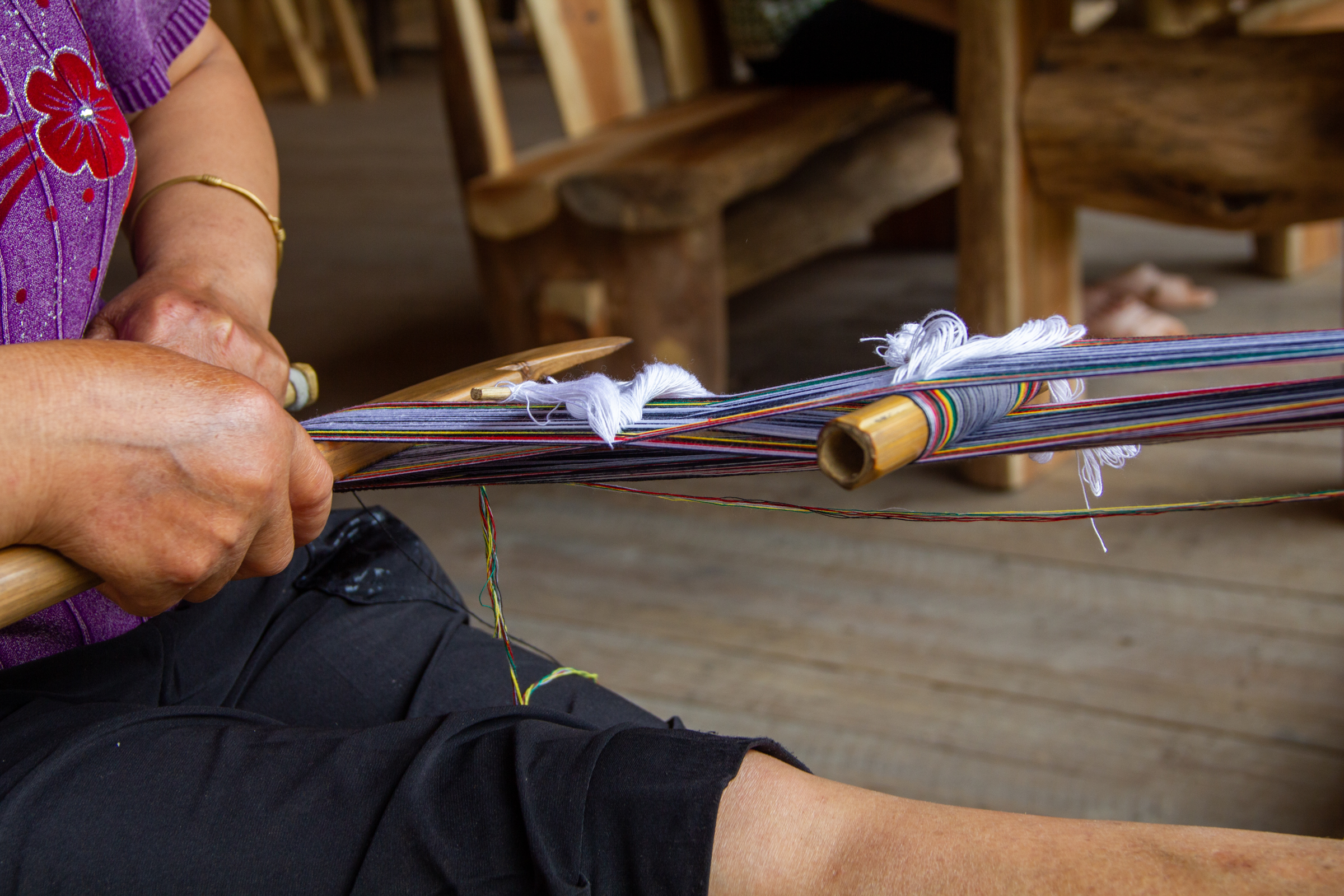
Image Credit: Marie Anna Lee


Leave a Reply