
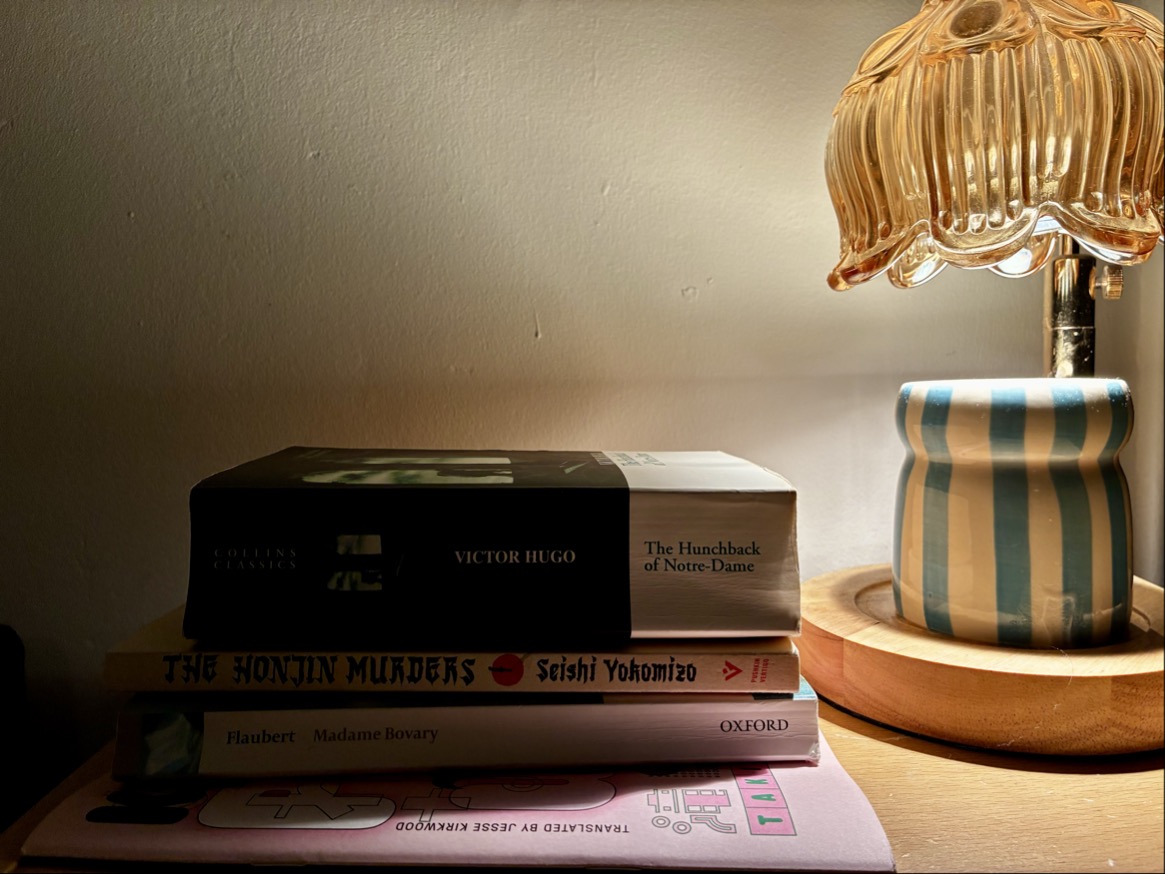
If, like me, you grew up reading your parent’s childhood copies of Asterix and Tintin, translated literature has always been a part of your life, even if you did not realise it.
Experiencing any art, in this case literature, is one of the best ways to learn about new cultures and broaden our understanding of the world. With an estimated 7,100 languages in existence, there are fears that thousands could become extinct by the end of the century, if not 2050, for a myriad of reasons.
Then, translating literature from a language like English can help to preserve these smaller languages that do not dominate the networks of global communication.
Translated books in the UK market account for only 3%, whilst in other countries, this is much higher, with most translated literature being from Britain.
English is the primary language of international literature, but it does seem like it is taking up an unfair amount of space in the market, consequently pushing other languages to the side.
With the opening examples mentioned, there seemed to be a time and place for what was deemed acceptable media to translate, both part of the Bandes dessinées (Franco-Belgian comics).
Tintin has had controversy due to its depictions of non-white cultures, and it is only recently that there has been an increased effort to translate literature originating outside of Europe.
In the sci-fi and fantasy space, you have series such as Liu Cixin’s The Three-Body Problem, exploring Chinese history and present-day clashes of civilisations.
In contemporary, there are the works of Sayaka Murata, examining nonconformity within Japanese society, namely Earthlings, which is unafraid to directly tackle serious subject matter.
And look no further than the recent explosion in Manga’s popularity, taking up more space in bookstores than ever before, with iconography from its most famous offerings like One Piece used all over the world.
Obviously, there is still a diverse range of languages within European literature, including the likes of Andrzej Sapkowski’s The Witcher series, translated from Polish and steeped in Slavic folklore.
Also, Russian authors such as Tolstoy and Dostoevsky were translated and have come to be regarded as some of the finest writers in literary history.
In other places across the globe, there are the works of South American writers such as José Mauro de Vasconcelos (Brazil/ Portuguese) and Mario Vargas Llosa (Peru/ Spanish), Korean writers such as 2024 Nobel Laureate Han Kang and the recently passed Baek Se-Hee, and African writers such as Abdelaziz Baraka Sakin (Sudan/ Arabic) and Fiston Mwanza Mujila (Congo/ French) among many, many others.
Thanks to the internet, we are more connected than ever, facilitating a wider outreach for literature translated from other languages, countries, or cultures.
Translated literature also sits at the heart of our campus and is the home to Strangers Press, a company set up in 2016 who strive to publish translations and international writing in innovative ways.
Nathan Hamilton, Co-founder of the UEA publishing project, says Strangers Press is “interested in the idea of translation as a form of cultural exchange” and “that cultures learn things about each other, in multiple ways” through this art from.
So, seek out translated literature.
What you find will be incredibly rewarding and potentially change the way you understand or view the world, especially in a time when travelling abroad can be expensive. A quick check showed the cost of a flight from London Heathrow to Tokyo starts at around £725-731.
If you cannot go to a place in person, then stories set there are the next best way to experience the place, and that is the best example of the power translated literature holds.
Image Credit: Polly Dye



Leave a Reply