
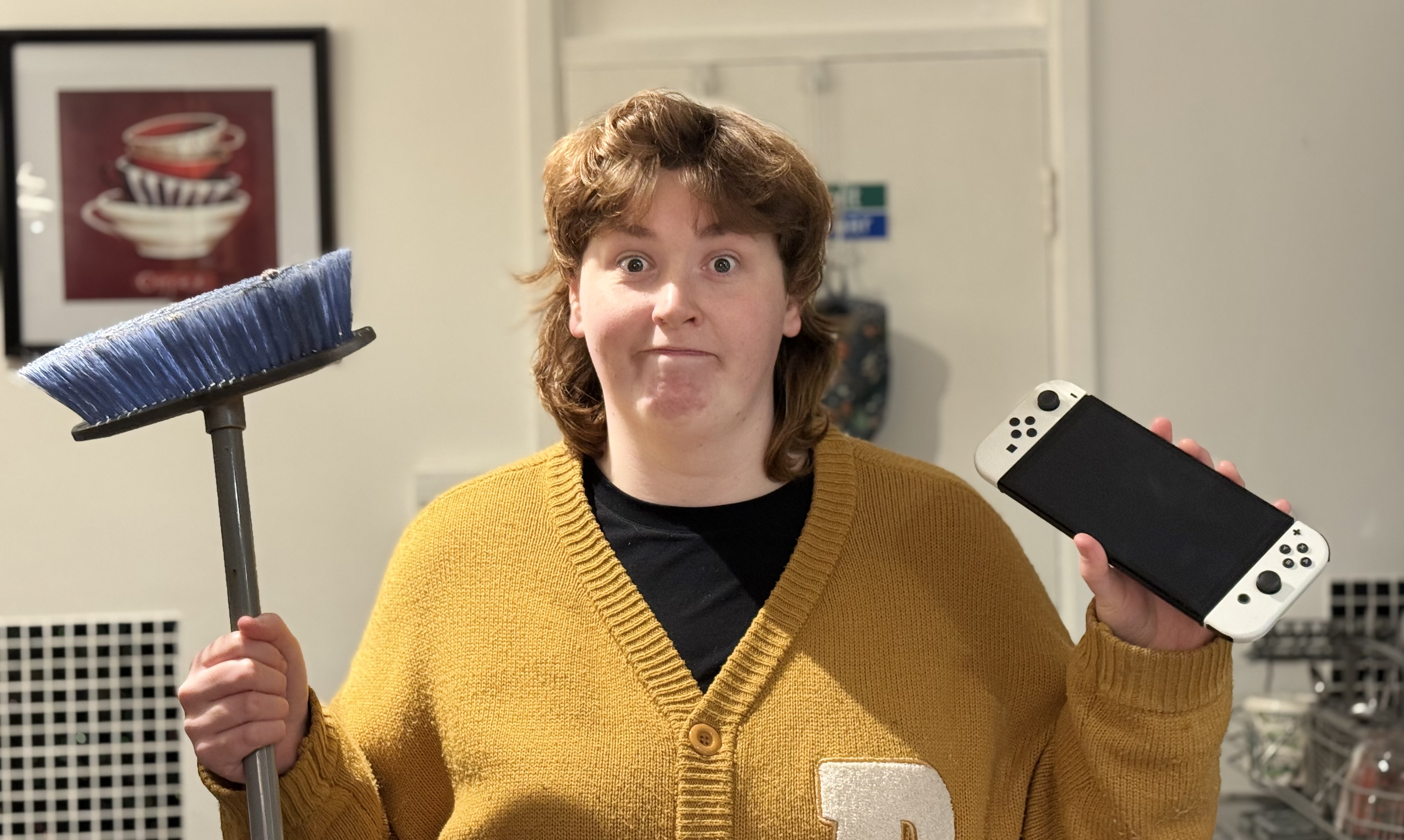
For all their drama and fantasy, games have their fair share of mundanity too.
Cooking, cleaning, decorating, and gardening are things we already do in real life, yet many of us love to do them again, fully voluntarily, in the digital world.
So why do developers keep recreating everyday activities in games? And why do we gleefully tackle these virtual tasks when they bore us so much in real life?
Part of the appeal, perhaps, is how games give ordinary activities a sense of
structure and reward that real life often lacks. Real chores are endless and rarely satisfying (looking at you, dishes), but in games, the same tasks come with clear goals, progress bars, and small bursts of gratification in the form of XP or rewards. Mundanity starts to feel enjoyable because it’s been gamified into tidy loops of effort and payoff.
Take fishing minigames like the ones in Final Fantasy XV, Red Dead Redemption 2, or Stardew Valley. In real life, many people wouldn’t go fishing if you paid them (sorry, fishing fans!) But these games condense it into a short and addictive gameplay loop of cast, wait, and reel. It cuts out hours of waiting around on a muddy riverbank and skips straight to the good bits. Less effort, less waiting, less dead fish.
This opens the hobby to people who would never attempt it in real life, and there’s something quite beautiful about that. Naturally, a big part of the fun in these minigames is catching every possible fish, which leads to another gamer instinct: the urge to collect things.
Most games are filled with catalogues of collectables, and ticking each item off gives you a little dopamine hit every time. In Stardew Valley, completing the community centre is a long-term project, pushing you to farm, fish and mine your way through the game as you gather every last item the junimos need for their bundles. It’s something you chip away at day by day, and the visible progress when each room of the centre bursts into life after you finish a bundle feels incredibly satisfying.
In real life, we can’t track all our tasks with a progress bar and get a lovely reward after we finish each of them – which is frankly a design flaw. Games also have the freedom to bring a bit of fantasy to the ordinary.
Breath of the Wild, for example, has a really fleshed-out cooking system, and though you might love cooking in real life, you probably don’t make a habit of using monster guts or fairies in your dishes. Power Wash Simulator is the same. We all do plenty of cleaning at home, but rarely are we blasting grime off a UFO or an ancient temple (much to our dismay). That would be much more thrilling than constantly scrubbing the limescale left by Norwich’s obscenely hard water out of our kettles.
By mixing mundanity with magic, games add a new dimension to chores while still keeping their familiar rhythm. They can even help us see our real-life errands in a new light. Believe me, it’s a lot more fun to put your laundry away when you imagine you’re doing Minecraft inventory management instead.
But there’s one more secret ingredient that makes digital tasks so appealing, and it’s arguably the most important of all: failure doesn’t matter.
If you don’t do your chores in real life, it usually has consequences.
Didn’t do the laundry? Good luck trudging to university in your dressing gown with no undies. Couldn’t be bothered to cook? That’s £15 on a mediocre kebab from the takeaway. Didn’t clean the house? Enjoy living in squalor.
In games, though, there’s no pressure because nothing truly bad happens if you walk away. As soon as you turn off your console, the world freezes. Dust doesn’t collect, laundry doesn’t pile up, and nobody, not even your mum, judges you for abandoning your responsibilities.
Video game chores stay fun because they’re optional, low-stakes, and insulated from real-life consequences. They let you enjoy domesticity without the stress, the mess, or the effort.
So, if you ask me, bring on more boring games.
Give us games about recycling, organising the spice rack, untangling the cables behind the telly – or just about anything that lets us feel the dopamine rush of productivity without having to do anything at all.
Games take the ordinary and make it extraordinary, proving that with enough
imagination, even the boring bits of life can be just as fun as any epic quest.
Photo credit: Paris Forsythe-Fields





Leave a Reply