
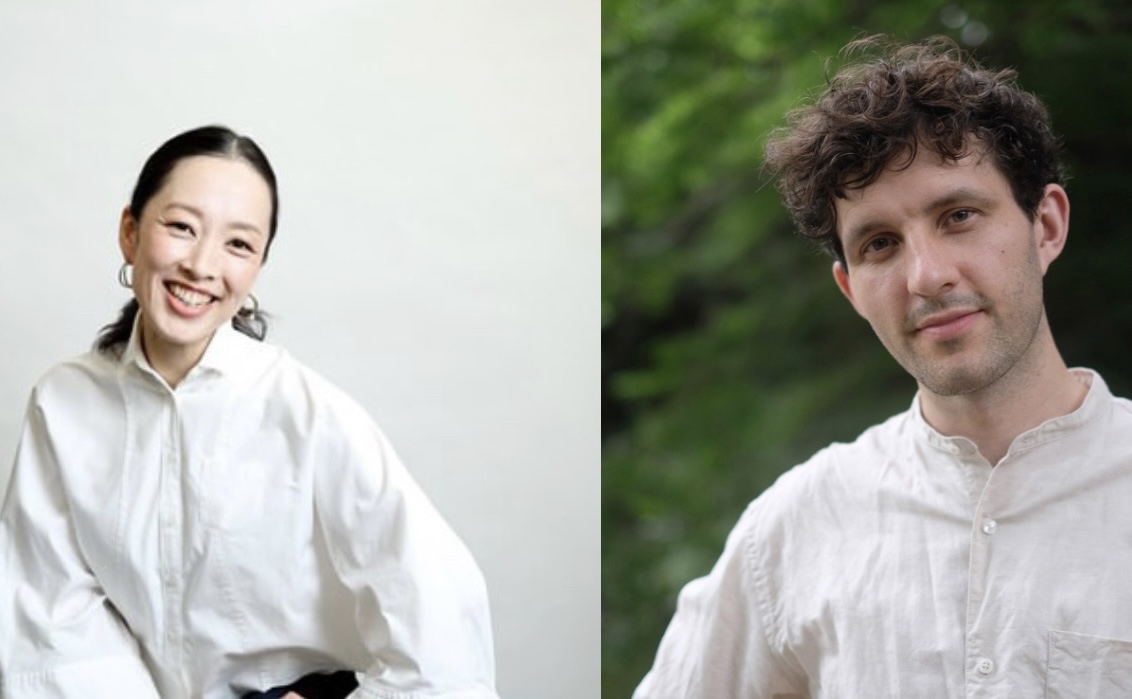
Literary translation is perhaps the best way to experience another culture without jetting off abroad. It transforms foreign into familiar, while preserving the spirit of the original text. At Strangers Press, that ethos takes a hold in KANATA, a new chapbook series spotlighting overlooked Japanese writers. We spoke with Jesse and Yuki, two of the series’ translators, about navigating the intricate art of translation, as well as the triumphs and challenges their craft brings.
How do you balance faithfulness to the original text with accessibility/engagement for new readers?
Jesse: Faithfulness to me is less about a one-to-one correlation between words or sentences and more about recreating a Japanese reader’s experience of a passage of text taken as a whole. Once you adopt that mindset, it’s a lot easier to see faithfulness and accessibility as complementary rather than competing features of a translation.
If I can find a way to make a joke or pun work in English, of course I’ll go for it, but the important thing is really whether the moment ‘feels’ the same in translation. That might mean compensating for an ‘untranslatable’ joke or reference by including one of my own elsewhere in the same paragraph.
Yuki: When translating a novel, I do my best to try to preserve the author’s voice, much of which is found in the humour, wordplay and cultural references. They are the elements that I find myself mulling over the longest.
I spend more time thinking about how to be faithful to the feel of a paragraph or page, rather than finding an exact word-for-word translation. I think to myself, “Will I walk away from this passage feeling in English the way I did when I read the Japanese?”
What is your translation philosophy? Do you believe translators are a sort of ‘co-author’ or an ‘invisible medium’ to get the author’s voice from their native language to English?
Jesse: I don’t think we’re exactly co-authors, and nor are we invisible (even if sometimes we’d like to be!). There are countless metaphors for what translation involves, but one of my favourites is that we are musicians reading from a score. In other words, it’s our interpretation of the source text that constitutes the performance, and no two translators are going to produce the same interpretation.
Yuki: I don’t know that I’ve ever thought of myself as a co-author or invisible medium, though I do try to imagine myself inside the head of the author. I imagine every translator moves through a novel with their own vision of who they are, and often it’s not something one can explain in words.
If I thought of myself that way, I think it would affect the words that end up on the page. I might think that I’ve just composed a beautiful sentence in English, but when I go back to the Japanese text, I realize I’ve overdone it.
How did you become a translator? Was it something you always knew you wanted to do or did something specific set you on this path?
Jesse: I fell in love with languages at an early age and studied them at university. But I originally only saw translation as a stopgap before I found a ‘real’ job. I was stuck in rural Cumbria without the means to move to London where all my friends and employment prospects were. Working remotely for translation agencies seemed like a good way to make ends meet at the time. It was getting the opportunity to work on literary translation specifically, after winning the Harvill Secker Young Translators’ Prize, that made me realise that it was my calling.
Yuki: I grew up in an environment where English and Japanese were spoken daily, which means the translating and interpreting began at an age before I knew those were actual concepts.
I did grow up to be a professional translator, but while I’ve worked in non-literary translation for nearly two decades, the transition to becoming a literary translator has been both thrilling and terrifying. I am grateful now that I was an avid reader of English and Japanese novels first, immersing myself fully in the stories and languages, and a translator second, where you need to analyse those stories on a technical level.
What does your day to day as a translator look like?
Jesse: I try to spend the mornings actually translating, as that’s when my brain seems to work best. I spend most afternoons responding to emails, helping to draw up materials for pitching books, and generally playing admin whack-a-mole. My favourite part of the job is probably in the closing stages of each book, when things finally come together and I’m able to feel the power of the original work in what I’ve produced. The main challenge of the job is that you’re expected to do a million things in addition to translating – producing publicity materials, advising publishers, writing reports, advocating for authors and so on. It can be quite lonely unless you go out of your way to interact with other translators.
Yuki: Early mornings are when I am most focused, so I try to sit myself in front of the computer as soon as I rise. You’ll find me with frequent tea and yoga breaks in between [translating], to remind myself that I have a body. Giving my mind a break is one of the most important parts of my day.
What impact has Strangers Press had on your career as a translator?
Jesse: I was very grateful for the opportunity to translate a wonderful author who, because of his slightly experimental style, has been quite a hard sell with larger publishers. In an industry so dominated by market forces, it was refreshing to work with a publisher that was so focused on the quality and literary interest of the work.
Yuki: My translation with Strangers Press was the first of my literary translation career, and I am still pinching myself that in my first outing, I was tapped to translate a Japanese author I admire so fiercely: Risa Wataya.
I am grateful to my bilingual editors for helping me to see the story in ways I might not have arrived at on my own. I was fortunate to be able to experience how carefully and thoroughly a piece can be edited, and how much better your translation can become for it.
What’s one book you would like to translate and why?
Jesse: Having translated two short pieces of fiction by Takiguchi Yusho for Strangers Press, I’d love to tackle some of his longer work. Suiheisen (‘Horizon’) is a polyphonic masterpiece that tells the little-known story of the original inhabitants of the island of Iwo Jima before it became one of the fiercest battlefields of the Second World War. It would probably take years of my life to do it justice!
Yuki: I would love to translate Japanese novels from the nineties and early aughts, which is when I was reading everything I could get my hands on. In your teens and twenties, the books you read can truly change you. They give you so much later in life, once you’re fully grown, and I hope that I can now start to give back.
What’s one title you’ve worked on that embodies the spirit of Strangers Press that you could recommend to our readers?
Jesse: I’d love for Concrete readers to get their hands on the Takiguchi Yusho chapbooks! More generally, Aoyama Nanae feels like an author I’ve translated who would be right at home at Strangers Press. A Perfect Day to be Alone is a great example of the sort of offbeat fiction that she does so well.
Yuki: Emi Yagi’s When the Museum is Closed is the wonderful follow-up to her brilliant first novel Diary of a Void. If you are looking for humour in the setting and dialogue of a novel but also welcome unexpectedly moving moments, this might be for you.
Jesse Kirkwood is a translator that primarily works from Japanese and French into English, focusing on literary fiction. You can find out more about him and his work at jessekirkwood.com
Yuki Tejima is a Tokyo-based professional translator of over ten years from Los Angeles. With years of experience in translation in television, film, and copywriting, you can find out more about her and her work at yukitejima.com
Meaning “far out” or “beyond”, KANATA celebrates the art of translation with introspective and unique Japanese stories. The full collection is available now from Strangers Press.
Image credit: Strangers Press




Leave a Reply