
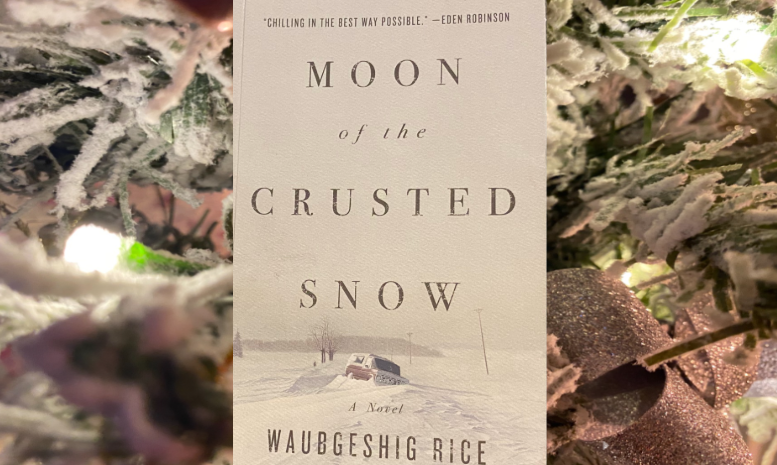
Waubgeshig Rice’s Moon of the Crusted Snow presents winter as overwhelmingly oppressive and dangerous.
The encroaching cold and snow are intimately tied up with threat.
It leads to the complete cutting off of communication outside the community, reduces availability of food and thus threatens people’s lives.
This immediately becomes apparent once members of the community begin to die from the cold. Their inability to bury the bodies, because of the hard ground and layers of snow, adds another level of suffering.
The winter prevents them from giving the dead the peace they deserve, being stored in a garage until spring.
This eventually leads to the complete breakdown of civility in Justin Scott and his group. A body goes missing from the garage and ends up in a cooking pot. Winter, then, leads to an acceleration in the breakdown of civility, in the name of survival.
In apocalyptic circumstances, can winter ever create a wonderland? To some degree, Rice suggests that the winter brings positives.
It gives the community a chance to return to their indigenous practices, like hunting and being off grid.
It gives them a chance to reconnect with each other and their history. The book ends with them setting out on a journey to return to their native land, certainly reframing the winter as something that can instill hope.
Rice, then, creates a duality of Moon of the Crusted Snow’s winter.
It is simultaneously dangerous, threatening the lives of the community, and hopeful, providing the opportunity to return to their history.
Image credit: Lilia Colledge





Leave a Reply