
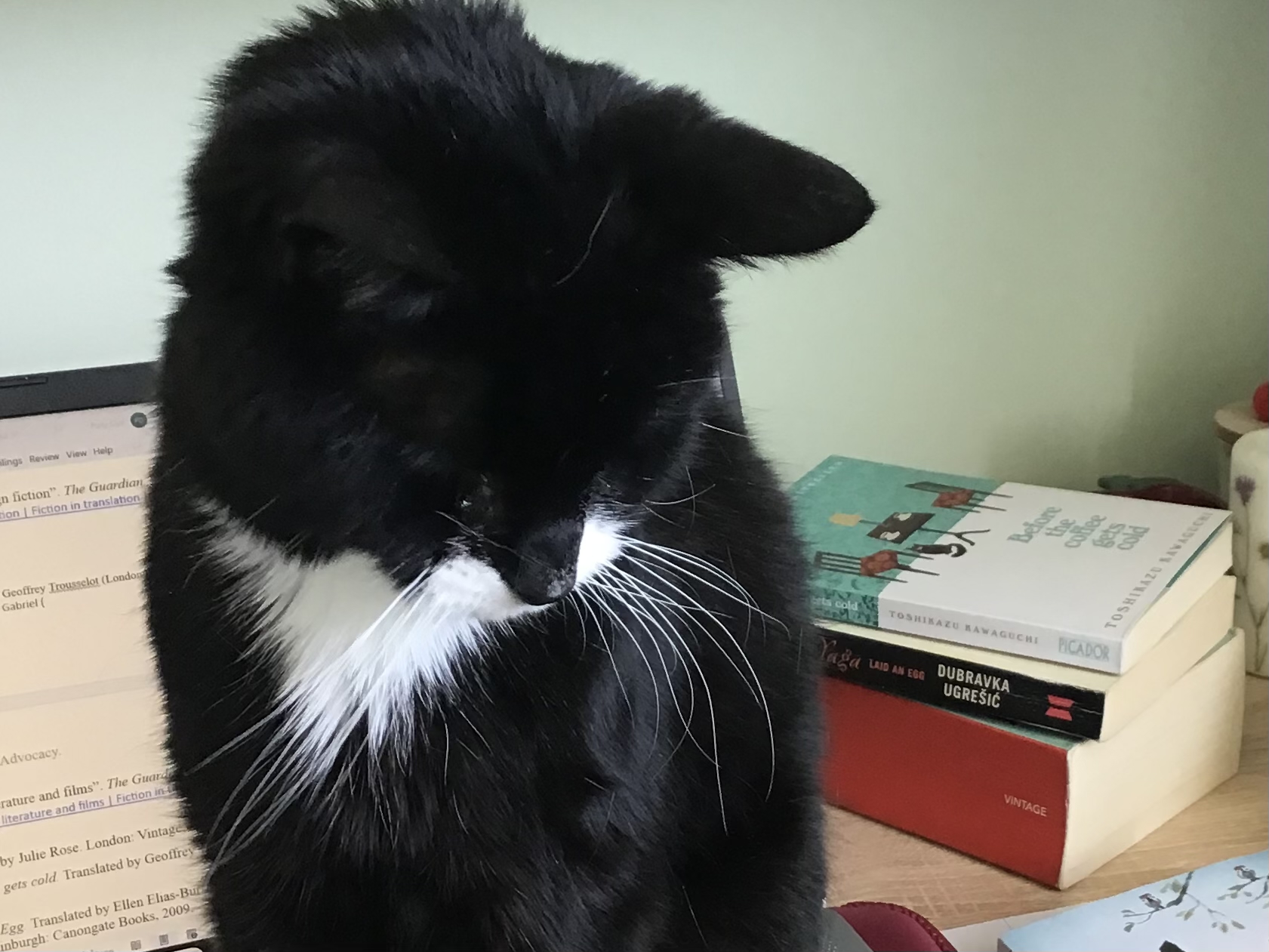
December arrives the way it always does. There are hot mugs of tea brewing on the countertop, hums of carols echoing from the speaker, frost clutching at the windows. Everything looks the same, yet something is amiss. Since losing my cat, Evan, the season has lost some of its festive charm. There’s no soft thump as he jumps off the sofa, no one to play with the baubles that dangle off the tree.
I’ve always read my way through difficult times, and this Christmas is no different. To fill the cat-shaped hole in my life, I now find myself thinking about cats who wander through literature. Prowling through archaic poetry, plays, fairy tales and contemporary fiction, cats have proved to be the best companions across centuries. So, this makes the perfect moment to chart a brief history of literary felines and explore how they are carved into our imaginations.
Medieval literature shows us that cats make the best writing companions. They often held a special place in the lives of monks and nuns and were often depicted in the margins of their manuscripts. Nonetheless, they were still mischievous. Inky paw prints on an Italian manuscript from 1445 show us cats have not changed their playful (and sometimes intrusive) nature. Evan also liked to be involved in my writing, often walking over my laptop creating all sorts of weird and wonderful words. Cats truly have not changed.
Perhaps the most famous medieval feline ‘love letter’ is the poem Pangur Bán, written by an Irish monk around the 9th century. One of the oldest surviving texts from Ireland, the poem is a celebration of the poet’s white cat, Pangur. It compares the monk’s scholarly tasks to the chores of his mouser, highlighting the joy they find in their respective activities. Exploring themes of companionship, it remains a touching early insight into the bond between people and their pets.
Things got a bit more dire for cats during Shakespeare’s time. Though cats were still valued for their ability to control vermin, their superstitious association with witchcraft made hating them popular, subsequently casting them as villains in literature. In Shakespeare’s arguably most famous play, Romeo and Juliet, the nefarious Tybalt is repeatedly called “the Prince of Cats”. He is lithe and agile, but also predatory and territorial, making his connection with cats a negative one. Though Shakespeare is undeniably one of our greatest writers, seeing how eagerly he demonised cats has knocked my respect for the Bard down a peg.
Victorian literature started to be kinder to cats, presenting them as moral beings that were both independent and unpredictable. Possibly the most famous literary cat was created during this period: the Cheshire Cat from Lewis Carroll’s Alice’s Adventures in Wonderland. The Cheshire Cat sits calmly in the nonsensical world of Wonderland and appears when Alice feels lost or overwhelmed. He isn’t bound to Wonderland in the same way the other inhabitants are he is a guide of sorts, offering strange kinds of wisdom. Throughout the novel, he appears and vanishes, leaving only his smile behind. For me, the Cheshire Cat now acts as a representation of what it feels like to miss a loved one. Though they may have disappeared, they are still emotionally present, leaving memories that glow faintly like fairy lights across the December dusk.
Modern and contemporary literature extends the Victorian impulse to moralise cats, transforming them into reflections of a human’s emotional state. Some novels even have fully realised cat protagonists, such as Hiro Arikawa’s The Travelling Cat Chronicles. Nana, the feline narrator, experiences many things humans do, he laughs, he grieves, he has his own identity. The bond depicted between Nana and his owner is reciprocal, not hierarchical, making them equals. In this light, contemporary literature mirrors the truth cat owners have always known: a cat makes a family whole, and when they are gone, it is hard to get back to normal.
Literature reminds us that cats have long been woven into our stories. In the same way, Evan remains with me in the stories of him that I keep alive. Books and storytelling are quiet kinds of medicine, urging us to preserve what we love and to keep the past within reach. Though Christmas may feel different for some of us this year, both fictional and real-life stories allow us to hold our loved ones close, keeping them present within the festive season.
Image credit: Polly Dye




Leave a Reply