
This article contains reference to an antisemitic attack that took place in Australia.
For the Christmas holidays, I spent much of my time in Bondi.
When I arrived, two days after the terrorist attacks, the weather was sunny. But the atmosphere was anything but warm.
My brother, who had arrived before me, was sunbathing on the grass when gunfire broke out. He thought that the shooting was fireworks; no one should have had to assume otherwise. But as floods began running away from the beach, reality set in.
What was meant to be a gathering celebrating light quickly turned to darkness.
I was staying in my brother’s apartment, which neighbours the main synagogue in Bondi. On the first day of my trip, the view from my window was of the funeral of Rabbi Eli Schlanger.
Walking down the street to the beach felt inappropriate in swimwear while so many others were in formal black attire. These people should be walking to the Chabad of Bondi with their family and community to celebrate, not mourn.
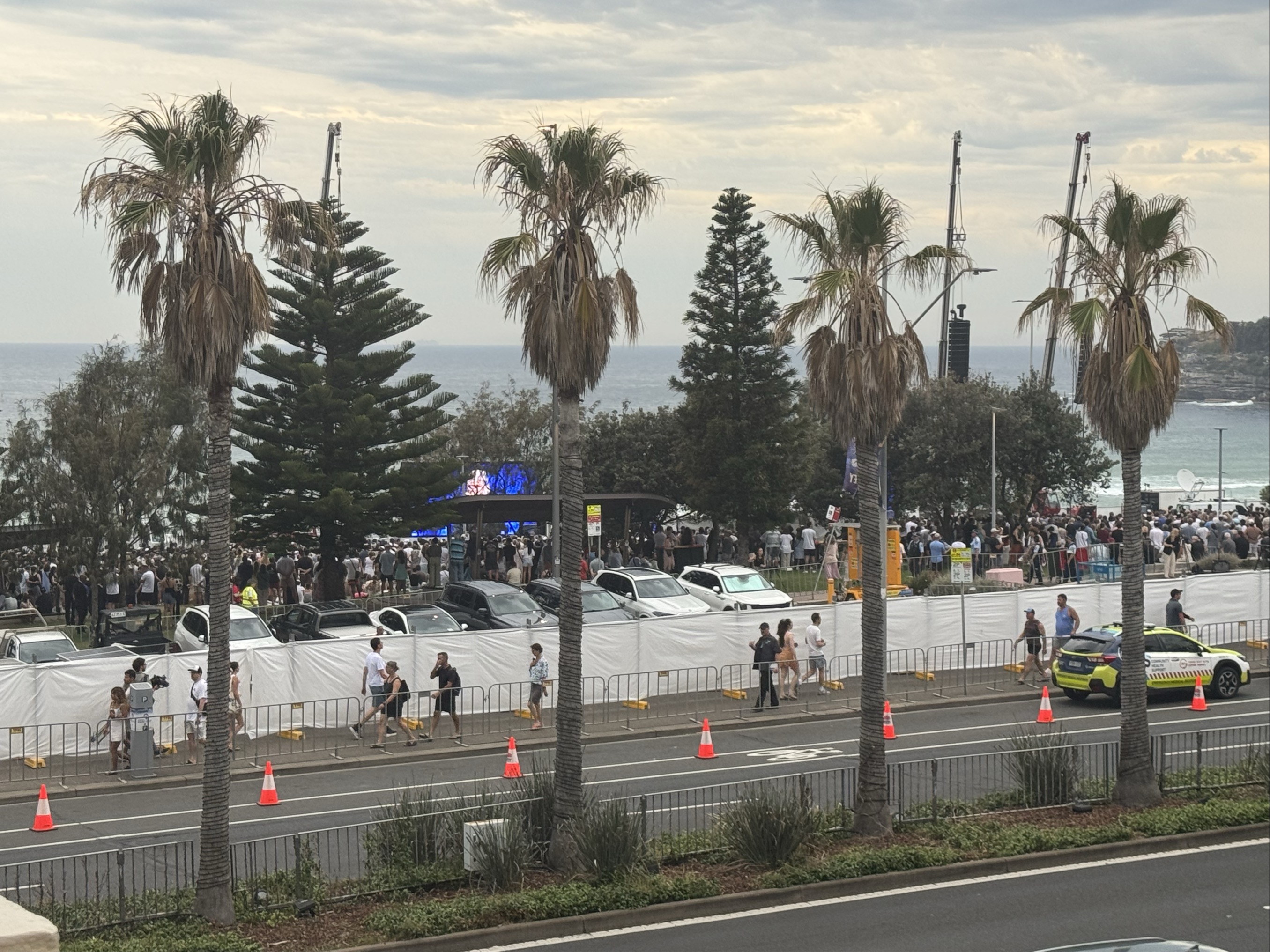
I have never seen such a police presence. For every civilian, three police officers were stationed. It doubled when the official memorial took place exactly a week after the attack.
A large flower memorial was placed where the attack occurred. I watched the service from the balcony of my parents’ hotel.
Amid the grief and overpowering sense of community, what stood out was the sense of dissatisfaction towards the Prime Minister of Australia. When Anthony Albanese was mentioned at the memorial, whilst still in attendance, the booing sounded like a swarm of ravens. This was the first event related to the shooting that he had attended – and he was not welcome.
Soon after, Bondi returned to business as usual.
It created an air of uncertainty – how, as a community, could the Jewish community forget what had just torn lives from the arms of loved ones?
I was sunbathing on Bondi Beach, two days after the attack. In the corner of my eye, people laid flowers. I felt wary and upset.
The juxtaposition was like nothing before; waves swept ashore, washing away stones and shells. But they could not cleanse the grief of those mourning.
It was the first time that a major event had affected me personally. Being in the same place where a tragedy has occurred feels vastly different from hearing about it on the news.
Seeing terrible things happen in the world makes you feel helpless. Being in Bondi with family makes you feel like you should be anything but helpless.
You are unable to ignore the grief. You must not ignore the story. You don’t ignore the feeling.
I can’t ignore the waves of pain that I, and so many others, met at Bondi Beach.
Image credit: Evie Smith




Leave a Reply