

The 21st of January 2026 marked the 76th anniversary of George Orwell’s death. Born as Eric Arthur Blair, Orwell was a British novelist and essayist whose work is remembered for its social criticism and opposition to totalitarianism, most prevalent in his novel Nineteen Eighty-Four.
The bleakness of his work reflects our world today: our political rhetoric is becoming more divisive and, honestly, wouldn’t feel out of place in Orwell’s fictional state of Oceania. In times like these, his insistence on challenging hateful language makes him a vital cautionary voice when navigating our alienated political landscape.
Ironically, people have begun to use Orwell’s name, and the word “Orwellian”, inaccurately. Describing aspects of society that relate to the totalitarian dystopia of Nineteen Eighty-Four, this term is now being used on social media, mainly TikTok, to narrate minor inconveniences.
One user described his parents as “truly Orwellian” for refusing to let him play video games when he had a sick day off school. In order, the hashtags included: “#1984 #gaming #politics #bruh”, ballooning Orwell’s name into a sensational cliché at best, and a meme at worst.
Though it’s been a few years since reading it, I don’t remember Nineteen Eighty-Four being about the tragedies of how little time one is allowed on their Xbox. In fact, the novel warns against this kind of language decay through the fictional dialect of Newspeak, a tongue that is comprised of simplified grammar and vocabulary. Being politically enforced by Big Brother, this dialect explores how the systematic manipulation of language can destroy independent thinking, thereby suggesting language is a tool for liberation and truth. Ironically, Orwell’s fears of speech oversimplification is exactly what happens when his name is used as a social media buzzword.
This misunderstanding of Orwell’s legacy reflects the novel’s warning about the weaponisation of language. In Nineteen Eighty-Four, the slogan “war is peace. Freedom is slavery. Ignorance is strength” is frequently used by Big Brother’s party (called “the Party”) to distort basic logic. Similar mechanisms have recently become more prevalent in British politics, with the central culprit being Nigel Farage of the Reform UK party.
Reform UK have proved to be a recent challenge towards the Labour and Conservative parties in the polls, pushing hard on false immigration narratives and redefining key political concepts like “freedom”, “security”, and “patriotism”.
Farage has made many false claims about people settling in Britain from forced migration backgrounds. He believes that they have increased crime levels and created housing shortages, both of which have been disproved by BBC factcheckers. Farage has even gone so far as claiming that “people who come from certain cultures pose a danger to our society,” a statement that fuels harmful racist stereotypes. In my opinion, such language risks condoning prejudice rather than attempting to resolve the deeper causes of social division. His use of selective statistics provide him with alarming headlines, garnering him an increasing number of supporters that are (perhaps) unknowingly mislead.
Many British people, including the Prime Minister, have argued that Farage’s rhetoric is divisive and contradicts British Values. In other words, by stoking resentment towards people from forced migration backgrounds, Farage can reshape political discourses surrounding what it means to be patriotic and British.
Similarly, in Nineteen Eighty-Four, “the Party” often changes who Oceania’s enemies are, encouraging characters to doubt their perception of their own memories. By putting political fearmongering into action, Orwell shows us how politics changes the framework through which we interpret facts. He reminds us of how easy it is for political leaders to use language that makes us doubt our own beliefs and ideas – a lesson that remains resonant today.
Despite being written over 75 years ago, Nineteen Eighty-Four remains powerful because it compels us to ask: who gets to define truth? Why does the truth matter? Current debates surrounding Reform UK aren’t simply about policy disagreements, they expose how political agents use language to shape how people interpret reality. The danger Orwell warns readers against isn’t just merely right-wing propaganda; it is the narrowing of vocabularies and frameworks that make certain truths harder to realise and easier to dismiss.
Orwell is not just a literary genius, but a lens through which to understand current British politics and how to challenge those who attempt to divide us.
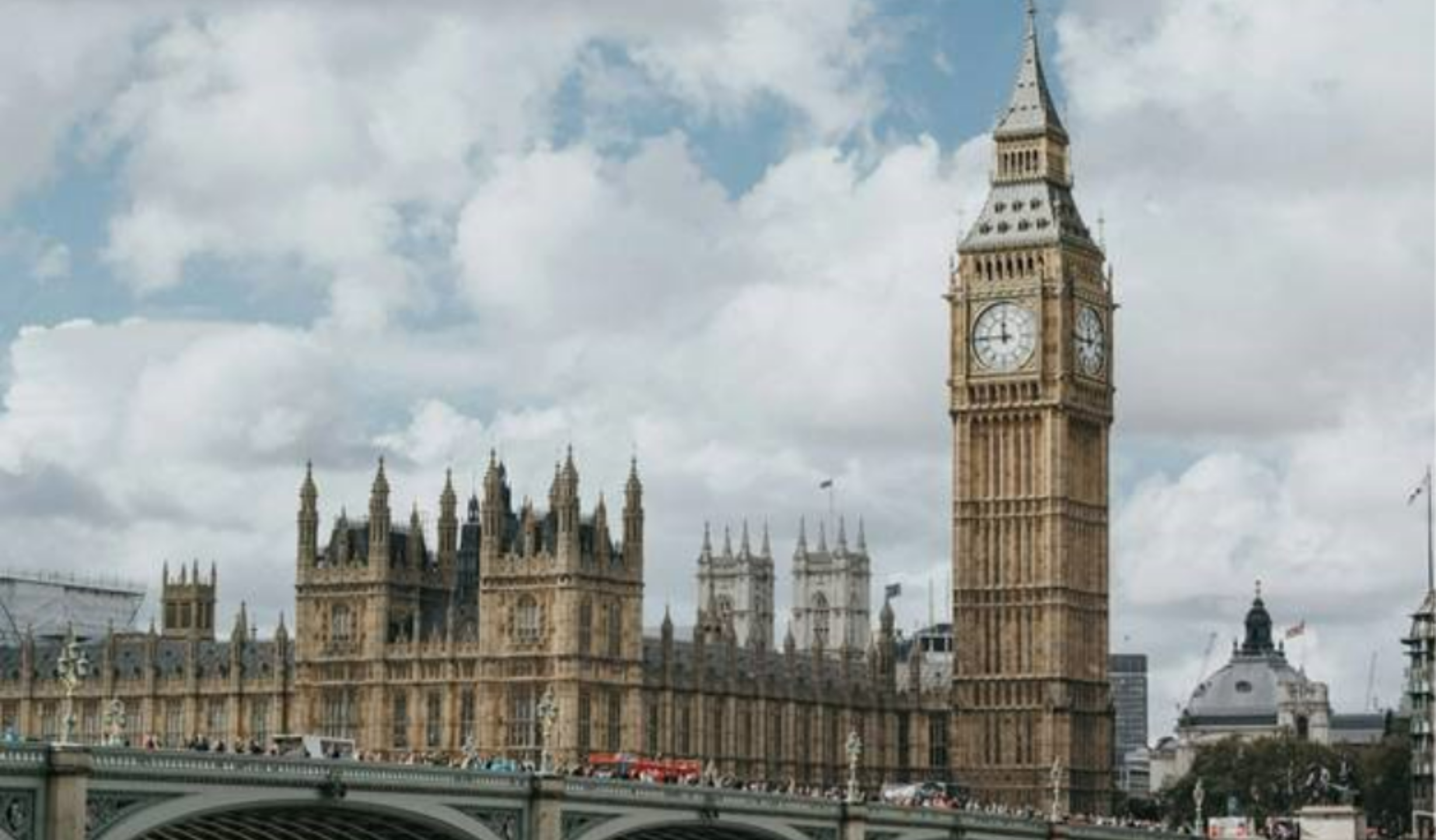
Image credit: Polly Dye



Leave a Reply