
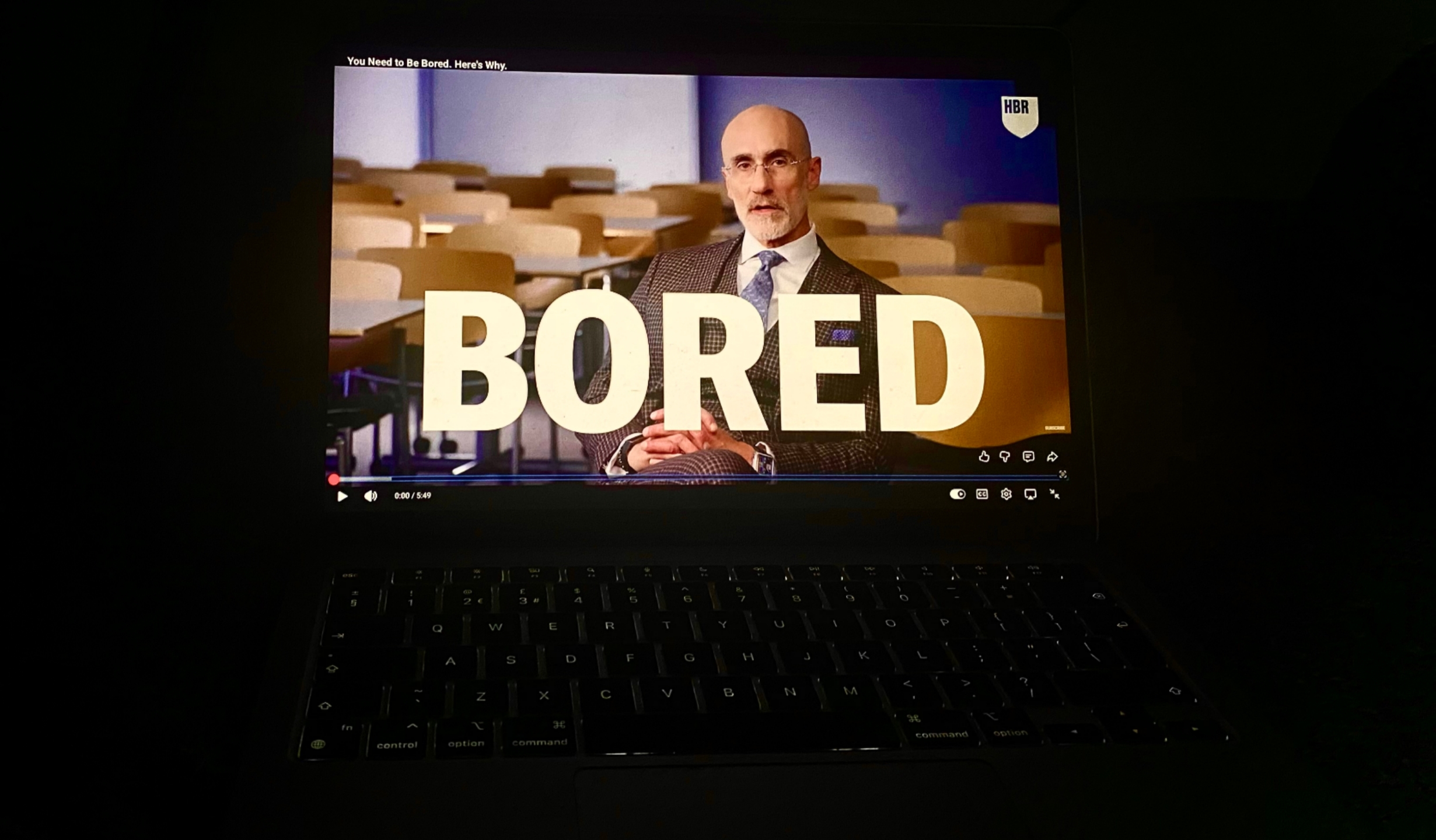
It was 11:45 p.m.; I had a 9 a.m. lecture the next morning, and my thumb was hovering over my phone.
I was scrolling through YouTube when a video appeared: You Need to Be Bored. Here’s Why. I have a guilty pleasure for videos which promise a purposeful answer to my meaningless activities as a student.
In the video, Dr Arthur Brooks, a Harvard professor, lectured for 5 minutes and 49 seconds, explaining why one of our greatest problems is not overwork or stress, but lack of boredom.
Our constant avoidance of boredom is quietly reshaping the way we think; limiting the way we create and even our own lives.
Neuroscientists say when our mind is bored, it turns to the “default mode network.” Studies say this is when our brain finds time to self-reflect, daydream, recall memory or imagine the future.
Several students I spoke to talked of their dependence on videos, podcasts and music, with some even needing it to sleep. When I ask them why, they all told me that they dislike the feeling of being left with nothing but their own thoughts.
Brooks argues people resist the default mode, because it forces us to ask the ‘Big questions’ – existential questions of purpose and meaning. However, big questions are important. Research shows that avoiding reflective time may contribute to younger generations feeling a greater sense of uncertainty.
I have noticed that my screen time peaks at times when I am most tired or stressed – when sitting quietly feels the hardest. Is boredom something we are supposed to solve? Instead of solving a problem, have we instead created one?
Brooks suggests boredom is a trait like any other: it can be improved through greater experience and weakened under neglect.
So how does one embrace boredom?
Acknowledgement is an important start. I found that being conscious of how often I picked up my phone, I started to put it back down, choosing boredom over short-term comfort.
On TikTok, people are posting ‘brain rot detoxes’ where they sit alone, or with a friend, with a ten-minute timer being left alone with only their thoughts.
Though a good start, these are only small steps to the larger strengthening of a neglected mental muscle.
Over the past month, I tried to push it a little further. I decided to ditch my headphones and not listen to music or podcasts. This might seem small, but you forget how often you rely on a background sound to get to places: the walk to campus, working out at the gym, getting the bus to town.
A former Google designer stated that he had a thousand engineers whose job was to get more attention from his users. By ignoring your phone, you are fighting a battle against an addictive opponent who is constantly finding ways to bring you back in.
One US designer told Zomorodi, “The only people who refer to their customers as users are drug dealers and technologists.”
The first week of my boredom exercises was very hard. I found myself reaching for my phone, often finding comfort simply having it in my hand or pocket, as though its touch was providing me comfort. I was coming to terms with an addiction that I never knew I had.
Researchers at USC have found that students are less creative and imaginative about their own personal futures and about solving societal problems. The big-picture problems are becoming so big that our brains lack the focus to solve them.
Zomorodi finished “No wonder CEOs in an IBM survey identified creativity as the number one leadership competency.”
By the last week, I was beginning to feel positive changes. One example was that my relationship with my phone was less toxic. I no longer always needed my phone in my pocket, often not knowing where I left it.
But the most beneficial change was that I felt more present. Instead of using my phone as an easy escape, I embraced the boredom I feared, finding myself more creative and productive because of it.
Image credit: George Marsden





Leave a Reply