
We see clips of so-called “red pill” influencers spewing nonsense online about what a ‘real man’ is while enthusiastic keyboard warriors die on a hill screaming that women were meant for the kitchen.
“Red pill” is a term borrowed from the Matrix, where one must choose between a blue pill (staying ignorant) or a red pill (awakening to the truth).
In the real-world context, the ‘red pill sphere’ centres around the belief that feminist ideologies have destroyed society hence they argue for a return of traditional values.
But how and why did this notion come to fruition?
The outdated stereotype has no clear origin.
Some online believe that it naturally occurred as an extension of motherhood, rather than the view that women are too feeble to be providers.
Some are more adamant that differences in biology have pushed gender roles.
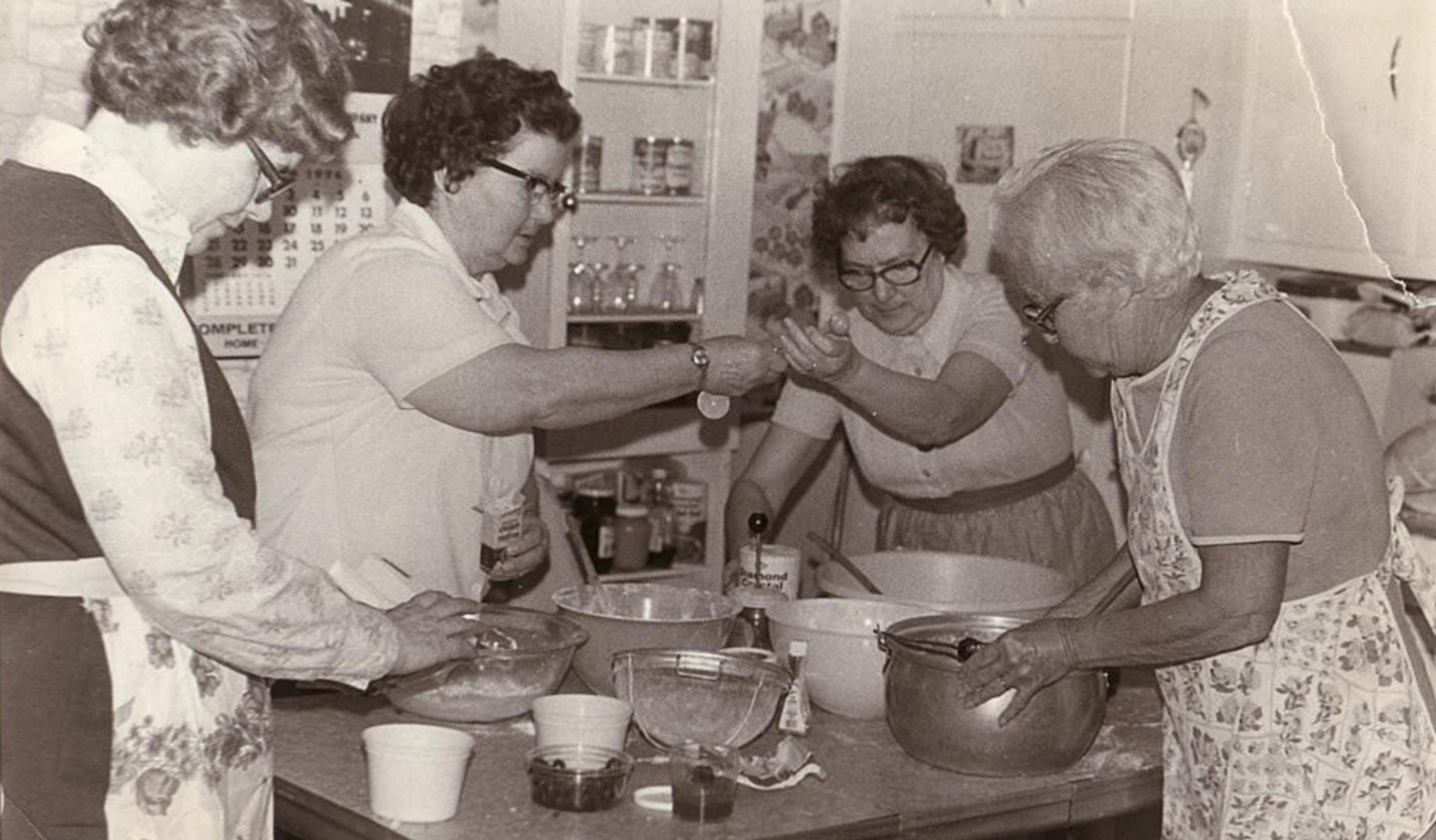
Long ago, it was the norm that a woman’s place was in the home, and the fates of men were to be breadwinners. Then came the World Wars, where we saw more women entering the workforce due to men being off fighting.
After they ended in 1918 and 1945 respectively, men returned to the workplace while women returned to their household duties.
The traditional role of the ‘housewife’ lingered on for many years, until women re-entered the world of work thanks to feminist movements. Sociological concepts like dual burden and the division of labour highlight that, although women are employed now, many still do most – if not all – of the housework and childcare.
Many can remember school lunches where a male figure would manage the kitchen staff. A workforce full of all women, ordered by a single man.
Statistics show that, despite the even split of female and male food workers, most executive positions (like the head chef or managerial) are held by men.
The Office for National Statistics reported in 2018 that only 17 per cent of chef positions were occupied by women. Additionally, just 8 per cent of Michelin-starred restaurants are headed by women.
What makes this the case?
Could it be that men are more qualified for the job? Or that men have a stiff upper lip and are more authoritative than women? Surely not.
Biology has nothing to do with how well one can cook, nor can it determine leadership capability.
This isn’t unique to the food industry. Problems like this and the gender pay gap are widely protested among all professions.
Even during family gatherings, this disparity becomes clearer.
Women are busy stressing over the timings, while men often have the luxury of lounging around and playing mahjong or cards with cigarettes in their hands.
To achieve real change, we need to teach the men of tomorrow how to cook, too. Don’t treat your mum like your personal chef, but spend quality time with her and ask if she can teach you one weekend during break.
If she’s busy, learn from YouTube videos or cooking shows and perfect a dish to surprise her on a Sunday morning.
The expansion of the food industry has included the world of food content creation. Despite creators like Maya Leinenbach (@FitGreenMind) and Nadia Catterina Munno (@the_pastaqueen) having massive followings, most popular food content creators are men.
However, the opposite can be said about mukbang channels; with a handful of studies finding that a partial reason for its female creator-led popularity is the unintended ‘sexual appeal’ and the attractiveness that draws in male viewers.
This anomaly in the market can be explained through the objectification of women and how pornography has impacted the perceptions of women – even in the cooking industry.
At no fault of his own, Gordon Ramsey’s popularity is a classic case of the double standard. If a female restaurateur swore like a trooper, I’m certain there would be plenty of backlash.
It would be deemed aggressive and improper, instead of witty.
Inequality in the food industry is nothing but an indication of the societal expectations and norms that are stubbornly ingrained in society.
While it’s easier to pinpoint issues than propose solutions, it doesn’t mean that these are issues unworthy of discussion.
It might be as good as it gets – but we’ll never know if we just accept how things are and nod along idly.
Image credit: Wikimedia Commons



Leave a Reply