
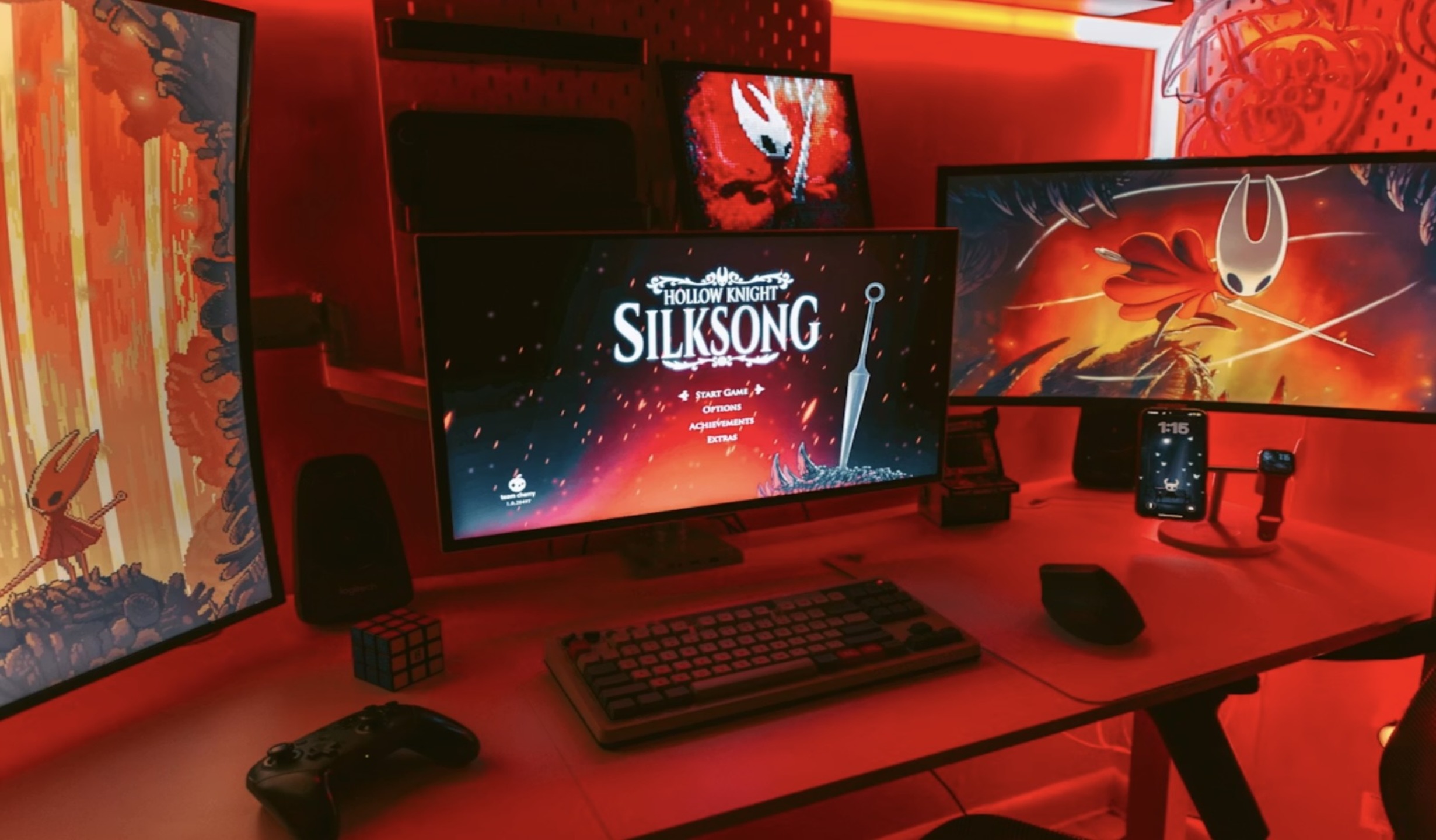
One of the most anticipated games of the last five years was Hollow Knight: Silksong. A sequel to indie developer Team Cherry’s 2017 masterpiece Hollow Knight, it was finally released in September 2025.
Demand on release was so high that the digital stores it was released across crashed. It has since sold seven million copies and received rave reviews.
Released not long after in January 2026, Highguard was a AAA (a game produced by a major publisher with a larger budget) blockbuster game developed by Wildlight Entertainment, a developer consisting of industry veterans who had worked on the likes of Titanfall and Apex Legends.
The game underwent major shifts during development to be finally released as a 3v3 hero shooter.
It received mixed to negative reviews, and its player count dropped 90% after the first week. 45 days after release, the game was shut down and Wildlight laid off many of its staff. Its failure is similar to that of another AAA hero shooter, Concord, which was shut down after only 2 weeks in 2024.
This pattern suggests that, to some extent, gamers have grown tired of the live-service model and its reliance on microtransactions. The contrasting performances of Concord and Highguard against the success of Silksong point to a fascinating trend in the industry: audiences may be increasingly turning towards indie games over AAA blockbusters.
There are a few obvious reasons why, including the price. Indie games tend to be cheaper, whilst the average AAA game can cost as much as £70 on release. Amidst a cost-of-living crisis, consumers will be saving around £40-50 by purchasing an indie game.
Modern AAA games also have development cycles that can last more than a decade, meaning they can often release when demand for a type of game has already peaked. Concord took eight years to develop, beginning when similar games like Overwatch were at the height of their popularity.
Streaming and social media has also played a part in the growing success of indie games. Seeing an indie game being played by a popular streamer, or gameplay clips going viral on TikTok, leads to them receiving more attention and growing popularity very quickly.
Variety is another strong draw. Silksong, Balatro and Deltarune are all recent indie successes, and all completely different in terms of style and gameplay. Each has a unique hook and voice, whilst many AAA games now have similar photorealistic graphics and gameplay systems that make them appear to blur together.
Video games have never been more accessible nor numerous, and because of the quantity now available, something special is required to make a game stand out.
If you look at older generations of games, you will find a variety of graphics, gameplay and styles. The original PlayStation had everything from PaRappa the Rapper with its cartoonish style and rhythm gameplay, to Ape Escape with its unique use of the controller, to Hideo Kojima’s revolutionary Metal Gear Solid.
These previous generations were more willing to take a risk in the mainstream, but it now seems the risk-taking has shifted into the indie space.
It’s no surprise that this is happening. As gaming has grown in popularity, budgets for AAA games have increased to hundreds of millions of dollars. Studios are more risk averse with the projects they develop than ever before, as pressure from shareholders forces games to become more generic and widely appealing to bring in the most profit.
Small indie studios have objectively less money to lose, and as a result they have more freedom to take creative risks.
Changes in gaming habits and the wider market has led to increased success for indie games, with titles like Clair Obscur: Expedition 33 winning a staggering 436 Game of the Year Awards in the year since its release.
Through price, creativity, and public word of mouth, the indie scene is providing memorable and original experiences audiences would clearly rather play over AAA games.
Sometimes, taking risks pays off, and we can only hope the blockbuster studios are paying attention to that.
Image credit: Unsplash





Leave a Reply