
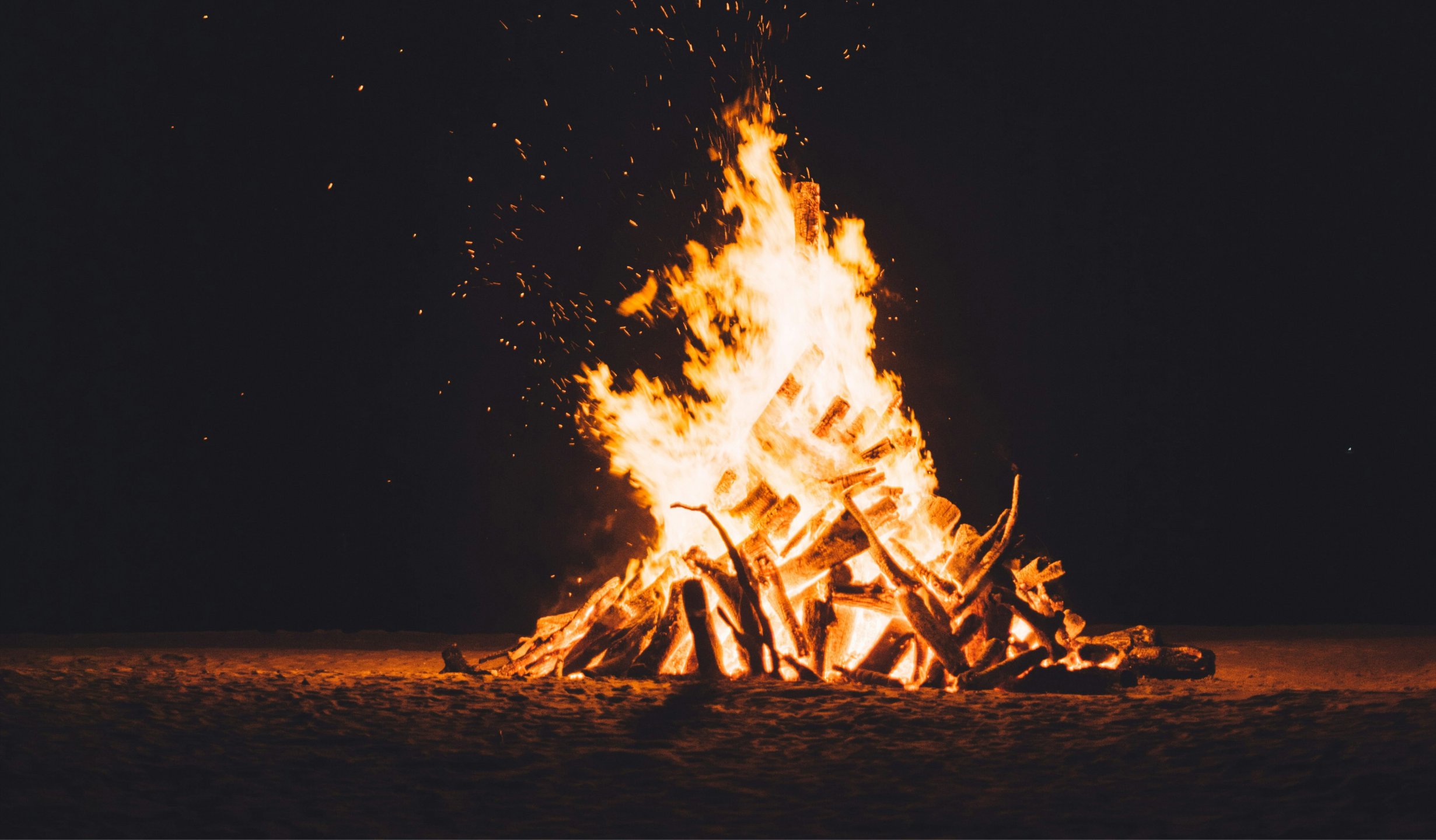
No one wants to see the forest burn anymore. But that perspective avoids addressing a difficult conversation: what happens to the rural communities whose livelihoods depend on fire when fire is simply banned?
On the last day of summer, small fires break out in Cruz Blanca, Bolivia. An indigenous community located in the heart of the Chiquitano dry forest call this the ‘Day of Fire’.
It involves a ritual that marks the beginning of slash-and-burn farming. While the women prepare the communal meal, the men get ready to set the first flames of the year. They hope for a good harvest using what they call ‘good fire’.
Good fire, however, is no longer what the world sees when it looks at flames.
Today the planet seems to be plagued by large-scale fires. Every year, alarming reports are published about ecosystems ravaged by uncontrolled fires and animals fleeing for their lives. From Brazil and Indonesia to Australia, the story is the same. Devastating! In Bolivia, wildfires have become a regular occurrence, returning year after year without fail.
The primary government response, both in Bolivia and internationally, has been the total suppression of the use of fires. This policy has been welcomed by most conservation organizations and environmental advocates, and not without reason.
For Cruz Blanca and indigenous peoples across Bolivia’s tropical lowlands the answer is to coexist with fires in a complementary and responsible way. That is not to exclude fire. For them, fire is a key element to manage lands. But beyond the practical issue, fire is a cultural and spiritual way of living in community and connecting with nature.
From the words of an experienced farmer in Bolivia, “You steer the fire, guiding it step by step; the fire has a mind of its own, sometimes it gets angry and can leap into the green forest.”
They say that ‘good fire’ serves a purpose and is harmless, arguing that what distinguishes their practice is collective knowledge. Before any burning takes place, families follow strict protocols and even prepare “firebreaks” and have buckets of water ready. On the day the fire is set, they carefully study the wind direction to make sure the fire does not grow uncontrolled. The community leaders may penalize anyone who fails to follow these collective rules.
Even so, fire suppression policies are gaining momentum. Despite this, the passion for their traditions stay a light. For them, coexistence with fire is not something of the past – It is a living practice.
Image credit: Unsplash





Leave a Reply