
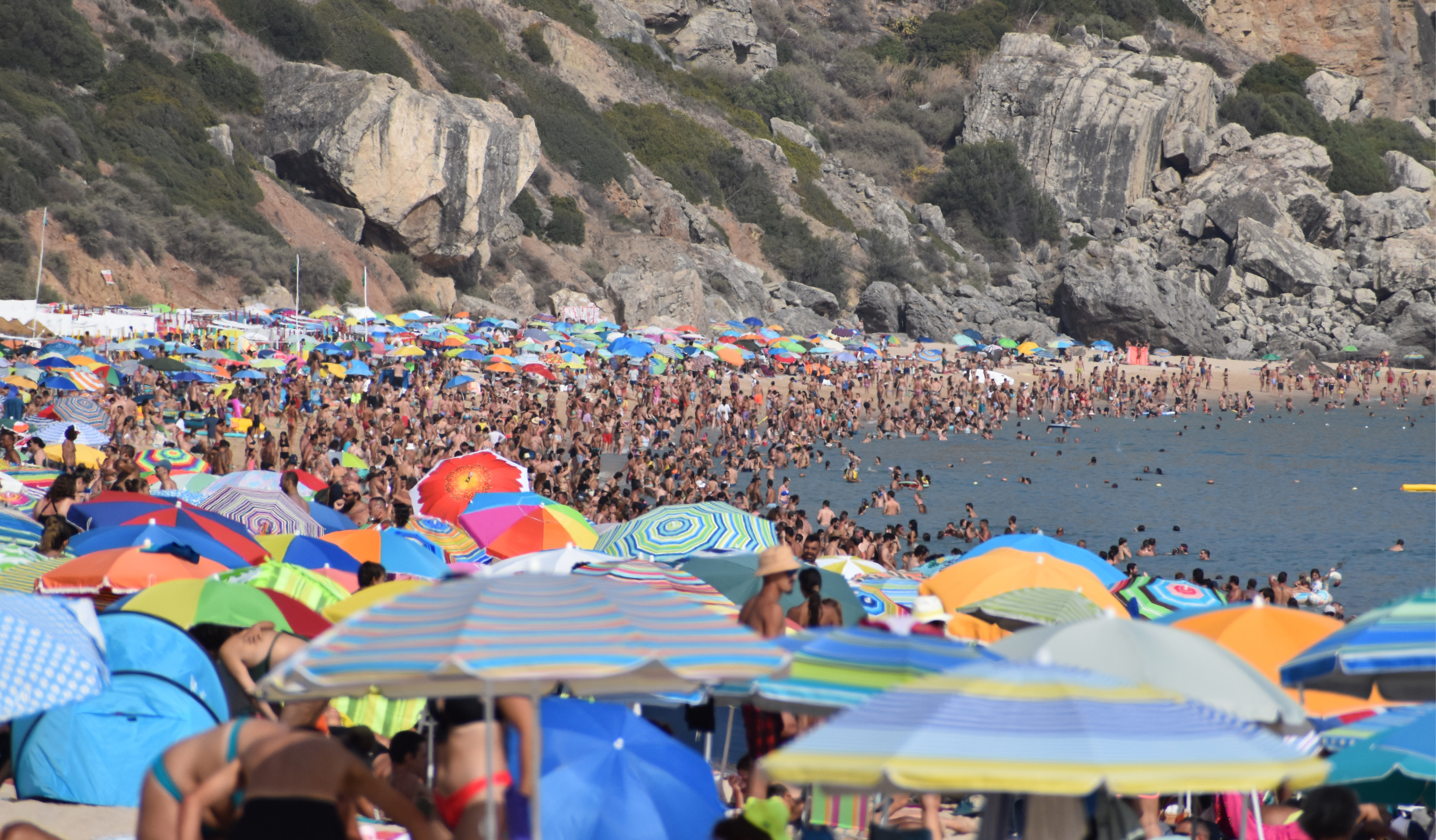
We all love a nice, hot summer’s day, whether you’re sunbathing down the beach or enjoying a refreshing drink down the pub with friends. However, with sweltering temperatures reaching highs of 37.7 degrees Celsius, in some places and expected to rise to 41 degrees in August, it’s fair to say it’s too hot.
But how do heatwaves actually happen? Firstly, let’s look at what is classed as a heatwave. The Met Office describes heatwaves as at least three consecutive days when the temperature is above a set threshold. For example, in London, the threshold for a heatwave is 28 degrees, however, in Scotland and Northern Ireland, it is 25 degrees. In Norwich, it’s slightly higher with 27 degrees.
But what actually causes heatwaves?
We first must understand something called the polar jet stream. The polar jet stream, located about 5-7 miles above the Earth’s atmosphere, is a band of fast-moving winds. This stream is created when cool air from the Arctic meets Warmer air from the equator.
The jet stream then traps warm air close to the ground and prevents cool air from moving across the area. This causes a build-up of pressure in the weather systems, which causes a heatwave. Because the polar jet stream flows mostly across the north of the UK during the summer, this pressure builds up from the south. Essentially, the hot, dry air gets trapped in one area and cannot move, so the heat from the days prior starts to build up.
And when that happens, we all start searching online for cheap air-conditioning units.
But why is it so much hotter now than ever before? Two words: global warming! You likely knew this already, but let’s look at it in more detail.
Global warming is the rapid increase in the Earth’s temperature, sped up by human activities such as using fossil fuels. Not to be confused with climate change, which refers to changes in weather patterns across the globe.
Why do fossil fuels and other human activities increase the Earth’s temperature?
Well, it all comes down to the Greenhouse effect. When the sun’s rays penetrate the Earth’s atmosphere, they are reflected by the Earth’s surface. However, when fossil fuels are burned, they trap some of the heat from those rays in the Earth’s atmosphere. This is known as the Greenhouse effect and causes the Earth’s temperature to rise over time.
Global warming has increased the frequency of heatwaves because as the Earth gets hotter, so do we and the hotter the air is, the hotter the air that gets trapped by the jet stream is.
The Earth’s climate and weather patterns have always changed over time, but humans are speeding up the process at a dangerous rate. As the use of fossil fuels has significantly increased since the Industrial Revolution and particularly in the last 50 years, the temperature has also increased.
This presents a danger to all life on Earth, and unfortunately, without drastic changes worldwide, it isn’t going to get any better. We’ve discussed a lot of pretty gloomy topics, so let’s discuss what we can do about it.
You may be thinking, “I’m only one person, I’m not going to make a difference!” And while you can’t stop global warming all on your own, we can always do our bit.
Reducing your energy usage is a good start (and will save you money on your electric bills). You can do this, for example, by turning off lights and plugs when not in use and doing laundry at off-peak hours. Additionally, try not to leave fans running all day (although I do understand the temptation!)
Another good idea is walking and taking public transport if you are able to, although I’m sure many of you are university students who do that already. So good job!
Supporting charities that research climate change is also a good idea; however, if you can’t give anything, then look for petitions you can sign to get the government to be more sustainable. And remember to vote!
To sum up, heatwaves occur when hot air gets trapped near the Earth’s surface and can’t escape. Now back to Googling pubs with air-conditioning!
Photo credit: Ian/Pixabay




Leave a Reply