
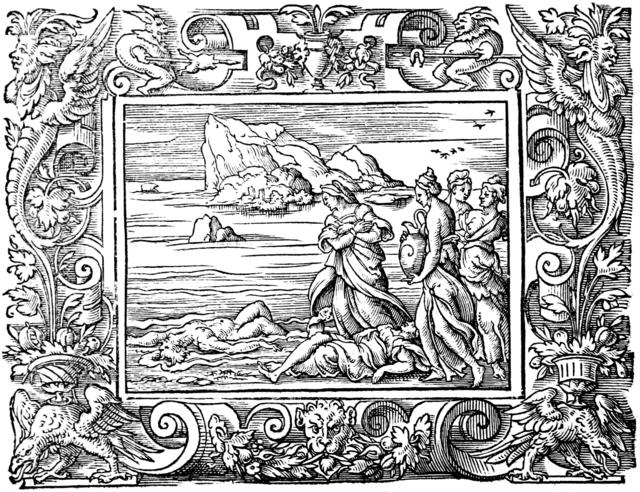
This production of Hecuba was directed by Phoebe Segal, a UEA MA Theatre Directing student. The original text was written by Euripides, but Marina Carr retold the story in 2015 with a focus on grief, loss and the horrors of war; notably highlighting the struggle of women and children in the aftermath of conflict. The play covers the capture of Queen Hecuba and explores her grief over both her dead children and ruined kingdom while she interacts with Agamemnon, the invading Greek leader. I saw the performance on opening night, 5thNovember 2024.
Hecuba (played by Wendi Grantham) performed an opening monologue surrounded by ‘her women’, her daughters and servants, with stripped back vignettes of death, mourning and bloodshed. Here the dialogue style was established. Actors switched between performing their dialogue and narrating the dialogue of other characters; the execution of this style was effective in creating a sense of history being made.
Grantham’s performance was vivid and natural, with a cold, calculated portrayal of the titular character which built to an emotive depiction of grief and horror as she found her last son murdered. The construction of the play by Segal was effective in creating visually striking scenes, skillfully combining elements of sound, puppetry, physical theatre and set. A notable scene was the sacrifice of Polyxena (played by Amelie Mobbs) in which a tired and war-weary Agamemnon (played by Ben Nash) must carry out the execution to appease his armies. The scene began oddly calm, the sound of the sea, the chorus of Hecuba’s women performing rites to Polyxena, a bleak monologue delivered by Agamemnon. The tension builds quickly with well executed ribbons of blood and a choreographed lift which the audience awarded with a gasp; the brutal scene was punctuated by a compellingly conflicted final narration from Odysseus (played by Pip Kerswill).
Through the making of the production and alongside a successful execution by the actors, with special mention to the effective physical acting of Hecuba’s chorus of women, Segal was able to effectively capture and portray the bleakness of war, historical female struggle and a vivid story of grief and betrayal.
Photo Credits: Wikimedia Commons





Leave a Reply